Serengeti Safari: The Complete Guide to Costs, Migration & Regions

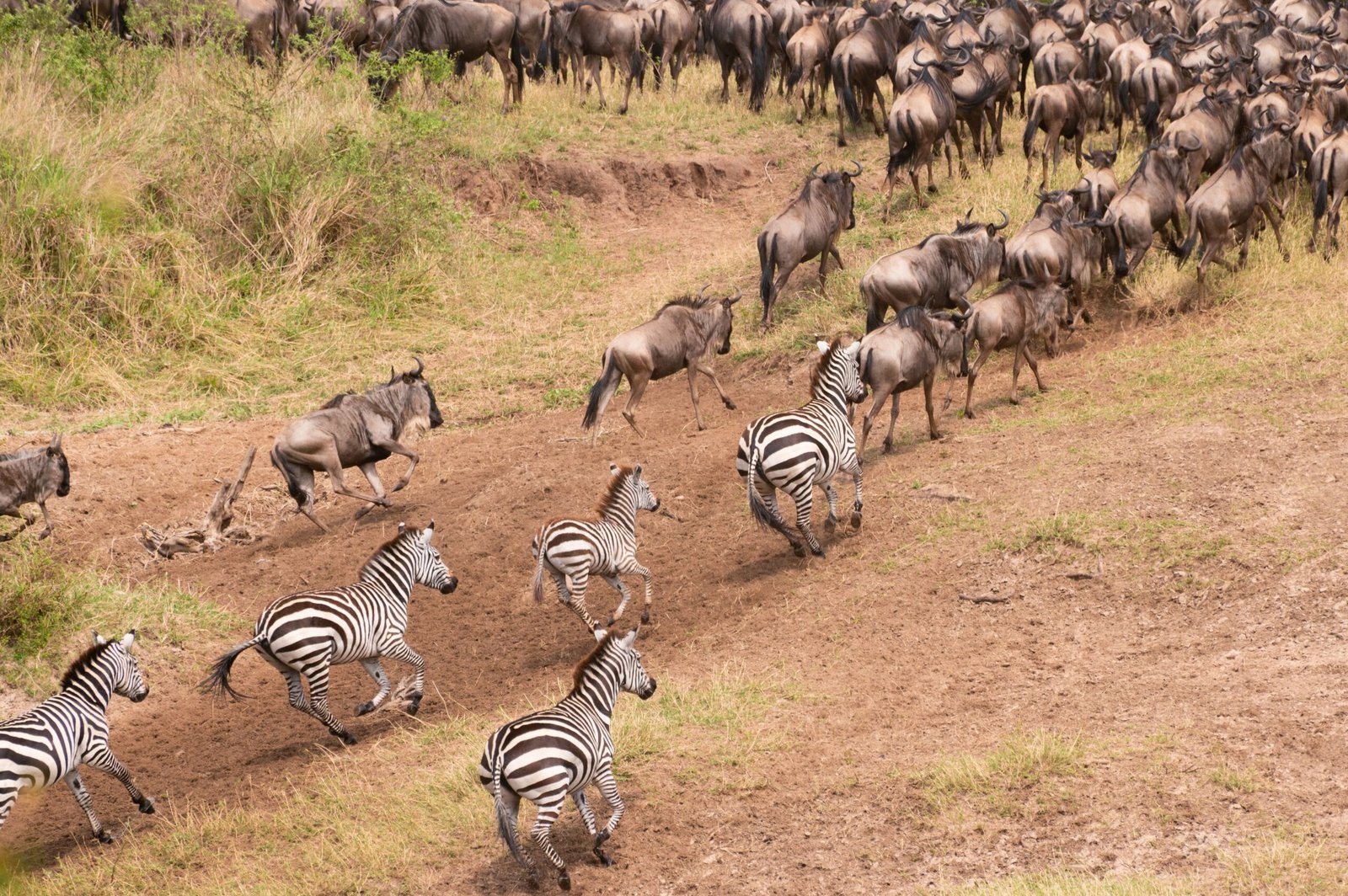
The Serengeti is the safari every other safari is measured against. It is 14,750 square kilometres of open grassland in northern Tanzania, a UNESCO World Heritage Site, and home to the largest land migration on Earth — around 1.5 million wildebeest, plus zebra and gazelle, moving in a year-round circle between Tanzania and Kenya.
It is also the safari most likely to surprise you with its price. The headline rate for a lodge or a tour is only part of the bill. Park fees stack up separately, per person, per day and per night, and in Tanzania they can add more than $150 a day before you have paid for a bed, a meal or a vehicle. This guide lays out the real cost, the migration month by month, and the four regions — so you book the right place at the right time, with your eyes open. New to African safaris? Start with our African Safari Beginner’s Guide.
Serengeti Safari: Quick Facts
- Where: Serengeti National Park, northern Tanzania. Most visitors fly into Kilimanjaro or Arusha, then drive or fly in.
- The animal: the Great Migration — wildebeest, zebra and gazelle — plus the big cats that follow them. Central Seronera has resident lions and leopards all year.
- What it costs: roughly USD 220–515 per person per day for a camping or mid-range lodge trip (operator ranges, November 2026), plus park fees of about USD 82.60 per day entry + USD 70.80 per night concession — full table below.
- Best season: June–October for dry weather and river crossings; January–March for calving in the south.
- How long: 3–5 nights in the park is the standard advice; 4–5 nights if you are pairing it with Ngorongoro Crater.
- Watch out: a river crossing is never guaranteed on any given day, however good the month. And the entry fee runs per 24 hours, not per calendar day — timing your arrival matters.
- Visa: Tanzania visa USD 50 standard, USD 100 for US citizens (multiple-entry), per operator guides checked November 2026.
The migration, month by month
The herds do not stay still, so a Serengeti safari is really four different trips depending on the month. Pick the month first, then pick the region — not the other way round.
January–March: calving in the south. The herds gather on the short-grass plains of Ndutu and the southern Serengeti to give birth. At peak, around 8,000 calves are born a day, according to operator guides — and where there are calves, there are predators. Lions, cheetahs and hyenas hunt in the open, in daylight, in front of your vehicle. This is the season most guides under-sell, and the honest alternative to the river-crossing rush: fewer vehicles, lower prices, and the best predator action of the year.
April–May: the long rains. The wettest, cheapest months. Roads get muddy, some camps close, and the herds drift west and north. Prices drop hard — a mid-range lodge can cost what a camping trip costs in July. The wildlife is still there, but tall grass makes animals harder to spot. Good for a budget trip; a poor choice for a once-in-a-lifetime one.
June–July: the Grumeti crossings. The herds push west into the Grumeti corridor and cross the Grumeti River — smaller and less famous than the Mara crossings, but with far fewer vehicles watching. A good month for travellers who want a crossing without the crowd.
July–October: the Mara River crossings in the north. The herds reach the Mara River in the Kogatende-Lamai area and cross back and forth between Tanzania and Kenya. This is the famous scene — wildebeest pouring down a steep bank into crocodile water — and the busiest, most expensive season in the park. Crossings happen most days in August and September, but never on schedule: a herd can stand on the bank for hours, or turn back entirely. No operator can promise you one.
November–December: the herds return south. Short rains green up the plains, the herds drift back toward Ndutu, and prices ease. A quiet, underrated window — good game, fewer vehicles.

The four regions compared
| Central-Seronera | South-Ndutu | West-Grumeti | North-Kogatende | |
|---|---|---|---|---|
| Best months: | All year | Dec–Mar | May–Jul | Jul–Oct |
| The draw: | Resident big cats, year-round game | Calving, predators, open plains | River crossings, fewer crowds | Mara River crossings |
| Crowds: | Busiest — the park’s hub | Quiet | Quiet | Busy in Aug–Sep |
| Best for: | First-timers, big-cat fans | Photographers, repeat visitors | Crossing-seekers who hate queues | The classic migration trip |
The verdict, plainly: if this is your first Serengeti trip, base yourself in central Seronera — the cats are there all year, whatever the month — and add nights in the region that matches your season. If the river crossing is the whole point of your trip, book three or more nights in the north between July and October; one night is a lottery ticket, three nights is a real chance (operator rule of thumb, not a statistic — crossings are never guaranteed). If you have been before, go south in February: the calving season is the Serengeti at its wildest, and most first-timers never see it.
What a Serengeti safari costs
Here is the honest answer, with the honesty first: the price you see on a tour listing is not the whole price, and the ranges below come from different sources that do not agree with each other — so they are quoted per source, never blended.
Package ranges (per person per day, November 2026): camping trips USD 220–460; private mid-range lodge trips USD 340–515; luxury lodge trips from USD 900 a day (operator guide ranges). Another operator’s tiers run higher: USD 300–500 / USD 500–1,000 / USD 1,000–3,000+. SafariBookings-platform listings for 3-day Serengeti + Ngorongoro trips run from about USD 1,175–1,631 per person (luxury listings USD 1,433–2,486).
The fee stack — the part most guides hide: on top of the package price, Tanzania charges park fees separately. Entry is USD 82.60 per adult per 24 hours in high season (USD 70.80 in low season, 15 March–15 May). Sleeping inside the park adds a concession fee of USD 70.80 per adult per night. A public campsite is USD 35.40 per adult per night. Children aged 5–15 pay USD 23.60 entry and USD 11.80 concession; under-5s are free. All figures are the TANAPA 2026/27 tariff as published by bookserengeti.com, corroborated by two further sources, and quoted including 18% VAT. That means a single adult day inside the park costs about USD 153 in fees alone — before bed, food or vehicle. A 4-night stay is over USD 600 in fees per person, and that is the real reason a Serengeti trip costs what it does.
One insider detail worth knowing: the entry fee runs per 24 hours, not per calendar day. Arrive at noon and your ticket runs to noon the next day — so a late-afternoon arrival wastes paid hours, and an early-morning arrival stretches them. The concession fee is charged per night you sleep inside the park, so a night in a lodge just outside the boundary saves USD 70.80 — at the cost of a longer drive in each morning. Ask your operator which nights are inside the park before you compare two quotes; two “4-night” trips can differ by hundreds of dollars in fees alone.
Balloon safari: about USD 500–600 per person for a dawn flight over the plains, according to operator guides — a genuine once-in-a-lifetime add-on, and the one splurge most travellers who take it say was worth it.
Tipping: budget about USD 15–20 a day for your guide and USD 10–15 a day for camp staff, per a single operator source (travelmapguide) — attribute it as a guide, not a rule, and check with your operator.
Getting there: road vs fly-in
Most trips start in Arusha. The road to the Serengeti takes a full day — roughly 7–8 hours including the Ngorongoro Crater rim — which is why most itineraries pair the two: a night at the crater, then into the park. Flying in, to Seronera airstrip or one of the seasonal strips, costs more but lands you on safari by lunchtime. The honest maths: if you have 3 nights, fly in — the road costs you a third of your trip. If you have 6–7 nights, drive in via Ngorongoro and treat the crater as a destination, not a detour. Internal flights are the line item most first-timers forget to budget; ask for them itemised in your quote.
How long to stay
Three nights is the minimum for a real Serengeti trip — one region, one rhythm, enough mornings for the park to show you something. Four to five nights is the sweet spot: two regions, or one region plus Ngorongoro Crater. Seven nights is for photographers and migration-chasers. Less than three nights, and you will spend more time arriving and leaving than watching animals. Whatever you choose, sleep in the region that matches your month — a lodge in the wrong region in the wrong month is the most expensive mistake in this guide.
The honest downside
Three things, said plainly. First, the migration is not guaranteed: the herds move on grass and rain, not on a timetable, and a river crossing can refuse to happen for days. Anyone who promises you a crossing is selling you something. Second, central Seronera is crowded — it is the park’s hub, the airstrip is there, and in August the river-crossing areas can feel like a traffic jam of Land Cruisers. The quiet Serengeti exists, but it is in the south in February or the west in June, not in Seronera in August. Third, the fees are the price of the park: over USD 150 a day per adult before anything else. That is not a hidden charge — it is conservation funding, and it is what keeps the migration possible — but it is the reason a Serengeti trip costs double a Kruger self-drive, and you should know it before you book, not after.
Booking checklist
Book 6–12 months ahead for July–October; the best northern camps sell out first. Confirm in writing: which region and which camp, how many nights are inside the park (concession fee), whether park fees are included in the headline price, whether internal flights are included, and the tipping guidance. Pack light, neutral colours, layers for cold dawns — full guidance in our What to Pack for a Safari guide. And check the current TANAPA tariff before you travel: fees are re-set each July, and last year’s price is not this year’s.
How much does a Serengeti safari cost?
Camping trips run roughly USD 220–460 per person per day and mid-range lodge trips USD 340–515, with luxury from USD 900 a day (operator ranges, November 2026). On top of that, park fees add about USD 82.60 a day entry plus USD 70.80 a night concession per adult — around USD 153 a day in fees alone. A 3-day Serengeti + Ngorongoro trip lists from about USD 1,175–1,631 per person on SafariBookings.
What are the Serengeti park fees?
For a non-resident adult, entry is USD 82.60 per 24 hours in high season (USD 70.80 in low season, 15 March–15 May), plus a USD 70.80 concession fee per night sleeping inside the park. Public campsites are USD 35.40 per adult per night. Children 5–15 pay USD 23.60 entry and USD 11.80 concession; under-5s are free. Figures are the TANAPA 2026/27 tariff, including 18% VAT, as published by bookserengeti.com and corroborated by two further sources — and fees are re-set each July.
When is the best time to visit the Serengeti?
June–October is the best overall window: dry weather, easy game viewing, and the Mara River crossings in the north (July–October). January–March is the calving season in the south — the best predator action and lower prices. April–May is the wettest and cheapest, with muddy roads and tall grass. There is no single best month; there is a best month for what you want to see.
How many days do I need in the Serengeti?
Three nights is the minimum for a real trip; four to five nights is the sweet spot, especially if you are pairing it with Ngorongoro Crater. If the river crossing is your goal, spend three or more of those nights in the north between July and October — one night is a lottery ticket. Less than three nights, and you spend more time travelling than watching animals.
Can I guarantee seeing a river crossing?
No. Crossings are never guaranteed on any given day — herds can wait on the bank for hours or turn back. They happen most days in August and September, and spending three or more nights in the Kogatende-Lamai area in those months gives you the best odds. Any operator that promises a crossing is overselling.
Serengeti or Masai Mara — which should I choose?
They are two halves of the same ecosystem, and the herds cross between them. The Serengeti is far bigger, with more regions and more room to escape the crowds; the Mara is smaller, denser and easier to reach from Nairobi. First trip, one park only: pick the Serengeti for scale and variety, the Mara for a shorter trip. If you have a week or more, do both — the herds are in the Mara roughly July–October and back in the Serengeti the rest of the year.
Booked with open eyes — the right region for your month, the fee stack understood before you pay, three nights minimum and no promised crossings — a Serengeti safari is the greatest wildlife show on Earth: a million wildebeest on an endless plain, lions in the morning light, and a sky that goes on forever. For the wider picture — how to pick a country, set a budget and book in the right order — read our African Safari Beginner’s Guide, and browse our Tanzania Safari destination page for everything Tanzania.

