
Yala National Park Safari: Blocks, Costs & Leopard Odds

Yala is the best place in Asia to see a leopard in the wild. Block 1 of the park holds about one leopard per square kilometre, among the highest densities recorded anywhere, according to a 2026 Mongabay report cited by Sri Lankan safari guides.
It is also the easiest leopard trip to get wrong. Pick the wrong block and you spend the morning in a traffic jam of jeeps. Trust the wrong price page and you arrive at the gate short on cash. Book the wrong week and the block you came for is closed for the dry season. This guide fixes all three. It is a neutral, non-operator guide — three of the top five ranking pages are one operator’s blog, and operator blogs sell their own jeeps. If big cats are your thing, our tiger guide covers the other Asian option: Ranthambore Safari.
Yala National Park Safari: Quick Facts
- Where: Yala National Park, on Sri Lanka’s southeast coast. Visitors use Block 1 or Block 5.
- The animal: the Sri Lankan leopard, plus elephants, sloth bears, crocodiles, water buffalo and a huge bird list.
- Gates open: 06:00–18:00 daily. Half-day safaris run dawn (about 06:00–10:00) or dusk; full-day safaris run the whole gate window.
- What it costs: roughly USD 42–47 per foreign adult in park fees, plus jeep hire of LKR 16,500–18,500 per vehicle for a half-day (up to 6 guests) — full table below.
- Best season: February to July, when shrinking waterholes pull animals into the open. Sloth bears peak May–June.
- Watch out: Blocks 1–2 close for about a month in the dry season — in 2026 that was 14 September to 16 October. Check the current year’s dates before booking.
- Book permits: online through the Department of Wildlife Conservation (DWC) eService at dwc.lankagate.gov.lk. The jeep is booked separately.
The blocks and gates compared
Yala’s block system confuses first-timers, so here it is plainly. Block 1 (14,101 hectares) is the famous one: Palatupana and Katagamuwa gates, the highest leopard density, and the most jeeps. Block 5 is the quiet one: Galge gate, fewer leopards, more elephants, and mornings that feel like a safari instead of a queue. Block 2 is restricted. Blocks 3–4 are limited, expedition access only — no regular visitor safari runs there.
| Block 1 | Block 5 | |
|---|---|---|
| Gates | Palatupana, Katagamuwa | Galge |
| Leopards | Highest density in Asia — about 1 per km² | Fewer; a bonus, not the plan |
| Elephants | Present, but not the draw | Better elephant country |
| Crowds | The jeep jam — see below | Quiet tracks, often alone at a sighting |
| Best for | First-timers who came for a leopard | Repeat visitors, photographers, anyone who hates crowds |
| Base town | Tissamaharama (Palatupana) or Kataragama (Katagamuwa) | Kataragama (Galge) |
The verdict, plainly: if this is your first Yala trip and a leopard is the point, pick Block 1 and accept the crowds. If you have been before, or a quiet morning matters more than the best odds, pick Block 5. A good morning in Block 5 beats a bad morning in Block 1 — and a bad morning in Block 1 is a real possibility.
Where you sleep decides your gate, and almost no guide says this clearly. Stay in Tissamaharama (usually shortened to Tissa) for the Palatupana gate. Stay in Kataragama for Katagamuwa or Galge. Book your hotel first and your block second, and you may find yourself driving across the park to reach the gate you wanted.
What a Yala safari really costs in 2026
Here is the honest answer, with the honesty first: Sri Lanka’s Department of Wildlife Conservation does not publish a fee table on its website — its eco-tourism page reads “Under Construction”, according to blog.reservations.lk (October 2026). That is why every price page you find disagrees with the next. One operator guide says foreign entry is “~$15–20”; its own 2026 update says “~13,000 LKR (~$40–43)”. The build-up below is compiled from 2026 operator calculators by blog.reservations.lk. Treat every Yala price as “as of late 2026” — and re-check before you travel.
Park fees (per foreign adult, 2026): entry permit USD 25 per adult; USD 15 per child aged 6–12; under-6 free. SAARC passport holders pay USD 20. Add about USD 10 service charge per group, plus a vehicle charge and VAT. Total fees: roughly USD 42–47 per foreign adult. Local visitors pay far less (LKR 150 per adult, LKR 100 per child, LKR 400 service charge per group) — which is why you will see very different numbers quoted for Sri Lankan nationals.
Jeep hire (per vehicle, up to 6 guests — Palatupana gate, 2026 operator rate card): cozy jeep LKR 16,500 half-day / LKR 33,000 full day; luxury jeep LKR 18,500 / LKR 37,000. Katagamuwa and Galge gates add a flat LKR 5,000. A travel-blog cross-check puts the same half-day jeep at roughly USD 30–50 and a full day at USD 70–100, which lines up with the rate card once you split it across a group.
What that means per person (half-day, cozy jeep, foreign adult): the permit is per person; the jeep is per vehicle. Two people sharing pay LKR 8,250 each for the jeep; four people pay LKR 4,125; six people pay LKR 2,750 — each plus USD 42–47 in fees. A full day doubles the jeep share while the fees stay the same. Two people in a half-day jeep pay three times as much per person for the vehicle as a full group of six — which is why the ride-share option below matters for couples and solo travellers.
Half-day vs full-day — and the ride-share budget option
Half-day (about 4 hours, dawn or dusk) suits most visitors. The dawn half-day, roughly 06:00–10:00, is the best leopard window of the day — leopards are most active in the cool early hours, and the light is best for photos. If you have one morning in Yala, take the dawn half-day.
Full-day (06:00–18:00) suits photographers and serious wildlife watchers. You get the midday hours too, when most jeeps have left and the park empties — but midday in the dry season is hot, animals rest in shade, and you pay double for the jeep. The full day’s real value is not more leopards; it is more time. For a first visit, the half-day is the better buy. For a second visit, or a photography trip, the full day earns its price.
The skipped alternative most guides miss: ride-share jeeps. At Palatupana gate, operators sell shared seats on a half-day jeep: LKR 6,500 per person for a cozy jeep, LKR 7,450 for a luxury jeep (parties of two or more, 2026 operator rate card). That is cheaper than hiring a private jeep for two, and it is the honest budget option for couples and solo travellers. The trade-off is obvious: you share the vehicle, so you do not choose the route or the stops. But if the choice is a shared jeep or no safari at all, take the shared jeep. Only one of the top five ranking pages mentions it — strange, because it is the single most useful price on the whole board for anyone travelling as a pair.
Best time to go
February–July is the best window. The dry months shrink the waterholes, animals come to drink in the open, and sightings are at their best. May–June is sloth bear season — bears come down for the palu fruit, the peak window for seeing one. July–September stays good but gets hotter and dustier; mornings stay productive.
Mid-September to mid-October, Blocks 1–2 close. In 2026 the closure ran 14 September to 16 October, for drought and road repairs. Blocks 5–6 stayed open. The dates move every year — check the current year’s closure before booking, and never book a Block 1 safari in this window without confirming the block is open.
November–January is the green season. Rain returns, the park greens up, animals scatter, and leopard sightings get harder. Cheaper and quieter, but this is the trade-off season — book it for the park, not for the leopard. One practical note: Yala is in Sri Lanka’s dry zone, so its seasons run opposite to the wet southwest. A rainy week in Colombo does not mean a rainy morning in Yala — check the forecast for Tissamaharama, not the capital.
Leopard odds, honestly
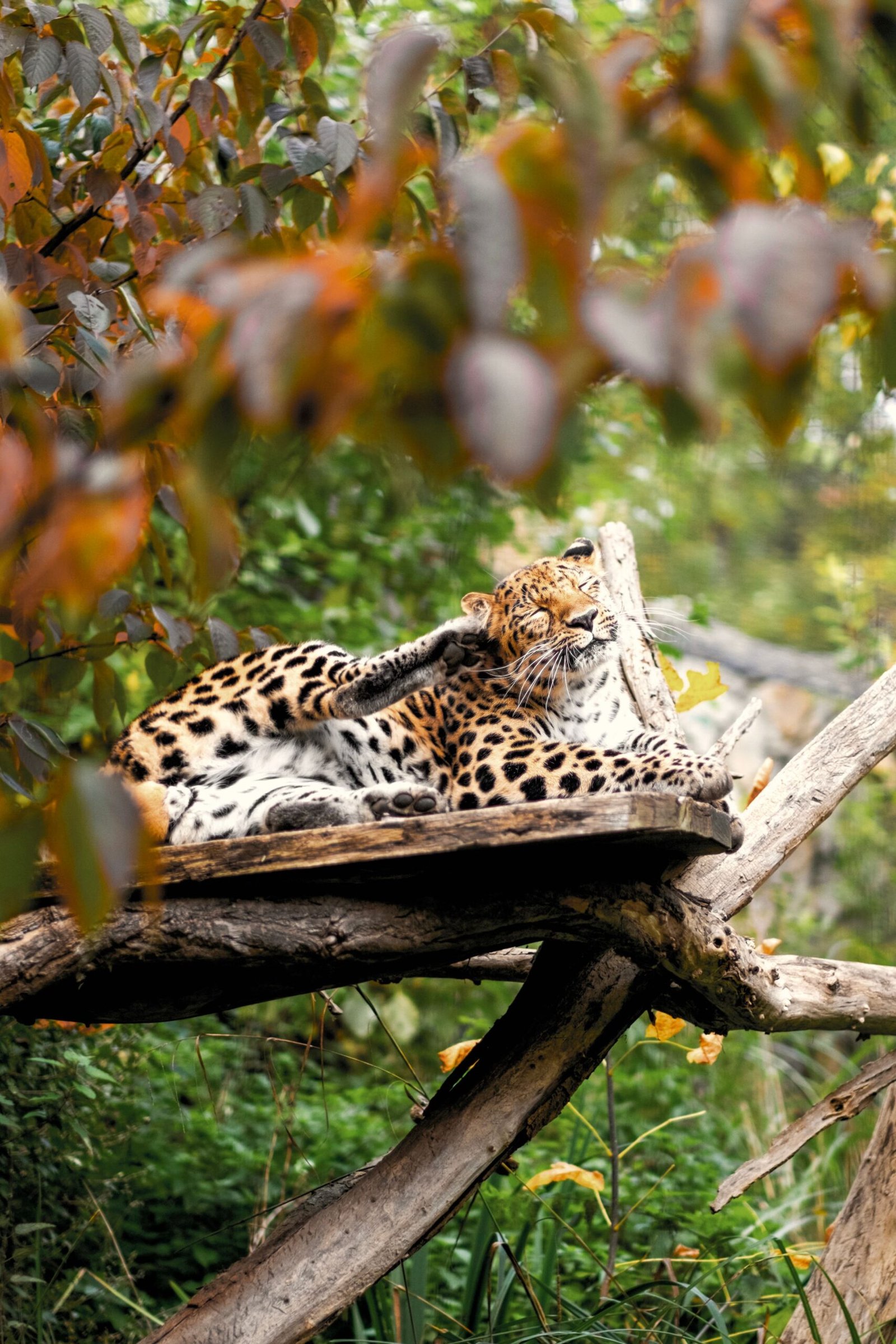
Yala’s leopard density is real — about one leopard per square kilometre in Block 1 — but density is not a guarantee. A leopard is a solitary, camouflaged animal in 14,101 hectares of scrub, and no guide, no tracker and no radio network can promise you one. What improves your odds: a dawn start (the 06:00–08:30 window is when leopards move and hunt), a good tracker who reads pugmarks and alarm calls, and a full-day safari if you can afford it, because more hours means more draws. The famous Yala photo — a leopard draped over a tree branch in the morning light — is real, and it happens most mornings somewhere in Block 1. It just may not happen in front of your jeep.
Now the honest downside, because every Yala guide should say it and almost none do: the jeep jam. When one driver spots a leopard, the radio goes out and every jeep in the area converges. Trip reports describe the same scene again and again — twenty or thirty jeeps jostling for position around one animal, engines running, guides shouting, the leopard eventually slipping into the long grass. At the gate, the same thing happens in reverse: jeeps queue before the 06:00 opening, and once inside, the fast drivers race for the best-known waterholes. This is the price of Block 1’s density, and it is worst in the February–July peak. Block 5 exists for exactly this reason — fewer leopards, but the one you find is yours alone.
A second honest warning: a leopard sighting is not the whole safari. Elephants, sloth bears, spotted deer, wild boar, mugger crocodiles and peacocks are all easier to see than a leopard, and a morning that “only” delivers elephants and a sloth bear is still a superb morning. Travellers who measure the day by one animal usually leave disappointed; travellers who watch the whole park do not.
How to book: permits, jeeps and what to confirm
Yala has two separate bookings, and confusing them is the classic first-timer mistake. The park permit comes from the Department of Wildlife Conservation, online through its eService at dwc.lankagate.gov.lk. The jeep comes from an operator or your hotel, separately. Some operators bundle both; some sell the jeep only and leave the permit to you. Ask which one you are buying before you pay.
Book the permit in advance in peak season (February–July) — gate queues at 06:00 are long, and a pre-bought permit is the difference between driving in at opening and waiting at the ticket office while the best light goes. Book the jeep at the same time, and confirm four things in writing: which block, which gate, whether the permit is included, and the pickup time from your hotel. A jeep booked for “Yala” with no block named is a jeep that can take you anywhere — usually to the block the operator prefers, not the one you wanted. Bring cash in LKR for anything not pre-paid, and bring your passport — permits are issued against ID, and the gate checks it. Pack for a 5 AM start: a light layer for the cool dawn drive, sun protection for the drive back, and a charged camera. Full packing guidance: What to Pack for a Safari.
Where to stay: Tissamaharama or Kataragama
Tissamaharama (Tissa) is the default base: closest to the Palatupana gate, the most hotels and safari operators, and the easiest logistics for a Block 1 dawn safari. Most first-timers should stay here. Kataragama is the quieter base: it serves the Katagamuwa gate (Block 1) and the Galge gate (Block 5), and it suits travellers combining Yala with the Kataragama temple town. If your plan is Block 5, stay in Kataragama — driving from Tissa to Galge gate wastes the dawn. Either way, stay the night before your safari, not the night of. A 05:30 pickup from a hotel an hour away is a 04:30 alarm, and a tired traveller at dawn is a traveller who misses the leopard.
Booked with open eyes — Block 1 for the leopard, Block 5 for the quiet, the permit bought in advance, the real price known before the gate — Yala is the best leopard morning in Asia: a spotted cat on a tree branch in the first light, and a park full of elephants, bears and birds behind it. For every other kind of safari in the region, browse our Asian Safaris hub.
Frequently Asked Questions
How much does a Yala safari cost per person in 2026?
Park fees for a foreign adult run roughly USD 42–47 once entry (USD 25), service charge, vehicle charge and VAT are all in (blog.reservations.lk, October 2026). Jeep hire is per vehicle, not per person: LKR 16,500–18,500 for a half-day at Palatupana gate, up to 6 guests — so a full group of six pays LKR 2,750 each for the jeep, while a couple pays LKR 8,250 each. Ride-share seats are LKR 6,500–7,450 per person. The DWC publishes no official fee table, so treat every Yala price as “as of late 2026”.
Which Yala block is best for leopards?
Block 1, by a wide margin — about one leopard per square kilometre, among the highest densities recorded anywhere. Enter through Palatupana or Katagamuwa gate. Block 5 (Galge gate) has fewer leopards but far fewer jeeps, better elephants and quieter mornings. First trip, leopard is the point: Block 1. Second trip, or you hate crowds: Block 5.
When does Yala close each year?
Blocks 1–2 close for about a month in the dry season — in 2026 that was 14 September to 16 October, for drought and road repairs. Blocks 5–6 stayed open. The dates move every year, so check the current year’s closure before booking, and never book a Block 1 safari in September–October without confirming the block is open.
Half-day or full-day safari — which is better?
A dawn half-day (about 06:00–10:00) suits most visitors: it covers the best leopard window and costs half the jeep hire. A full day suits photographers and second visits — more hours, quieter midday, but double the jeep price. For a first visit, take the half-day; for a photography trip, take the full day.
Do I need to book Yala permits in advance?
Yes in peak season (February–July). Buy the permit online through the DWC eService at dwc.lankagate.gov.lk, and book the jeep separately or as a bundle — but confirm in writing whether the permit is included. A pre-bought permit gets you through the gate at the 06:00 opening instead of queuing at the ticket office.
Where should I stay for Yala — Tissamaharama or Kataragama?
Tissamaharama (Tissa) for the Palatupana gate and Block 1 — the most hotels and operators, the default base for first-timers. Kataragama for the Katagamuwa gate (Block 1) or the Galge gate (Block 5). Stay the night before your safari, not the night of — a dawn pickup from an hour away means a 04:30 alarm.

