African Safari for Beginners: Your First Trip, Planned Step by Step

Your first African safari is one of those trips that sounds simple until you start planning it. Which country? When? How much will it really cost — not the headline price, but the whole trip, flights and tips included? And how do you avoid booking the wrong thing and only realising it when you’re already there?
This guide answers all of that, in order. Pick a country, pick your month, set a real budget, choose your style, then book in the right order. Follow the steps and your first safari will feel like a holiday, not a gamble.
The short answer: the first safari we’d book
If you want the simple version first: one country, five to seven nights, a mid-range lodge, in the dry season. That is the setup experienced guides keep recommending for first-timers — four to six nights in one area, lodge-based, two game drives a day, simple transfers.
Kenya or Tanzania is the classic first choice — big herds, big cats, lodges that have been doing this for decades. South Africa is the easiest first safari if you want to drive yourself and keep costs down. Botswana is the most expensive and the most exclusive. Uganda is the add-on if gorillas are the dream, not the starting point.
One country, one area, one week. That is the whole secret.
Step 1: pick your country
Don’t try to cover East and Southern Africa in one trip. The distances are huge, the flights between regions are expensive, and you’ll spend your holiday in airports. Pick one.
Kenya — the Masai Mara, the great migration, and the easiest first-timer logistics. Nairobi is a straightforward hub, and the Mara is the most famous wildlife stage on earth. Good for: migration, big cats, a first trip that delivers.
Tanzania — the Serengeti and Ngorongoro Crater, the classic pairing. The Serengeti is enormous, so you travel further between camps, but the wildlife density is unmatched. Good for: the full classic safari, longer trips.
South Africa — Kruger National Park, which you can self-drive in your own hire car. No internal flights needed, lodges and rest camps at every budget, and Cape Town or Johannesburg as an easy gateway. Good for: first-timers on a budget, families, self-drive.
Botswana — the Okavango Delta and Chobe, the most exclusive safari in Africa. Fly-in camps, tiny guest numbers, and prices to match. Good for: a once-in-a-lifetime trip, not a first taster.
Uganda — gorilla trekking in Bwindi, plus savanna parks. The gorilla permit is a separate, expensive decision — treat Uganda as a second trip, or a gorilla add-on, not your first safari. Good for: gorillas, once the safari bug has bitten.
Still torn between the two big names? Kenya vs Tanzania comes down to this: Kenya is simpler and cheaper to reach; Tanzania is bigger and wilder. Either is a great first safari — and the Serengeti is rated the top park in a 2025 expert and traveller review analysis quoted by Explore Africa, if you need a tiebreaker.
Step 2: pick your month
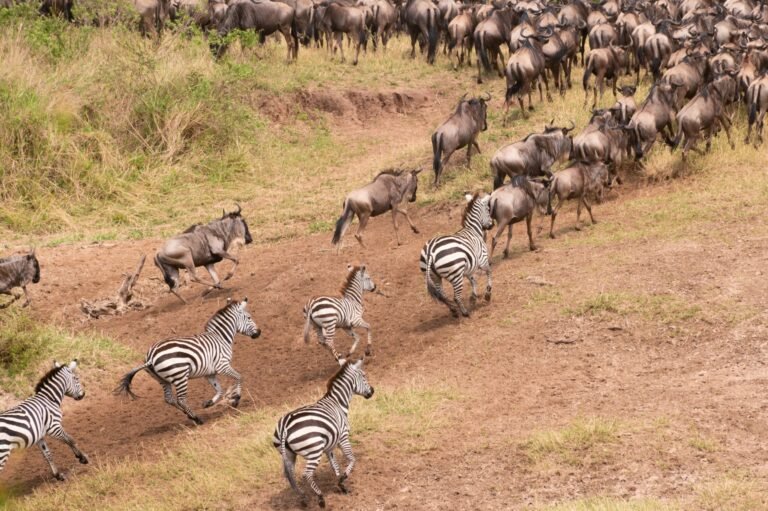
The dry season, roughly June to October, is when game viewing is easiest. Water is scarce, so animals gather at the few waterholes that remain, and the grass is short, so you can actually see them. The great migration is in the Masai Mara from about July to October, and in the northern Serengeti at the same time.
The other seasons have their own logic:
- January to February: calving season in the southern Serengeti — thousands of newborn wildebeest, and the predators that follow them. Lush and green, fewer visitors, lower prices.
- March to May: the long rains. Some camps close, roads get muddy, and the wildlife scatters. The cheapest time to go, but the hardest for a first-timer.
- November to December: the short rains. Green, quiet, and good value — a fair compromise if your dates are fixed.
For a first safari, book June to October. You are paying for the animals to be findable.
Step 3: set a real budget
This is the part most beginner guides dodge, so here are real numbers. SafariBookings (safaribookings.com) puts an African safari at $125–$1,500 per person per night, with averages of $150 a night for budget, $350 for mid-range, and $750 for luxury. Those are the per-person, per-night prices for the safari itself — accommodation, meals, game drives and park fees included.
What each level buys:
- Budget, around $150 a night: group camping or simple lodges, shared game drives, basic food. Real safari, modest comfort.
- Mid-range, around $350 a night: comfortable lodges or tented camps, good food, a proper guide, small groups. This is where most first-timers should aim.
- Luxury, around $750 a night: small fly-in camps, private guides and vehicles, excellent food and service. Wonderful, and three times the price.
Now the part nobody totals up — a worked 7-day trip for one person, mid-range, in the dry season:
- Safari itself, 6 nights at $350: $2,100
- International flights: varies hugely by where you fly from — budget this separately, and honestly
- Visa: varies by country (check the official entry rules before you travel)
- Tips: about $15 per person per day for your guide, plus a little for camp staff — roughly $105 for the week
- Travel insurance: essential, and check it covers safari activities
- Pre- and post-safari hotel nights: most itineraries need one night near the airport at each end
So a mid-range week is roughly $2,100 for the safari plus flights, visa, tips and two hotel nights. The safari price is the biggest line — but the extras are not small, and a quote that leaves them out is not a real price.
Step 4: choose your style
Four choices shape your trip more than anything else.
Group or private? A group safari shares the vehicle and the guide with other travellers and costs far less. A private safari costs more but moves at your pace — you stop when you want, for as long as you want. First-timers on a budget should take the group option; honeymooners and photographers should go private.
Lodge or tented camp? A lodge is a solid building with a proper bathroom. A tented camp is a big canvas tent on a platform — real bed, en-suite bathroom, and the sound of the bush at night. Neither is “roughing it” at mid-range and above. Pick the camp for its location, not its walls.
National park or private conservancy? This is the decision nobody explains. In a national park, you stay on the roads, you cannot drive at night, and you share sightings with every other vehicle. In a private conservancy next door, your guide can drive off-road, run night drives, and walk with you — and vehicle numbers are capped, so sightings feel private. Conservancies cost more. For a first safari, a conservancy stay is worth it for at least part of the trip.
How long? Four to six nights is the recommended first trip — enough time for the rhythm to settle and for a slow day not to ruin the trip. Six to ten days is the ideal for a first safari overall. Less than four nights and you’re mostly travelling; more than ten and most first-timers are ready for a hot shower and a city.
Step 5: book in the right order
Book in this order, or you will pay for it later:
- Gorilla permits first, if any. They are limited — eight visitors per gorilla family per day — and sell out 6–12 months ahead in peak season.
- International flights. Prices rise as departure nears, and your safari dates hang on them.
- The safari itself. Peak-season lodges and camps book 6–12 months ahead; the best ones are gone a year out.
- Internal flights and transfers. Small planes have strict luggage limits — soft bags, usually 15–20 kg — so check before you pack.
- Visa, insurance and health. Check the official entry rules for your destination. Some countries require a yellow fever vaccination certificate — it must be given at least 10 days before travel, and you must carry the certificate. See your doctor or travel clinic early, not the week before.
Book with a licensed local operator or a reputable agent. The cheapest quote on the internet is usually missing something — a park fee, a transfer, or a night.
What a day on safari actually looks like
A safari day has a rhythm, and it is the same almost everywhere:
- 5:30–6:00 AM: wake-up call, tea or coffee, and out before sunrise. Animals are most active in the cool early hours.
- 6:00–10:00 AM: the morning game drive — three or four hours, with a coffee stop somewhere scenic.
- 10:00 AM–3:30 PM: back at camp for a big brunch, a rest, a swim, a nap. The middle of the day is hot and the animals are resting too.
- 3:30–6:30 PM: the afternoon drive, ending as the light turns gold.
- Evening: dinner under the stars, stories around the fire, and an early night — because tomorrow starts at dawn again.
It is a gentle routine, and by day three it feels like the most natural thing in the world.
Health, visas and packing essentials
Keep this short and practical. Check the official entry rules for your destination country — visa requirements change, and the official portal is the only source that matters. See a travel doctor about vaccinations and malaria prevention well before you travel; some countries require a yellow fever certificate, and it must be given at least 10 days before you go.
Pack light and soft — small planes have strict luggage limits. Neutral colours (khaki, olive, beige), layers for cold mornings and warm middays, a warm fleece for the dawn drive, closed shoes, sunscreen and a hat. And two things every guide mentions: binoculars and a zoom lens of around 200mm or more — without them, the leopard in the tree is a dot.
For the full list, see our guide: What to Pack for a Safari.
The 7 mistakes first-timers make
- Trying to see two regions in one trip. Pick one country, one area. The rest will still be there next time.
- Booking too late. Peak season sells out 6–12 months ahead. The lodge you wanted is gone; the one left costs more.
- Choosing on price alone. The cheapest safari is usually missing a fee, a transfer, or a night — read what’s included.
- Going in the rains to save money. The discount is real, but so is the mud and the empty plains. Your first safari should be in the dry season.
- Skipping the conservancy. National parks are wonderful, but off-road and night drives are the moments you’ll remember.
- Packing like it’s a beach holiday. Cold mornings, dust, soft-bag limits — pack for the bush.
- Forgetting the extras in the budget. Flights, visa, tips, insurance and hotel nights add hundreds to the headline price.
What is the best African safari for a first-timer?
Kenya or Tanzania in the dry season (June to October), five to seven nights, one area, mid-range lodge-based. Kenya is simpler and cheaper to reach; Tanzania is bigger and wilder. South Africa’s Kruger is the best choice if you want to self-drive and keep costs down.
How many days do I need for my first safari?
Four to six nights is the recommended minimum for a first trip, and six to ten days is ideal overall. Less than four nights and you’re mostly travelling; more than ten is a lot for a first-timer.
How much should I budget for a first African safari?
SafariBookings averages are $150 a night for budget, $350 for mid-range and $750 for luxury, per person per night. A mid-range 7-day trip works out at roughly $2,100 for the safari itself, plus international flights, visa, about $15 a day in tips, insurance and pre/post hotel nights.
Is an African safari safe for beginners?
Yes, with a licensed operator and a good guide. Stay in the vehicle unless your guide says otherwise, keep voices low, never feed wildlife, and follow your guide’s instructions at all times. Safari camps and lodges are used to first-timers and brief you on arrival.
Do I need vaccinations or a visa for an African safari?
It depends on the country. Check the official entry rules for your destination before you travel. Some countries require a yellow fever vaccination certificate, given at least 10 days before travel — see a travel doctor early. Visa rules vary by nationality and by country.
When should I book a first safari?
Book peak-season safaris (June to October) 6–12 months ahead. Gorilla permits, if you want them, also need 6–12 months. Flights and lodges get more expensive and less available the closer you get, so the earlier you book, the better the choice.
One country, one area, one week in the dry season — that is the whole plan, and it works. The rest is detail: the lodge you like, the month that suits you, the budget you can honestly afford. Start there, and your first safari will be the trip you measure every other trip against.
For every kind of safari, browse our African Safaris hub. And when you’re ready to pick a park, our Kenya and Tanzania guides are next: Kenya Safari and Tanzania Safari live on the site.

One Comment