Masai Mara Safari: The Complete Guide to Fees, Migration & Timing

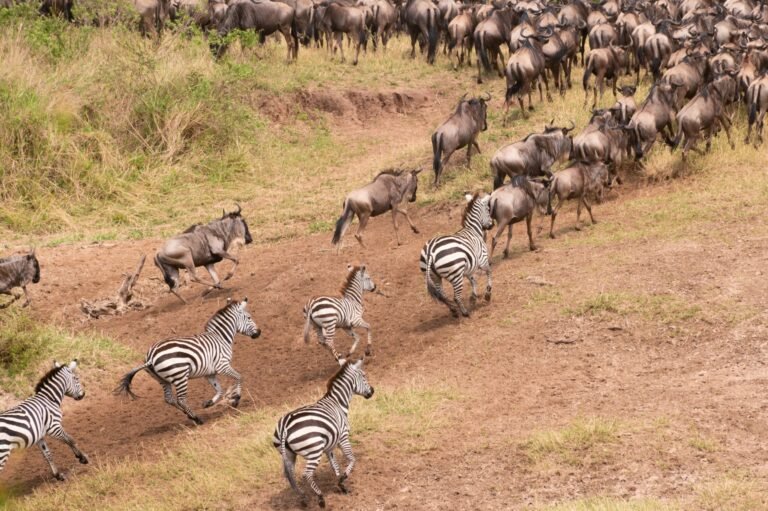
The Masai Mara is the smaller, denser half of the greatest wildlife show on Earth. Every year more than 1.5 million wildebeest, plus zebra and gazelle, cross from Tanzania’s Serengeti into Kenya’s Mara — and for a few months the whole herd is here, in a reserve about a quarter the size of the Serengeti. That density is the Mara’s gift and its problem: the animals are easier to find than anywhere else in Africa, and so is everyone else.
It is also the safari most likely to surprise you at the gate. The lodge price is only part of the bill, and the park fee alone can double between one day and the next. This guide lays out the real fee, the migration month by month, and the reserve-versus-conservancy choice. New to African safaris? Start with our African Safari Beginner’s Guide.
Masai Mara Safari: Quick Facts
- Where: the Masai Mara National Reserve, south-west Kenya, on the Tanzanian border. Most visitors fly into Nairobi, then drive or fly in.
- The animal: the Great Migration — wildebeest, zebra and gazelle — plus big cats, elephants and rhino. The Mara is the best place in Africa to see a river crossing.
- The fee: USD 100 per adult per day January–June, USD 200 per adult per day July–December (Narok County seasonal tariff, reported by nation.africa and corroborated by four further sources, November 2026). A ticket is valid 12 hours, 6am–6pm.
- What it costs: roughly USD 250–450 per person per day budget, USD 500–900 mid-range, USD 1,200–2,500+ luxury (nation.africa ranges, November 2026) — park fees may or may not be included, so ask.
- Best season: July–October for the migration; January–March for predators at half the fee.
- How long: 3 nights is the standard first trip; 4 nights if the river crossing is the point.
- Watch out: a river crossing is never guaranteed on any given day. And the fee doubles on 1 July — arrive 30 June and you pay half.
- Entry: Kenya eTA, from USD 30 per traveller, at etakenya.go.ke — plus mandatory Kenyan inbound travel health insurance, about USD 44 (checked November 2026).
The migration in the Mara, month by month
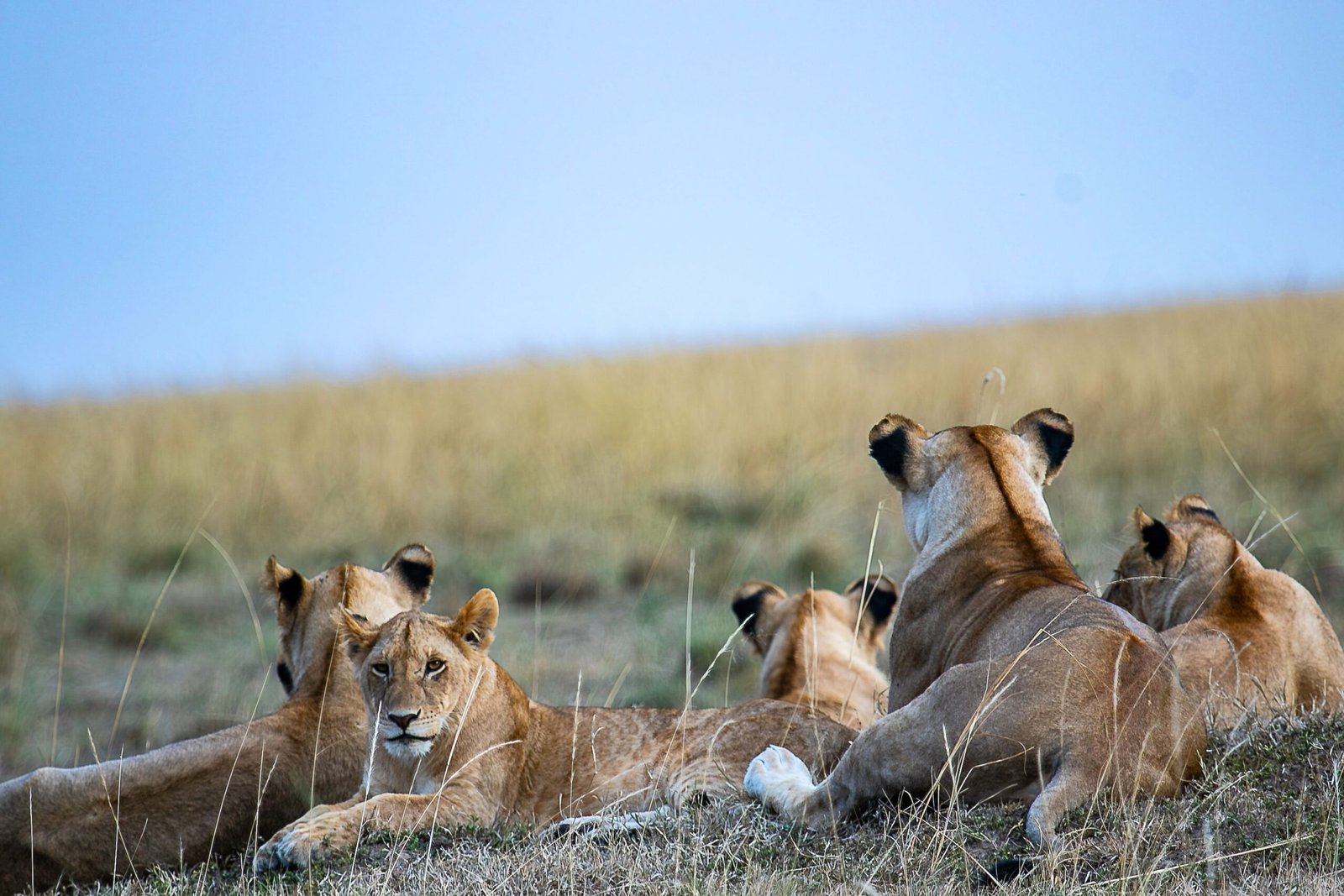
January–March: the quiet season, and the smart one. The migration is back in Tanzania, but the Mara’s resident animals stay — and this is predator season. Resident wildebeest, zebra and antelope calve in these months, and lions, cheetahs and leopards hunt in the open. The fee is USD 100 a day, half the high-season rate, lodges are quieter, and the guides have time for you. This is the season most guides under-sell: fewer vehicles, lower prices, and the best predator action of the year.
April–June: the long rains. The wettest, cheapest months. Grass grows tall, animals scatter, and some camps close. The herds are still in the Serengeti, moving north. One date matters more than the weather: 30 June is the last day of the USD 100 fee.
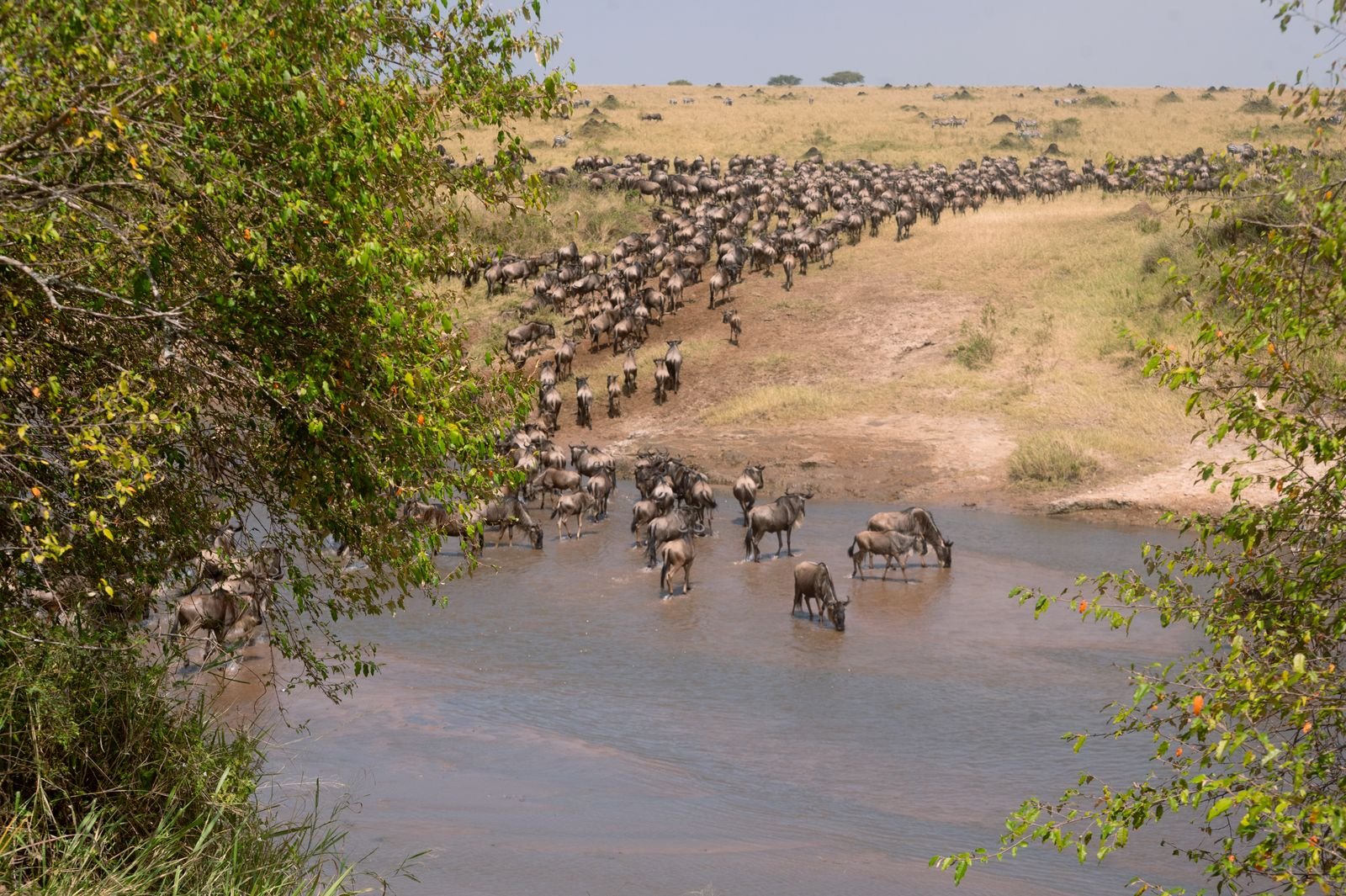
July–October: the migration. The herds pour into the Mara and cross the Mara River back and forth. Crossings are most frequent from mid-July to September, and biggest in August and September — but never on schedule. A herd can stand on the bank for hours, or turn back entirely. No operator can promise you one.
November–December: the herds leave. Short rains green up the plains, the herds drift back south, and prices ease. A quiet, underrated window — good game, fewer vehicles, and the fee is still USD 200 until the end of December.
Park fees explained: the $100/$200 split and the 12-hour rule
The Masai Mara National Reserve is run by Narok County, not by the Kenya Wildlife Service (KWS). For a non-resident adult, the reserve fee is USD 100 a day from January to June and USD 200 a day from July to December. Children and students pay USD 50 a day. East African citizens pay KSh 1,000 a day and East African residents KSh 2,000 a day. The figures are the Narok County seasonal tariff as reported by nation.africa (Daily Nation) at the start of the 2026 migration season and corroborated by four further sources, checked November 2026. Narok County calls the seasonal pricing a deliberate “low-volume, high-value” shift — fewer visitors, paying more, in the migration months.
The 12-hour rule is where the fee bites in practice. A ticket is valid for 12 hours, 6am to 6pm. A flight from Nairobi lands you in the Mara around midday: half your first ticket day is already gone, and you have paid the full USD 100 or USD 200 for it. A road trip takes about five hours, so an early Nairobi departure still reaches the gate in the afternoon. And where you sleep changes the maths — camps inside the reserve and camps outside it use different gates and different ticket logic, so the fee depends on where your bed is, not just on how many days you stay. Before you compare two quotes, ask the operator exactly how many fee-days are included and whether your arrival day counts as a full one. Two “3-night” trips can differ by a whole fee-day — USD 200 in high season — on this detail alone.
Reserve, Triangle or conservancy?
The Mara is not one place. It is three, and the choice changes what you can do and what you pay.
The main reserve is the big Narok County block most visitors mean by “the Mara”. It holds the bulk of the animals, the famous river-crossing points, and — in August and September — the bulk of the vehicles. Off-road driving is not allowed, night drives are not allowed, and there is no cap on how many vehicles can gather at a sighting.
The Mara Triangle is the north-western third of the reserve, managed separately by the Mara Conservancy. It has its own fee system and its own gate, it is generally quieter, and it holds some of the best crossing points on the Mara River. If the crossing is your goal, the Triangle side is where the patient watching happens.
The private conservancies ring the reserve — community-owned land leased to a small number of camps. Their fees are set per conservancy and are usually bundled into the camp rate, so ask for the number in writing. What the extra money buys is real: off-road driving is allowed, so your guide can follow a hunt instead of watching it from the road; night drives are allowed; and vehicle numbers at a sighting are capped, so a leopard sighting is shared with two or three vehicles instead of twenty. The trade-off: conservancy camps sit outside the reserve, so a day inside the reserve costs you a reserve fee-day on top of the conservancy fee.
The verdict, plainly: if this is your first Mara trip and the crossing is the point, stay in the main reserve or the Triangle, in the north, for 4 nights between July and September — one night is a lottery ticket, four nights is a real chance. If you have been before, or if quiet sightings matter more than the crossing, a conservancy camp in January–March is the better trip: half the reserve fee, predators hunting in the open, and sightings you do not have to queue for. If your budget decides, the main reserve in the low season beats a conservancy in the high season every time.
What a Masai Mara safari costs
The price you see on a tour listing is not the whole price, and the ranges below come from different sources that do not agree — so they are quoted per source, never blended.
Package ranges (per person per day, November 2026): budget USD 250–450, mid-range USD 500–900, luxury USD 1,200–2,500+ (nation.africa). Another source’s tiers run a little lower: budget USD 250–400, mid-range USD 300–850, luxury USD 800–2,000+, with 3-night mid-range packages often USD 1,000–1,500 per person and a 4-day migration safari USD 3,000–6,500 (travel.afrikanyouth.com). One operator lists comfortable trips “from USD 300 per person per night” (jubileesafari.com).
The fee stack: on top of the package price, the reserve fee is USD 100 or USD 200 per adult per day, depending on the month. A 3-night stay in February costs USD 300 per adult in fees; the same 3 nights in August cost USD 600. Whether that fee is included varies by operator — some include it, some do not — and a quote that leaves it out can look USD 600 cheaper than a quote that includes it, for the same trip. Ask in writing before you compare prices.
One insider detail worth knowing: the fee changes on a calendar date, not on the migration. The herds arrive when the rain and grass tell them to, usually in July — but the USD 200 rate starts on 1 July whether the herds are there yet or not. The flip side is the bargain hidden in the calendar: in late June, the herds are often already crossing in from the Serengeti while the fee is still USD 100. A late-June trip is a gamble on the herds’ timing, but it is the only week of the year you can see the migration at half the fee.
Getting there: road vs fly-in
Most trips start in Nairobi. The road takes about five hours — a long, bumpy drive on the last stretch — and costs you most of your arrival day. Flying takes 40–60 minutes to a Mara airstrip and lands you on safari by lunchtime. The honest maths: if you have 3 nights, fly in — the road costs you a third of your trip. If you have 5 or more nights, drive in and treat the journey as part of the trip. Either way, remember the 12-hour ticket: your first fee-day is already half spent by the time you reach camp, so plan your first game drive for the late afternoon, when the light is best and the animals are moving again.
Before you fly to Kenya at all, sort the paperwork: most visitors need a Kenya eTA, applied for online only at etakenya.go.ke, from USD 30 per traveller with standard processing of about three working days. Since October 2026 the application also includes mandatory Kenyan inbound travel health insurance, about USD 44 — your own travel insurance is not accepted in its place. Apply at least two weeks before you travel, and only ever on the official site.
The honest downside
Three things, said plainly. First, the crossing is not guaranteed: the herds move on grass and rain, not on a timetable, and a river crossing can refuse to happen for days. Anyone who promises you a crossing is selling you something. Second, the main reserve is crowded in high season — the Mara is small, the crossings are famous, and in August a single crossing point can draw dozens of vehicles. The quiet Mara exists, but it is in a conservancy, or in the low season, not in the main reserve in August. Third, the fee is the price of the park: USD 200 a day per adult in high season, on top of everything else, doubling overnight on 1 July. That is conservation funding for a county-run reserve, and it is what keeps the Mara possible — but it is the reason a Mara trip costs what it does, and you should know it before you book, not after.
Booking checklist
Book 6–12 months ahead for July–October; the best northern camps sell out first. Confirm in writing: which area and which camp (main reserve, Triangle or conservancy), how many fee-days are included and whether your arrival day counts as a full one, whether the reserve fee is included in the headline price, and whether internal flights are included. Pack light, neutral colours, layers for cold dawns — full guidance in our What to Pack for a Safari guide. And check the current Narok County tariff before you travel: the seasonal fee is re-set, and last year’s price is not this year’s.
How much are Masai Mara park fees in 2026?
For a non-resident adult, USD 100 a day from January to June and USD 200 a day from July to December; children and students pay USD 50 a day. Tickets are valid 12 hours, 6am to 6pm. East African citizens pay KSh 1,000 a day and East African residents KSh 2,000 a day. The figures are the Narok County seasonal tariff as reported by nation.africa and corroborated by four further sources, checked November 2026 — and the tariff is re-set seasonally, so confirm it before you travel.
When is the best time to visit the Masai Mara?
July to October for the migration and the river crossings, with crossings most frequent from mid-July to September and biggest in August and September. January to March is the quieter, cheaper alternative — half the park fee, predators hunting around calving resident herds, and far fewer vehicles. April to June is the wettest and cheapest, and the herds are still in the Serengeti. There is no single best month; there is a best month for what you want to see.
How many days do I need in the Masai Mara?
Three nights is the standard first trip — enough mornings for the reserve to show you something. Four nights is the right call if the river crossing is the point: crossings are never guaranteed on a given day, and three or more nights in the north between July and October gives you a real chance. Less than three nights, and you spend more time arriving and leaving than watching animals.
Masai Mara or Serengeti for the migration?
They are two halves of the same ecosystem, and the herds cross between them. The Serengeti is far bigger, with more regions and more room to escape the crowds; the Mara is smaller, denser and easier to reach from Nairobi. First trip, one park only: pick the Mara for a shorter trip and easier crossings, the Serengeti for scale and variety. If you have a week or more, do both — the herds are in the Mara roughly July to October and back in the Serengeti the rest of the year. Our Serengeti Safari guide covers the Tanzanian half in the same honest detail.
Are park fees included in safari packages?
Sometimes — and that is exactly the trap. Some operators include the reserve fee in the headline price and some do not, and the difference is USD 300 to USD 600 per person on a 3-night trip. Always ask in writing how many fee-days are included and whether your arrival day counts as a full one before you compare two prices.
Can I self-drive the Masai Mara?
It is possible in theory and rarely wise in practice. The reserve’s roads are rough, off-road driving is not allowed in the main reserve, and the river-crossing areas need a guide who knows where the herds are and where the other vehicles will be. Most first-timers are far better off with a driver-guide — and in the private conservancies, self-driving is not an option at all.
Booked with open eyes — the fee understood before you pay, the right area for your month, three nights minimum and no promised crossings — a Masai Mara safari is the densest wildlife show in Africa: a million wildebeest on an open plain, lions in the morning light, and a river crossing you will never forget. For the wider picture — how to pick a country, set a budget and book in the right order — read our African Safari Beginner’s Guide, and browse our Kenya Safari destination page for everything Kenya.