What to Pack for a Safari: The Complete Checklist

Packing for a safari feels harder than it is. The lists online run long, they disagree, and nearly all assume one thing: a lodge safari in Africa. If your safari is an evening in the Dubai desert, a jungle river trip in Borneo, or a gorilla trek in Uganda, most of that list does not apply — and the rest needs swapping.
This is the one master checklist: what every safari has in common, then three short swap boxes — desert, jungle, trek — so you pack for the trip you are actually taking.
The quick list
Screenshot this.
- Bag: soft duffel, about 60–80 litres; a small day pack for the vehicle.
- Clothes: 3–4 sets in neutral colours (khaki, olive, beige, grey); long sleeves and trousers; one fleece and one light insulated jacket.
- Feet: closed walking shoes, plus sandals for camp.
- Sun and dust: wide-brim hat, sunglasses, sunscreen, lip balm, a scarf or buff.
- Optics: binoculars (8×42 or 10×42), one pair per person; camera + zoom, spare batteries, spare memory cards.
- Health: DEET repellent, personal medicines, antimalarials where your doctor advises them, small first aid kit.
- Power: power bank, universal adapter, charging cables.
- Documents: passport, visa or e-visa printouts, insurance details, yellow fever certificate where required.
The bag itself: soft duffel, and the 15–20 kg rule
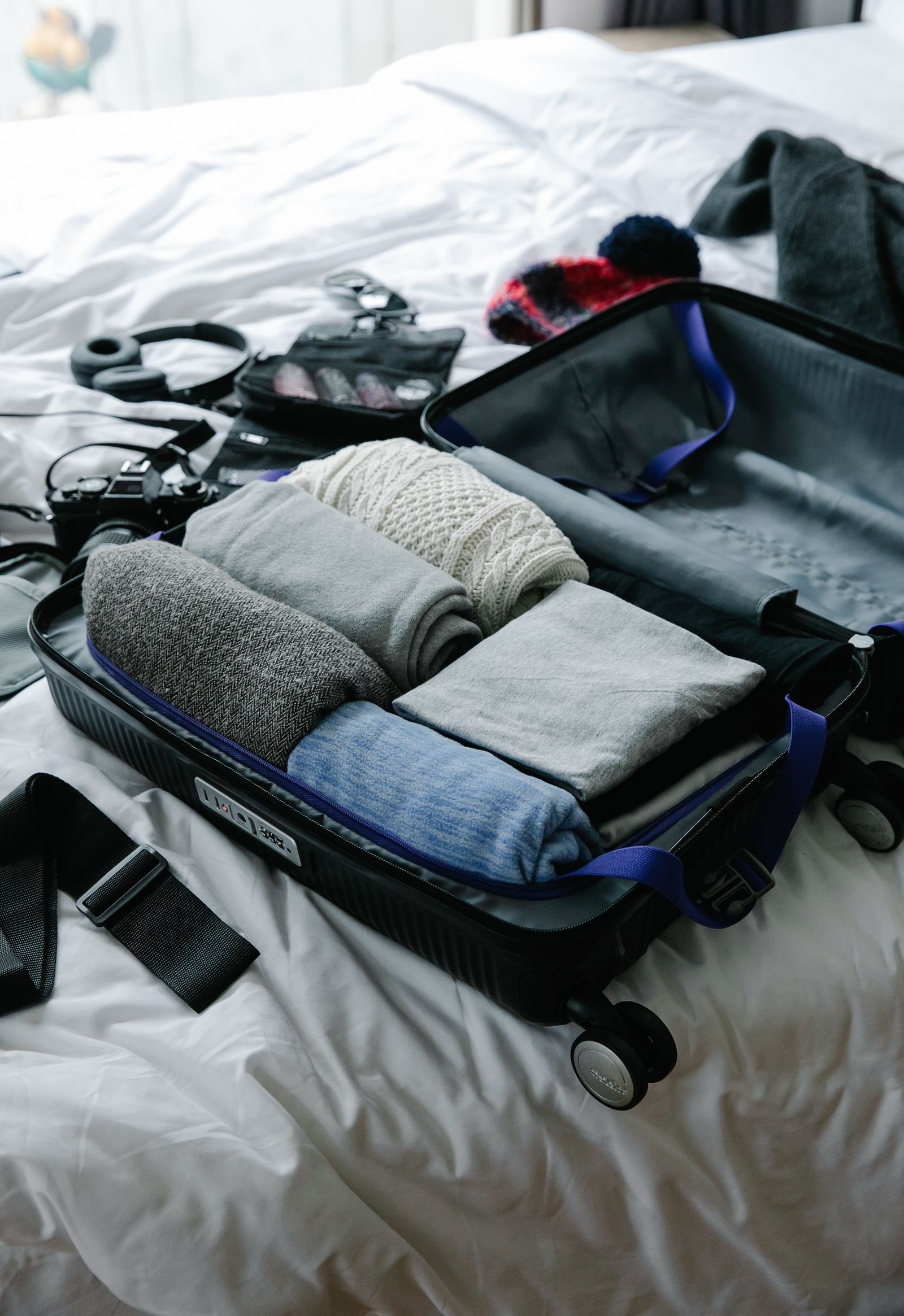
The bag matters more than most of the things in it, because on a real safari the bag is the constraint. If your trip includes a light-aircraft hop between camps — common in Tanzania, Kenya and Botswana — the total allowance is typically 15–20 kg including hand luggage, and the bag must be soft. A hard-shell suitcase will not fit in a small bush plane, and the airline will refuse it at the airstrip.
The one airline that publishes its numbers plainly is Coastal Aviation in Tanzania: 15 kg, in a soft duffel up to 40×40×80 cm. A soft duffel of about 60–80 litres is the standard size for a week — weigh it before you leave.
Clothes: the colours that work, and the ones that don’t
Colour on safari is not a fashion choice. It is practical, and two rules have real reasons behind them.
Wear: neutral, earthy colours — khaki, olive, beige, grey. They blend in, they do not show dust, and animals notice you less. Long sleeves and long trousers earn their place twice: sun protection in the day, mosquito protection at dusk.
Avoid black and dark blue. Tsetse flies are attracted to dark colours, and in tsetse country that is not a minor annoyance. Avoid bright colours too — you stand out, and the animals move away.
Do not pack camouflage. Camouflage clothing is restricted in some African countries — reserved for the military in places — and wearing it can get you stopped or fined. Leave it at home; there is no safari where it helps you. Three or four sets is enough for a week: nobody at camp is judging your outfit.
Layers: cold at 5 a.m., hot by noon
The biggest packing mistake is dressing for midday and forgetting the edges. A game drive starts before dawn, when the open vehicle moves fast through cold air. By midday the same day can be properly hot, and the evening drive gets cold again after sunset.
The fix is layers, not bulk: a light base layer, a shirt, a fleece, and a light insulated jacket. Jacket on at 5 a.m., off by 10, back on at 5 p.m. That one jacket is the difference between a miserable first hour and a good one.
Optics and camera kit: binoculars per person
If there is one item worth spending on, it is binoculars. The most recommended spec is 8×42 or 10×42 — enough magnification to see a leopard in a tree, steady enough to hold without a tripod. And the rule that matters: one pair per person, not per couple. Wildlife does not wait while you pass the binoculars back and forth.
A camera is not a substitute. A phone is fine for landscapes and camp photos, but a leopard at 100 metres needs a zoom lens — bring the camera, the zoom, spare batteries and spare memory cards. There is no shop at the waterhole. Add a power bank and a universal adapter: camp power can be solar, limited to certain hours, and shared between guests.
Health kit and documents
Keep this small and boring. DEET insect repellent (the most-repeated item in every packing guide), sunscreen, lip balm, your personal medicines in your hand luggage — never in the checked bag — and a small first aid kit. If your destination needs antimalarials, that is a conversation with your doctor before you travel, not a pharmacy decision at the airport.
Documents go in the day pack, not the main bag: passport, visa or e-visa printouts, travel insurance details, and a yellow fever certificate where required. Keep paper copies as well as phone copies.
Your day pack vs your main bag
This is the split almost no packing guide makes clearly, and it is the one that saves you on the day itself. Your main bag stays at camp. Your day pack rides in the vehicle with you.
In the vehicle with you (day pack): binoculars, camera, sunscreen, lip balm, hat, sunglasses, a layer for the cold start, water, repellent, phone and power bank, documents, any medicine you might need during the day.
Stays at camp (main bag): spare clothes, evening wear, toiletries, chargers, the bulk of your medicines, anything you will not touch until you are back.
If it is not in the day pack, you do not have it on the drive. Pack the day pack the night before.

Swap box 1: desert safari version
An evening desert safari in Dubai is not a lodge safari — it is a few hours with a hotel pickup, and you carry a small day bag, not a duffel. Leave the duffel at the hotel. Wear loose, light cotton or linen, long trousers rather than shorts, and closed shoes — sandals fill with hot sand and heels sink. Add a warm layer for after sunset (desert evenings drop fast), a scarf — sun cover, dust mask during dune bashing and extra warmth later — and a zip bag to keep sand out of your phone and camera. Drop the binoculars, the insulated jacket and the big health kit. Bring sunscreen, water and wipes; the operator provides the rest at camp. Full desert-specific list: Desert Safari Packing List.
Swap box 2: Asian jungle safari version
A jungle safari — Chitwan in Nepal, the Kinabatangan river in Borneo — is wet, muddy and leechy where an African savanna is dry and dusty. Add a light rain shell (afternoon showers are normal), leech socks for jungle walks, and quick-dry clothes rather than cotton — cotton stays wet all day. Wear closed, grippy walking shoes you do not mind getting muddy; sandals are for the lodge only. Keep the repellent, sunscreen, hat and binoculars — the jungle rewards them just as much — and use a dry bag or zip bags for camera gear; they matter more here than anywhere else. Drop the heavy insulated jacket — jungle mornings are warm — though a fleece is still useful on a river cruise at dawn.
Swap box 3: gorilla trek version
Gorilla trekking in Uganda or Rwanda is a hike through steep, wet forest, and the packing list bends towards the trail. Add garden gloves (you will be grabbing vegetation on steep slopes), gaiters to keep mud and insects out of your boots, and sturdy waterproof hiking boots. Your bag is a small day pack you can carry for hours, with water, rain shell, camera and documents. Porters are available at the trailhead and are worth hiring — they carry your bag and steady you on the slopes. The big duffel stays at the lodge, the safari jacket stays too, and you dress in layers you can peel off as the climb warms you up.
Pack light, pack neutral, and pack the day pack the night before. The animals do not care what you are wearing — but you will care, at 5 a.m. in an open vehicle, whether you brought the jacket.
How much luggage can I take on a safari flight?
Typically 15–20 kg in total, including hand luggage, and the bag must be soft-sided — a hard suitcase will not fit in a small bush plane. Coastal Aviation in Tanzania publishes a 15 kg limit in a soft duffel up to 40×40×80 cm.
What colours should I wear on a safari — and what should I avoid?
Wear neutral, earthy colours: khaki, olive, beige and grey. Avoid black and dark blue — tsetse flies are drawn to dark colours — and bright colours. Never wear camouflage: it is restricted in some African countries.
Do I really need binoculars, or is a camera enough?
You need binoculars. Binoculars are for actually seeing the animal — a leopard in a tree at 100 metres is a dot without them. The recommended spec is 8×42 or 10×42, one pair per person: wildlife does not wait while you share.
What should stay in my day pack during a game drive?
Binoculars, camera, sunscreen, lip balm, hat, sunglasses, a layer for the cold start, water, insect repellent, phone and power bank, documents, and any medicine you might need during the day.
Is camouflage clothing allowed on safari?
Not everywhere — it is restricted in some African countries, where it is reserved for the military. Leave it at home entirely.
What should I not pack for a safari?
Camouflage clothing, heavy boots (unless you are trekking), formal wear, a hairdryer, and anything valuable you would worry about in dust, rain and bumpy roads. Three or four sets of clothes is enough for a week.
Packed right, a safari is comfortable from the 5 a.m. drive to the last evening around the fire — and the bag never gets in the way of the animals. Once the bag is sorted, the next step is the plan itself: how to choose the season, the parks and the budget. For every kind of safari, browse our Safari Planning hub. And if your first safari is the Dubai desert, start with our complete guide: Desert Safari Dubai: The Complete Guide.

2 Comments