Desert Safari Abu Dhabi: The Complete Guide to Tours, Prices & What You Really Get

Abu Dhabi has some of the best desert in the UAE — big, quiet dunes that start less than an hour from the city. But if you search for a desert safari in Abu Dhabi, every page at the top of Google is trying to sell you one operator’s tour. There is no honest guide that compares the tour types, explains where you actually go, or tells you what the headline price leaves out.
This guide is that guide. It covers the standard evening safari, the morning, sunrise and overnight versions, what each one costs, and the small print nobody mentions — so you can book the right trip, not just the first listing.
Desert Safari Abu Dhabi: Quick Facts Before You Book
- Where you go: the Al Khatim Desert, about 45 minutes from central Abu Dhabi. It is the standard safari area for almost every operator.
- How long: the classic evening safari lasts about 6 hours, door to door. Morning safaris run roughly 8:00 AM to 12:00 PM; sunrise safaris pick up around 4:30–5:00 AM; overnight safaris pick up around 3:00 PM and return about 9:00 AM the next morning.
- What it costs: shared evening safaris with BBQ dinner typically run AED 150–250 per person across operators. Private vehicles cost more — roughly AED 400–700 — and premium VIP trips AED 800–1,200. These are ranges across operators at the time of writing (November 2026), not quotes.
- What is included: hotel pickup and drop-off in a 4×4, dune bashing, a sunset photo stop, sandboarding, a short camel ride, a Bedouin-style camp with Arabic coffee, tea and dates, a BBQ buffet dinner and live shows (evening trips).
- What costs extra: quad bikes (about AED 100 for 10 minutes), longer camel rides, dune buggies and VIP seating.
- Best season: October to April, when evening temperatures sit around 20–28°C.
Where the Safari Actually Goes: Al Khatim, Al Khazna and Liwa Explained
Most listings just say “the desert”. In practice, Abu Dhabi safaris run in three areas, and which one you get changes the drive, the dunes and the price.
Al Khatim is where almost every standard safari goes. It is about 45 minutes from the city, it is the closest accessible entry point to the Empty Quarter — the largest continuous sand desert on earth — and one guide describes its dunes as reaching over 100 metres (an operator claim, not a measured fact). This is the desert on the listings: golden dunes, a camp, and a 45-minute drive each way.
Al Khazna sits about 60 minutes out, with bigger dunes than Al Khatim. A few operators run here, usually at a slightly higher price.
Liwa, in the Al Dhafra region, is the real Empty Quarter edge — 90 to 120 minutes from the city, with the tallest dunes in the country. It is a premium product, not a standard one. If a listing promises Liwa at a standard evening-safari price, read it twice: a normal 6-hour safari does not go to Liwa.
So when you compare prices, compare the desert too. A cheaper trip is often a shorter drive to a smaller dune field — and a Liwa trip is worth paying more for only if the big dunes are the point of your day.
Morning, Evening, Sunrise or Overnight: Which Safari Fits Your Trip?
There are four versions of the same idea, and they suit very different travellers.
Evening safari — the classic. Pickup around 2:30–3:00 PM, back around 9:00 PM. Dune bashing, sunset photos, camp, BBQ dinner and shows. This is the one to book if you only do one safari: it is the full experience, and it is the cheapest way to get the camp and dinner included. Shared evening trips typically run AED 150–250 per person.
Morning safari — the quiet half-day. Pickup around 8:00 AM, back by noon. Dune bashing, sandboarding and a short camel ride, no camp, no dinner, no shows. It suits families with small children, summer visitors who want the coolest hours, and anyone with a flight or a city tour in the evening. Expect roughly AED 150–300 per person.
Sunrise safari — the early one. Pickup around 4:30–5:00 AM, back by about 9:00 AM. You watch the sun come up from a high dune, then do the dune bashing, sandboarding and camel ride in cool, empty desert. It is the photographer’s pick and the quietest safari of all — but it means a 4 AM alarm. Typical range AED 200–350 per person.
Overnight safari — the full stay. Pickup around 3:00 PM, camp overnight in a tent, breakfast and sunrise the next morning, back around 9:00 AM. It is the only way to see the desert stars properly. Typical range AED 350–700 per person for a shared tent setup; private setups cost more.
One warning that applies to all four: during Ramadan and on Islamic holidays and public holidays, live entertainment and alcohol are not available at camps. The safari still runs — the dunes, the camel ride and the dinner are all there — but the shows are not.
What a Typical Evening Desert Safari Includes, Hour by Hour
Timings move a little by operator and season, but the shape is steady:
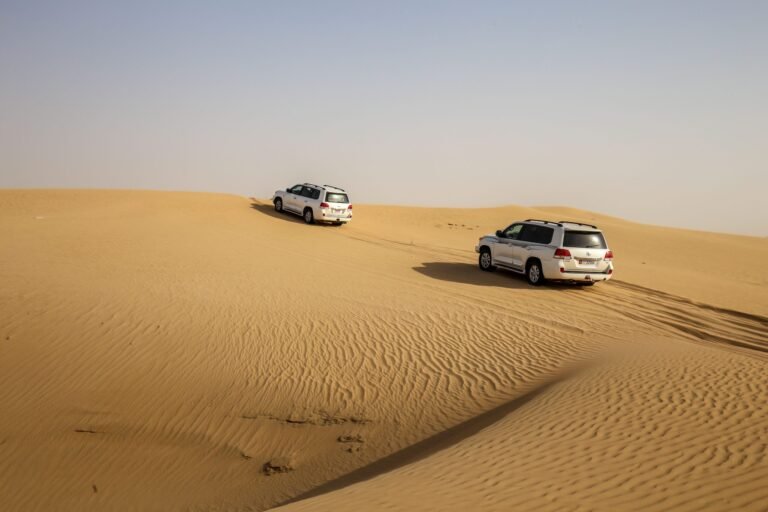
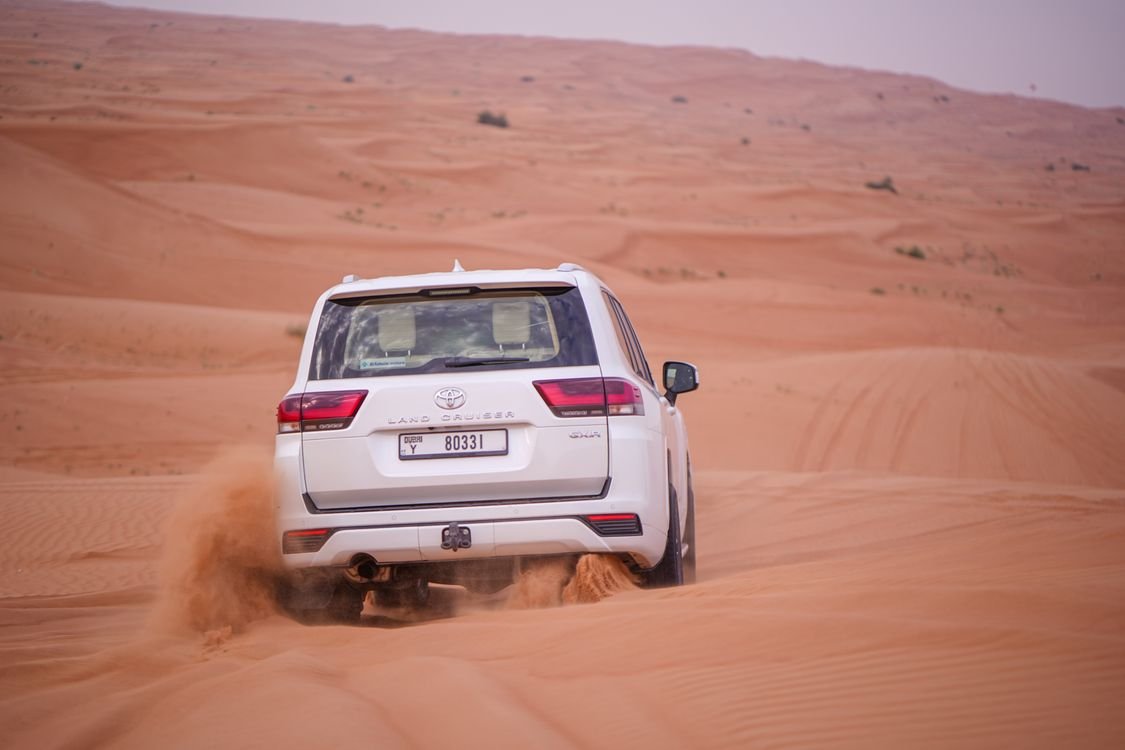
- Pickup (about 2:30–3:00 PM): your driver collects you from your hotel in a 4×4 Land Cruiser. Shared cars may stop for other guests first. One listing is explicit that airport pickup is NOT possible — its meeting points are the Premier Inn International Airport hotel, Al Raha Mall, Yas Mall and Yas Island hotels — so if you are arriving by plane, check the pickup rules before you book, not after.
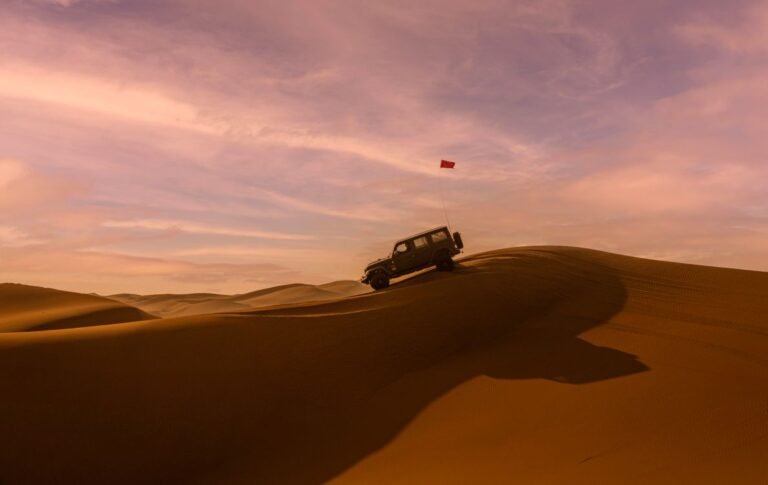
- Drive out (about 45 minutes): highway, then the dunes of Al Khatim. Short stop to let air out of the tyres.
- Dune bashing (30–40 minutes): the headline ride — driving up, over and down the dunes. One operator’s combo listing breaks it down precisely: 35 minutes of dune bashing, 25 minutes of sandboarding, 10 minutes of camel riding.
- Sunset photo stop: the convoy stops on a high dune as the sun drops. This is the photo everyone comes home with.
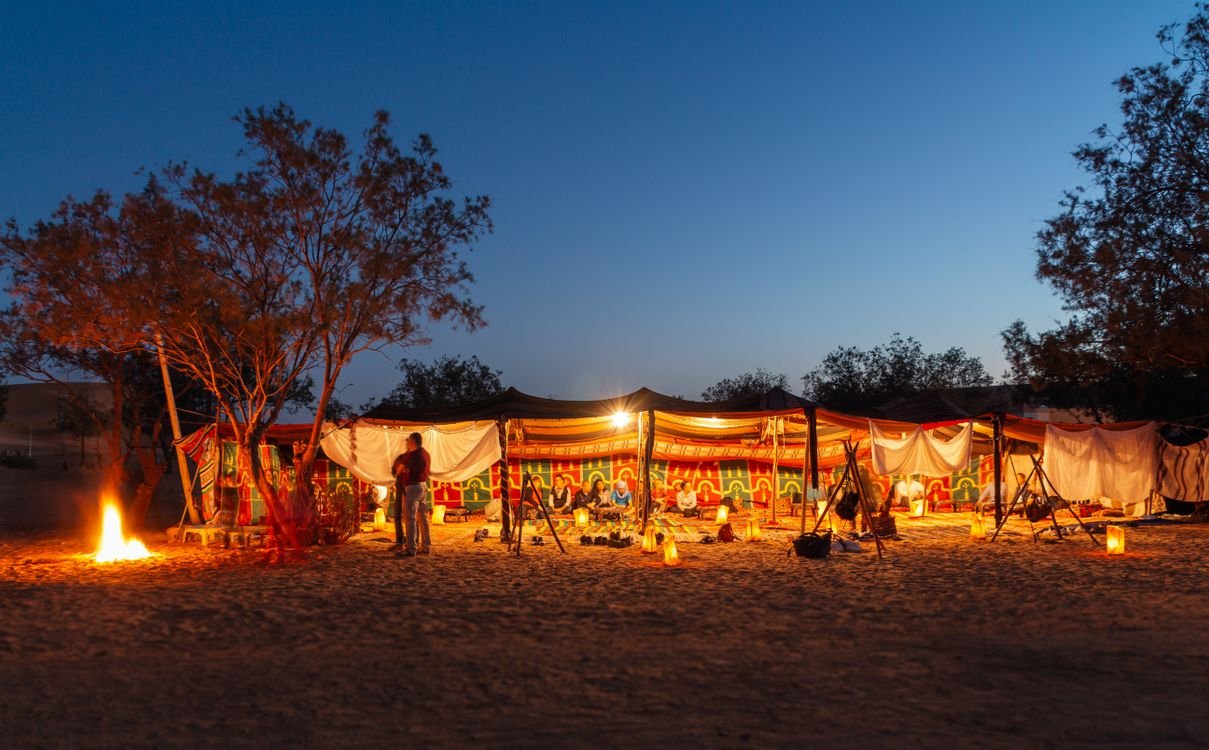
- Camp (about 6:00–9:00 PM): Arabic coffee, tea and dates on arrival, then the BBQ buffet dinner, henna painting, traditional dress for photos, a falcon photo opportunity and shisha. Live shows follow: Tanoura dance, belly dance and a fire show.
How Much Does a Desert Safari in Abu Dhabi Cost?
There is no single “official” price — listings disagree, and platforms display prices in the visitor’s currency. What follows is what operators and guides actually published at the time of writing (November 2026), as ranges.
Shared evening safari with BBQ dinner: about AED 150–250 per person. Platform listings show the same product from $59 and $85 per person (USD as displayed), and one Tripadvisor listing from €71.81 per adult — we do not convert those into AED, because the conversion rate on the day you book is not the rate on the day we checked.
Morning safari (no dinner): about AED 150–300 per person.
Sunrise safari: about AED 200–350 per person.
Overnight camping: about AED 350–700 per person.
Private vehicle: roughly AED 400–700 for an evening trip, and AED 800–1,200 for a premium VIP setup. Private means your own 4×4 for your group — worth it for families who want their own pace, or for anyone who does not want to share a car with strangers.
Children: rules genuinely differ. One guide says children under 3 are usually free; listings variously show age ranges of 0–99 and 0–80 for near-identical products. Check the age rules on your exact listing before you pay.
And the cheapest end of the market, which no top-5 page mentions: self-drive-to-camp packages start from AED 35 per person — you drive yourself to the Al Khatim camp and join the dinner and shows there, with no door pickup and no dune bashing in a 4×4. Shared-bus versions start from around AED 60. They are a different product from the standard 4×4 safari, and the price gap is the clue.
Abu Dhabi vs Dubai Desert Safari: Which Should You Choose?
This is the question almost no ranking page answers, and it matters — because many visitors stay in Dubai and wonder whether to do the safari from there instead.
The honest answer: the safaris are close cousins. Both run a 6-hour evening format, both include dune bashing, a camp, BBQ dinner and shows, and pricing is comparable. The difference is the desert itself. One guide puts it plainly: Al Khatim offers larger, less-crowded dunes and fewer tourist camps than Dubai’s Lahbab.
So the rule of thumb is simple. Staying in Abu Dhabi? Do the safari from Abu Dhabi — the dunes are bigger, the camps are quieter, and you save the transfer. Staying in Dubai? A Dubai safari is the easier choice, and the Lahbab red dunes are spectacular in their own right — see our complete guide: Desert Safari Dubai: The Complete Guide. Only cross over if the quieter Abu Dhabi desert is specifically what you want, and check the pickup rules first: some Abu Dhabi operators do not collect from Dubai hotels at all.
What Really Happens at the Desert Camp
The camp is half the evening, and it is worth knowing what it actually is: a Bedouin-style setup in the dunes, with low seating, carpets, a buffet line and a small stage.
Dinner is a BBQ buffet with vegetarian options, plus Arabic coffee, tea, dates and soft drinks. The shows run in sequence — Tanoura dance, belly dance, fire show — with henna painting, traditional dress for photos and a falcon photo opportunity between them. Shisha is usually available in a corner of the camp.
One thing to note: sources disagree about alcohol at desert camps. One guide states alcoholic drinks are not served at desert camps because they sit on public desert land outside licensed hotel premises; another guide claims licensed camps do serve beer and wine. We cannot settle that from the sources available — if it matters to you, ask your operator before booking.
The Small Print Nobody Mentions: Short Camel Rides, Quad Bike Fees and Ramadan Changes
The camel ride is short. Listings say “camel ride” with no duration. The one listing that breaks it down gives it 10 minutes — a short loop around the camp, not a trek. A longer camel ride costs extra, and the price is rarely printed in advance.
Quad bikes are always extra. The standard figure is about AED 100 for 10 minutes. They are not included in any standard evening price we found, and the same applies to dune buggies.
Pickup geography changes your day. Hotel pickup sounds universal, but it is not: city-centre hotels, Yas Island, Saadiyat and the cruise terminal can mean different pickup times, and airport pickup is not offered by every operator. Confirm your exact pickup point and time in writing when you book.
Ramadan changes the show. During Ramadan and on Islamic holidays and public holidays, live entertainment is not available at camps. The dunes, the ride and the dinner still happen — but if the shows are the reason you booked, pick another date.
Who Should Skip Dune Bashing — and the No-Bashing Option
Dune bashing is a proper roller-coaster in a 4×4, and it is not for everyone. Operators consistently say it is not suitable if you are pregnant or have back or neck problems. Children under 3 are not permitted in dune-bashing vehicles, according to one guide — and the age limits on listings conflict, so check yours.
The good news: you do not have to skip the safari. Most operators offer a no-bashing version of the same trip — same desert, same sunset, same camp and dinner, with a gentler drive to the camp instead. Ask for it when you book; it is rarely advertised on the listing page. Prone to motion sickness? Sit in the front seat, tell your driver, and eat light before pickup.
Best Time of Year, What to Wear and How to Book
Best season: October to April is peak season, with evening temperatures around 20–28°C. Summer is hotter and cheaper, but the evening safari still works — the desert cools fast after sunset, and the camp programme runs the same.
What to wear: light, loose clothes and closed shoes or strapped sandals — sand gets everywhere, and you climb a dune to sandboard. Sunglasses and a scarf help against wind-blown sand. In winter, bring a light jacket: desert evenings after sunset are genuinely cool. Full list: What to Wear for a Desert Safari in Dubai. For a general packing list, see our guide: What to Pack for a Safari.
How to book: book a day or two ahead in peak season — evening slots sell out. Shared is the best value; private is worth it for families or anyone who wants their own pace. Check three things before you pay: the exact pickup point and time, whether the camel ride and quad bike are included or extra, and the cancellation terms. And remember the price rule: the cheapest listing is usually a different product — a shorter drive, a smaller dune field, or no 4×4 pickup at all.
Booked with open eyes — knowing where the desert really is, what the camel ride actually lasts, and what costs extra — the Abu Dhabi safari is one of the best evenings in the Emirates: big quiet dunes, a proper sunset, and a camp that still feels like the desert. For every other kind of safari, browse our Desert Safaris hub.
What is included in an Abu Dhabi desert safari?
A standard evening safari includes hotel pickup and drop-off in a 4×4, about 30–40 minutes of dune bashing, a sunset photo stop, sandboarding, a short camel ride, a Bedouin-style camp with Arabic coffee, tea and dates, a BBQ buffet dinner and live shows (Tanoura, belly dance, fire show). Quad bikes, dune buggies and longer camel rides cost extra.
How much does an Abu Dhabi desert safari cost?
A shared evening safari with BBQ dinner typically costs AED 150–250 per person, across operators at the time of writing (November 2026). Morning safaris run about AED 150–300, sunrise safaris about AED 200–350, overnight camping about AED 350–700, and private vehicles roughly AED 400–700 (premium VIP AED 800–1,200). Self-drive-to-camp packages start from AED 35 but include no 4×4 pickup or dune bashing.
How is an Abu Dhabi safari different from a Dubai safari?
The format is almost the same — 6-hour evening trip, dune bashing, camp, BBQ dinner and shows — and pricing is comparable. The difference is the desert: Abu Dhabi’s Al Khatim has larger, less-crowded dunes and fewer tourist camps than Dubai’s Lahbab. Staying in Abu Dhabi, book from Abu Dhabi; staying in Dubai, a Dubai safari is the easier choice.
What time does the Abu Dhabi desert safari start and finish?
Evening safaris pick up around 2:30–3:00 PM and return around 9:00 PM. Morning safaris run about 8:00 AM to 12:00 PM. Sunrise safaris pick up around 4:30–5:00 AM and return by about 9:00 AM. Overnight safaris pick up around 3:00 PM and return about 9:00 AM the next morning.
Is dune bashing safe — and who should not do it?
Dune bashing is a bumpy, fast ride in a 4×4 with a trained driver. It is not recommended if you are pregnant or have back, neck or heart problems, and children under 3 are not permitted in dune-bashing vehicles. Most operators offer a no-bashing version of the same trip — same desert, sunset and camp, with a gentler drive.
Can I book a private desert safari in Abu Dhabi, and what does it cost?
Yes. A private evening safari — your own 4×4 for your group — typically costs roughly AED 400–700, and premium VIP setups AED 800–1,200. Private is worth it for families who want their own pace, or anyone who does not want to share a car with strangers.