Morocco Sahara Desert Tour: Merzouga Camel Trek Guide

The Sahara in Morocco is not one desert. It is a choice between two dune seas, two ways of getting there, and two very different nights — and most guides will sell you the easiest version of all three without telling you what you gave up.
This guide is about Merzouga and Erg Chebbi, the dune sea most first-timers end up in, because it is the one you can actually reach. If you want the Sahara, this is the honest version of how to do it.
Quick answer
One night in Erg Chebbi is enough for most people. A camel trek at sunset, dinner and drumming at camp, a sunrise ride back — that is the whole product, and it works. Budget roughly US$40–60 per person for a basic camp night, US$80–120 for a mid-range camp with an en-suite bathroom, and US$150–300 for luxury (Sahara Excursions, operator guide). Go between October and April. And know this before you book: the 3-day tour from Marrakech spends most of two of your three days in a vehicle.
Erg Chebbi or Erg Chigaga?
This is the first decision, and it is the one that shapes everything else.
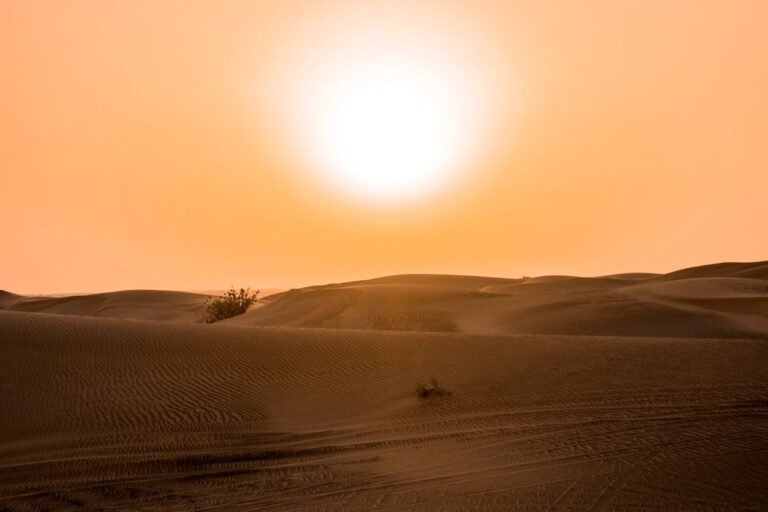
Erg Chebbi, at Merzouga, is a dune sea about 25 km long with dunes 100–150 m high (next-stop-anywhere.com; saharaexcursions.com). Tarmac runs right to the edge of the village, so you can arrive by road, meet your camels, and be in the dunes within the hour. Most camps are here, which means more choice, more competition, and lower prices — and also more camps, more people, and more noise.
Erg Chigaga, beyond M’Hamid, is the remoter option. There is no tarmac to the dunes, no village at the edge, and far fewer camps. You trade convenience for emptiness: longer to get to, quieter when you arrive, and usually pricier because the logistics are harder.
The verdict, stated plainly: first-timers should pick Erg Chebbi. It is easier, cheaper, and the dunes are just as tall. Chigaga is the better choice only if you have already done Chebbi, or if what you want most is to be alone in the sand — and you are willing to pay for the extra day and the extra drive to get it.
How the classic night works
The product is the same across almost every operator, and it runs on a simple timeline.
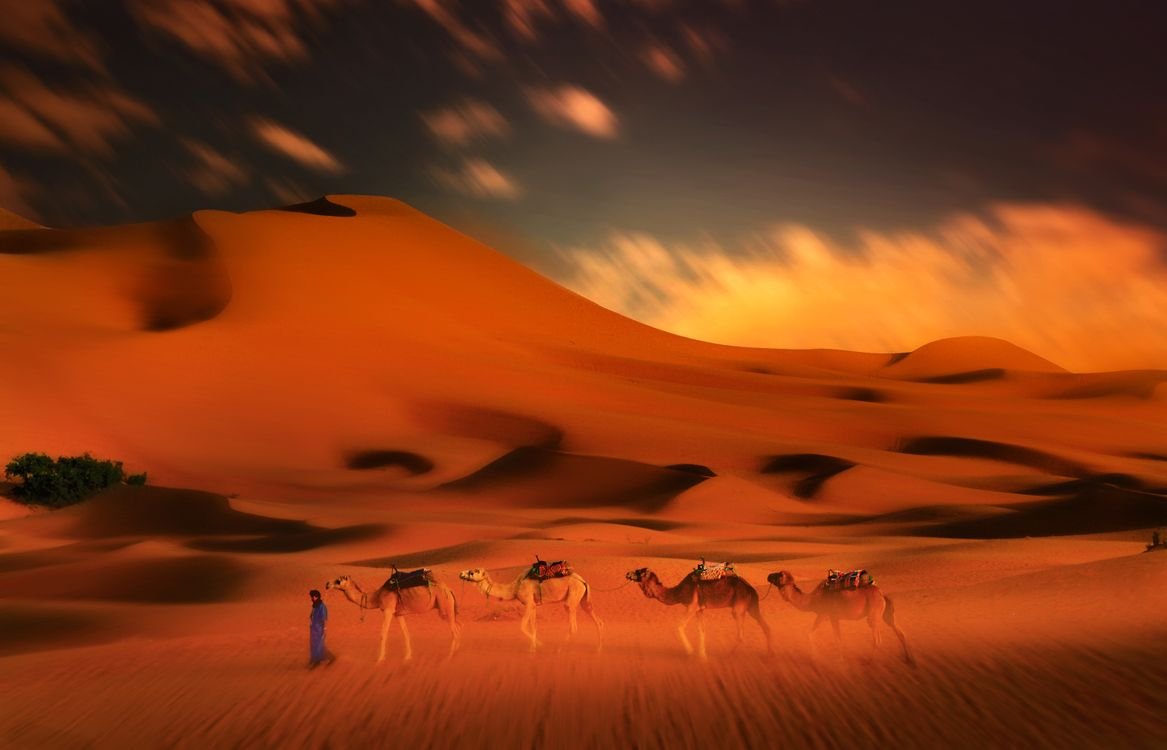
You arrive at Merzouga in the late afternoon. Camels are waiting at the edge of the dunes — or, at some camps, at the camp itself. The sunset ride takes 45 to 90 minutes, depending on how deep into the dunes your camp sits. That distance matters more than it sounds: a camp 20 minutes in is a different night from a camp 90 minutes in, and the price difference between them is often small.
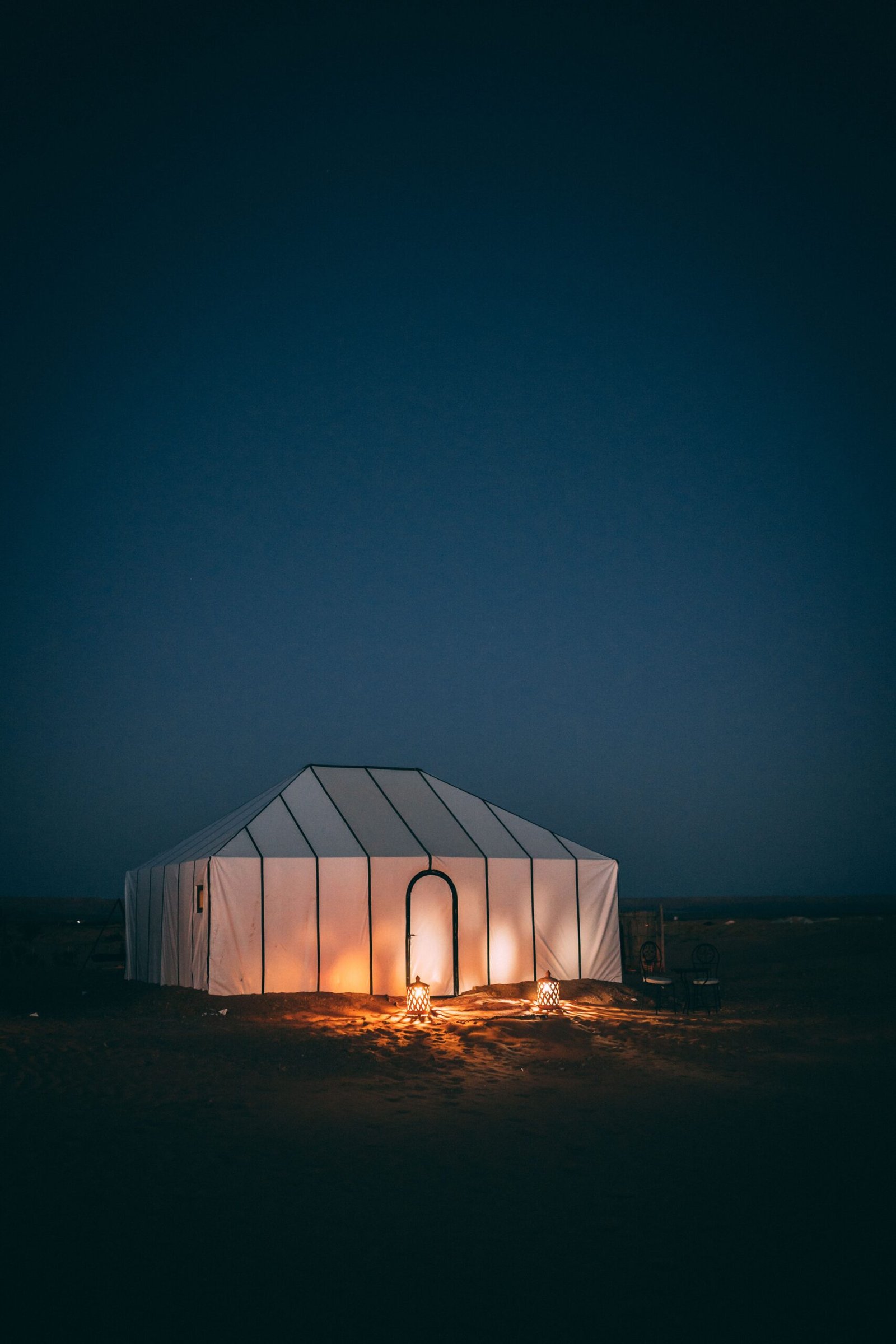
At camp, dinner is served — usually a tagine, bread, and tea — and then the drumming starts. Berber drumming around a fire is the standard evening entertainment, and it is genuinely good fun. Then you sleep in a tent, under a sky that, on a clear night, is the best part of the whole trip.
You wake before sunrise, ride back out as the light comes up over the dunes, and you are back in Merzouga by mid-morning. That is the whole night. It is short, and that is the point — one night is enough, because the Sahara at dawn is the memory, and the second night is mostly the same dunes again.
What it costs — one honest table
Prices for the same 1-night camel trek product disagree by a factor of two across operators, and they are quoted in dollars, euros, per person and per tent. Here is the normalised picture, per person, from the sources we checked in November 2026 — ranges, not quotes.
| Tier | What you get | Price per person, 1 night |
|---|---|---|
| Basic / standard camp | Shared bathroom, sunset camel ride, dinner, breakfast, sunrise ride | US$40–60 (Sahara Excursions); €30–70 (Next Stop Anywhere); €40 (Morocco Sahara Excursions) |
| Mid-range / superior camp | En-suite bathroom, same programme | US$80–120 (Sahara Excursions); €70 (Morocco Sahara Excursions) |
| Luxury camp | En-suite, larger tent, better food, deeper in the dunes | US$150–300/night (Sahara Excursions); €150–400+ per tent (Next Stop Anywhere) |
| 2-night trek | Two nights, more time in the dunes | From €80 standard / €200 luxury (Lovely Morocco Tours); about €200–450 total for two people (Next Stop Anywhere) |
A Viator-listed 1-night product sits at US$63.97 per person (via theabroadguide.com) — right in the middle of the standard band, which is a useful cross-check that the table is honest.
The bathroom test is the real dividing line between tiers. A standard camp means a shared bathroom block; a mid-range or superior camp means an en-suite toilet and shower in your tent. If you care about that at 3 AM in the desert, pay for the tier that has it — the price gap is small and the comfort gap is not.
One honest downside: the cheapest camps are also the ones most likely to sit at the very edge of the dunes, by the road, where you can hear traffic and see the village lights. Ask where the camp actually is before you pay — “how many minutes by camel from the village?” is the question that sorts honest camps from dune-edge ones.
The 3-day Marrakech tour, honestly
Most people do not book a camp night on its own. They book a 3-day tour from Marrakech (or Fes) that includes the Merzouga night in the middle. It is the most popular way to do the Sahara, and it is also the most mis-sold.
Here is the reality the seller pages dodge: the drive from Marrakech to Merzouga is a full day each way, over the Atlas Mountains and through the Draa Valley. One estimate puts driving at roughly 30 hours across the three days. That means most of two of your three days is spent in a vehicle, and the “desert night” — the thing you came for — is one evening in the middle of it.
That is not a reason to skip the tour. The drive itself is beautiful — the Atlas passes, Ait Ben Haddou, the Draa Valley palm groves — and for many people it is half the trip. But go in with your eyes open: you are buying a road trip with a desert night in it, not three days in the desert. If what you actually want is the desert, fly into Errachidia (about 2 hours from Merzouga) and book the camp night directly. You will save two days of driving and spend them somewhere you chose.
Choosing a camp — two tests
Two questions settle which camp to book.
The bathroom test. Shared or en-suite? Decide before you look at prices, because it splits the whole market into two halves and stops you comparing a €40 camp with a €150 camp as if they were the same product.
The location test. How many minutes by camel from the village, and can you see the road from camp? A camp deep in the dunes is quieter, darker, and better for stars. A camp at the edge is cheaper and easier — and noisier. Neither is wrong, but you should know which one you bought.
Two more things worth knowing. Khamlia, a village near Merzouga, is home to Gnawa musicians — a side visit there is one of the few cultural stops most guides never mention, and it is worth an hour if your schedule allows. And sandboarding is offered at most camps, but the quality depends on the dune: the tall, steep slip faces near the big dunes are the fun ones; the flat sand by a roadside camp is not.
Camel welfare — the part nobody writes about
Camel welfare guidance exists on barely one of the top-ranking pages (merzougaway.com), which is a poor showing for a trip built entirely around riding an animal. The basics are simple and worth checking before you mount up: the saddle should sit level and padded, not sliding to one side; the camel should stand and walk without limping; and the ride should be at a walk, not rushed. If something looks wrong, say so — and pick an operator that answers the question properly when you ask it before booking. A good operator will not be annoyed by the question. A bad one will change the subject.
Best time and what to pack
The best season is October to April. Summer in the Sahara is brutally hot, and the camps that run then are running for people who did not check. Within the good season, the sweet spot is the shoulder months — October, November, March, April — when the days are warm, the nights are cool rather than freezing, and the camps are not full.
Pack for the coldest hour, not the hottest. The desert at dawn is cold, and the sunrise ride is the coldest part of the whole trip — a warm layer, a scarf, and closed shoes matter more than anything you wear at midday. Bring a headlamp for the camp at night, sunscreen for the day, and a power bank: there is not much charging in a tent in the dunes.
For the full list, read our What to Pack for a Safari guide.
The skipped alternative
Most guides frame the choice as Chebbi vs Chigaga and stop there. The alternative they skip is the simplest one: stay two nights. A second night in the dunes — a full day with nowhere to drive to, a slow afternoon, sandboarding, a walk to the top of the big dune at sunset — is the version of this trip that actually feels like the Sahara instead of a whistle-stop. It costs roughly double the one-night price and it is, for most people, the better trip. The 2-night products from Lovely Morocco Tours start at €80 per person standard and €200 luxury, and Next Stop Anywhere puts two nights for two people at roughly €200–450 in total. If you have the time, take the second night. The desert rewards slowness more than any other safari we cover.
How much does a Merzouga camel trek cost?
A 1-night camel trek with camp, dinner and breakfast runs roughly US$40–60 per person at a basic camp, US$80–120 mid-range with an en-suite bathroom, and US$150–300 luxury (Sahara Excursions, operator guide, November 2026). A Viator-listed 1-night product is US$63.97 per person. Two-night treks start from €80 per person standard and €200 luxury (Lovely Morocco Tours).
Erg Chebbi or Erg Chigaga?
First-timers should pick Erg Chebbi at Merzouga: tarmac to the village edge, dunes 100–150 m high, more camps and lower prices. Erg Chigaga, beyond M’Hamid, is remoter, quieter and pricier — the better choice only if you have done Chebbi already or want to be alone in the sand.
Is one night in the Sahara enough?
For most people, yes — the sunset ride, camp dinner, drumming and sunrise ride back are the whole experience, and one night delivers all of it. But a second night is the better trip if you have the time: a full day in the dunes, sandboarding and a slow sunset, with no driving at all.
How do I get to Merzouga?
Most visitors arrive on a 3-day overland tour from Marrakech or Fes, which spends most of two days driving. The faster route is to fly into Errachidia, about 2 hours from Merzouga, and book the camp night directly. Merzouga itself has no airport.
What is the best time to visit Merzouga?
October to April. The shoulder months — October, November, March and April — are the sweet spot: warm days, cool rather than freezing nights, and camps that are not full. Summer is brutally hot and best avoided.
Standard or luxury desert camp — what’s the difference?
The real dividing line is the bathroom: standard camps share a bathroom block, mid-range and luxury camps have an en-suite toilet and shower in your tent. Luxury camps are also usually deeper in the dunes, with larger tents and better food. Ask how many minutes by camel the camp sits from the village — that tells you more than the word “luxury” does.
A Morocco Sahara desert tour is the cheapest real desert night in this series — a camel trek, a camp dinner and a sunrise over dunes taller than a 40-storey building, for the price of a hotel night in Marrakech. Book the right tier, check where the camp actually sits, and go in knowing the drive is part of the deal. For the desert trips closer to home, start with our Desert Safari Dubai guide or the Abu Dhabi guide, and browse the Desert Safaris hub.