Kenya Safari Tours: How to Choose the Right One for You

A Kenya safari tour is usually the biggest single purchase of a holiday — often $5,000 to $10,000 for two people, paid months before you fly. And the hardest part is not picking the parks. It is picking the tour.
Kenya has hundreds of operators selling what looks like the same trip: Nairobi to the Maasai Mara, three to seven days, a 4×4, a guide, a tented camp. The prices range from $150 a day to $1,500 a day. The difference is not the animals — the same lions walk past every vehicle. The difference is who runs the trip, how many people share your vehicle, and what the price actually includes.
First, the check that matters most: the licence
Before you compare a single price, check the operator is licensed. In Kenya, every legitimate safari operator must hold a licence from the Tourism Regulatory Authority (TRA) under the Tourism Act — trading without one is illegal. Ask for the licence number and the registered company name, then confirm it with the TRA at tra.go.ke. A real operator answers in one email. Hesitation, a changed subject, or a photo of a certificate with the number blurred is an answer in itself.
Membership of the Kenya Association of Tour Operators (KATO) is the second check — around 300 members, all bound by a code of conduct, and membership requires a TRA licence plus a year of trading first. Search the member directory at katokenya.org.
Why this matters more in Kenya than in most destinations: the barrier to calling yourself a safari company is low, the deposits are large, and you book from 8,000 kilometres away. The Uganda Tourism Board suspended the licences of 18 tour companies while investigating fraud reports — the system works, but only if you check the register before you pay, because no operator’s website announces its own suspension.
Verdict: no TRA licence you can verify, no booking. It takes one email and about twenty minutes, and it removes almost all of the risk.
The four tour types, compared
| Tour type | Typical cost (per person, per day) | Best for | The catch |
|---|---|---|---|
| Group road tour | $150–$300 | First-timers on a budget, solo travellers | 6–8 people per vehicle, fixed itinerary, basic camps |
| Private road tour | $300–$600 | Families, couples who want their own vehicle | Price per person rises sharply with a small group |
| Fly-in safari | $600–$1,500 | Short trips, travellers who hate long drives | Internal flights add $370+ return per person |
| Private conservancy stay | $700–$2,000+ | Photographers, honeymooners, repeat visitors | Conservancy fee of roughly $80–$150 per person per day on top |
Group road tour — the cheapest way in
A group road tour is the classic Kenya safari: a shared 4×4 Land Cruiser or minibus, a fixed route, a budget tented camp outside the park gates, and six to eight strangers sharing the vehicle. A 3-day Maasai Mara trip runs from about $665 per person in a full vehicle, and a 5-day Mara and lakes trip from about $617 per person in low season (operator prices checked October–November 2026).
This is the right choice if your budget is tight or you are travelling alone and happy to share. The catch is the vehicle: you do not choose when to stop, you do not get a guaranteed window seat, and a full vehicle means the guide follows the crowd rather than the light.
Verdict: travelling solo or on a strict budget? Book the group road tour — and check the maximum group size in writing before you pay.
Private road tour — the best value for most people
A private road tour is the same route with the vehicle to yourselves: your own 4×4, your own driver-guide, and the freedom to stay at a sighting as long as you like. Mid-range private tours run roughly $300–$600 per person per day, and a 7-day private mid-range Kenya safari for two people, flights included, realistically totals around $7,800 to $13,000 (Sola Safari Travels, November 2026).
Here is the maths most quotes hide: the vehicle costs the same whether two people or six sit in it. A 5-day Amboseli, Nakuru and Mara tour costs about $1,817 per person with eight in the vehicle and $2,399 for two (AJ Kenya Safaris, 2026 prices). A group of four friends pays far less per person than a couple — so if you can, travel as four or six.
Verdict: two or more travelling together and you can afford it? The private road tour is the best value in Kenya. It is the tour type we recommend to most first-timers.
Fly-in safari — for short trips and bad roads
Fly-in safaris replace the long Nairobi-to-Mara drive — roughly five to six hours on rough roads — with a one-hour bush flight from Wilson Airport. A 5-day fly-in safari runs from about $2,278 per person, and a 6-day luxury flying package from about $2,520 (Cherish Africa Safaris, October 2026). A Wilson–Mara return flight alone costs from about $370 per person, plus a fuel surcharge.
Fly-in is the right call if you have only three or four days, if you are combining two far-apart parks, or if anyone in your party dreads long drives. It is the wrong call if you are on a budget — the flight can cost more than a night at camp.
Verdict: short on days, not on money? Fly. Otherwise drive — the road is part of the safari.
Private conservancy — the upgrade most guides skip
Almost every Kenya guide points you at the Maasai Mara National Reserve. The alternative they skip is the private conservancies next door — Naboisho, Mara North, Olare Motorogi. There you get your own vehicle, off-road driving, night drives and walking safaris, and a fraction of the vehicles at a sighting. The price is a separate conservation fee of roughly $80–$150 per person per day instead of the reserve fee, and luxury conservancy camps run $700–$1,500+ per person per night.
Verdict: this is your second safari, or you are a photographer or honeymooner? The conservancy is the better trip, and worth the higher fee.
What a Kenya safari actually costs
The single biggest fixed cost is the Maasai Mara reserve fee, set by the Narok County Government. For 2026, non-resident adults pay $100 per day from 1 January to 30 June and $200 per day from 1 July to 31 December. Children aged 9 to 17 pay $50 a day; children 8 and under enter free. That doubling on 1 July is the reason the same tour costs hundreds more in August than in May — and the reason a cheap quote that omits park fees is not cheap at all.
Add the Mara bed-night levy of $40 per night, which some operators list separately and some bury. Then the tiers, land-only, per person per day, from current operator and editorial pricing checked November 2026:
- Budget / camping: $150–$300 — group tours, shared vehicles, basic camps.
- Mid-range: $300–$600 — comfortable tented camps, semi-private 4×4, quality local guides.
- Luxury: $600–$1,500 — private 4×4, premium camps, expert guiding, often a fly-in leg.
- Ultra-luxury: $1,500+ per day — exclusive camps, private flying, the marquee names.
A 7-day Kenya safari lands somewhere between roughly $2,600 per person at mid-range and $7,000 or more per person at luxury, excluding international flights. Always ask for the quote itemised — accommodation by name, park fees separated, vehicle type, meal basis, and everything excluded. “Similar category” lodges is the phrase where downgrades live: insist on named lodges, then email one lodge directly to confirm you are in their system. Lodges answer these emails.
How to pay safely
Pay a deposit of 20–30% by credit card or PayPal, so you keep chargeback rights. Never pay by Western Union, MoneyGram or any irreversible transfer, and never pay into a personal account or an account in a different country from the company. Full payment before the trip starts is normal in Kenya — operators prepay lodges and park fees — but full payment demanded at the enquiry stage, before an itinerary is confirmed, is a red flag.
Keep every email, invoice and receipt. Take travel insurance that covers supplier financial failure — a standard policy usually does not. And if a deposit vanishes, contact your card issuer or PayPal at once: chargeback windows are often 120 days from the transaction date.
The guide and the vehicle decide your trip
These two determine your experience more than anything else you pay for, and they are the easiest things for an operator to quietly downgrade. Ask for a named guide, not “an experienced driver-guide”, and ask how long they have worked with the company. In Kenya, ask whether they hold a Kenya Professional Safari Guides Association (KPSGA) certification — bronze, silver or gold, earned through rigorous exams. A good guide reads animal behaviour, positions the vehicle for light, and knows when to leave a crowded sighting. A cheap one follows other vehicles.
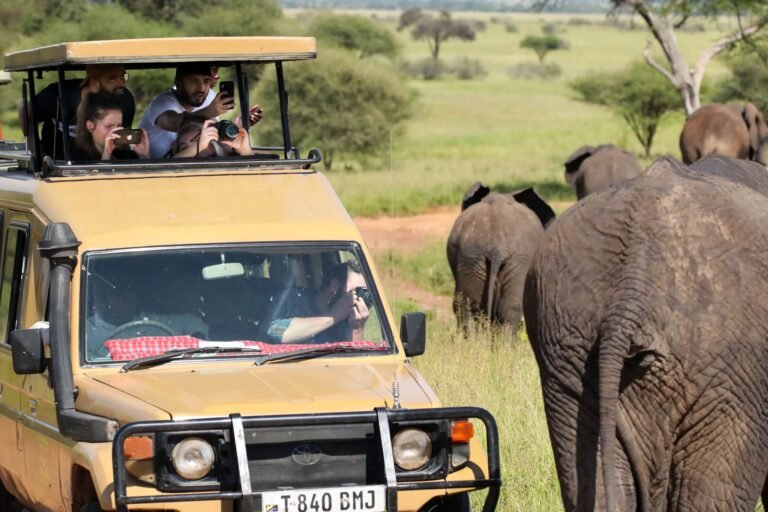
The vehicle should be a purpose-built 4×4 with a pop-up roof, charging points, a fridge or cool box, and a window seat for every passenger. Ask how old the fleet is and whether the vehicles are owned or hired in per trip — operators who hire vehicles have no control over condition, which is why so many complaints involve breakdowns. Ask what happens if a vehicle breaks down in the park, and get the answer in writing.
Red flags — walk away if you see these
- A price far below everyone else. Park fees are identical for every operator, so a quote 40% under the market is saving money on the vehicle, the guide, the lodges — or it is not a real quote.
- Pressure and urgency: “three seats left, pay today.” Real operators hold space while you decide.
- No physical address, or an address that is a shared office with several company names.
- Lodges named only as “similar category”.
- Refusal to provide references from travellers in the last six months.
- Payment to a personal account, or by irreversible transfer only.
- Someone who approaches you on the street or in a hotel lobby asking for a deposit. Never pay a deposit to someone who approached you.
The honest downside
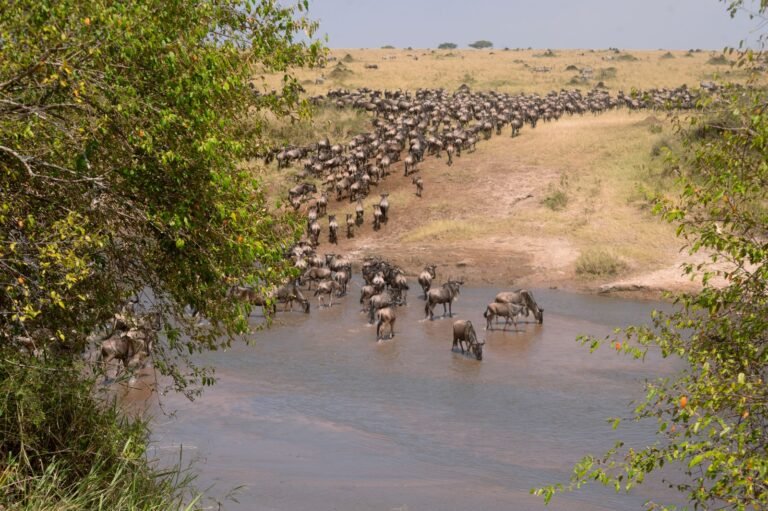
Three things. First, the price you see is never the price you pay until you add the Mara fee, the bed-night levy, tips, visas and flights — a $300-a-day headline can become $500 a day all-in. Second, the Mara in migration season is crowded — the reserve fee doubles in July for a reason, and the river crossings draw dozens of vehicles to one spot. Third, a private tour for two costs nearly double per person what it costs for six, so the best-value tour type can still be expensive for a couple.
How to choose — the short version
- First safari, tight budget, travelling solo: group road tour, 3–5 days, Maasai Mara.
- First safari, two or more travelling, mid-range budget: private road tour — the best value for most people.
- Short on days or combining distant parks: fly-in safari.
- Second safari, photographer, honeymooner: private conservancy stay.
- Any tour, any budget: verify the TRA licence, get two or three itemised quotes from licensed local operators, and pay the deposit by card.
Get those three steps right and the rest — the parks, the season, the camp — is the fun part.
FAQ
How much does a Kenya safari tour cost?
Budget group tours run roughly $150–$300 per person per day, mid-range private tours $300–$600, and luxury $600–$1,500 or more, land-only (checked November 2026). A 7-day mid-range safari is roughly $2,600 per person; luxury is $7,000 or more, excluding international flights.
How do I know if a Kenya safari operator is legitimate?
Ask for their Tourism Regulatory Authority (TRA) licence number and registered company name, then confirm it with the TRA at tra.go.ke. Also check KATO membership at katokenya.org. A real operator answers in one email.
How much deposit should I pay for a Kenya safari?
Typically 20–30%, paid by credit card or PayPal so you keep chargeback rights. Never pay by wire transfer to a personal account. Full payment before the trip is normal in Kenya, but only after a confirmed itinerary naming your lodges.
What is the Maasai Mara park fee in 2026?
Non-resident adults pay $100 per day from 1 January to 30 June and $200 per day from 1 July to 31 December. Children aged 9–17 pay $50 a day; children 8 and under enter free. Private conservancies charge a separate fee of roughly $80–$150 per person per day.
Is a private or group Kenya safari tour better?
A private tour is better for most travellers — your own vehicle, your own guide, and you choose when to stop. A group tour is better if you are solo or on a strict budget, but expect 6–8 people per vehicle and a fixed itinerary.
When is the best time to go on a Kenya safari?
July to October for the Great Migration river crossings, when the Mara fee is $200 a day. January to February is the short dry season — lower fees, thinner crowds, and good wildlife viewing. See our Best Time to Visit Kenya guide.
Closing
Choosing a Kenya safari tour comes down to three steps: verify the licence, compare two or three itemised quotes, and match the tour type to your trip — group road for a tight budget, private road for the best value, fly-in for short trips, and a private conservancy when the experience matters more than the price. For the parks themselves, read our Kenya Safari hub, our Masai Mara Safari guide, and Where Is the Masai Mara Located? — and for the wider picture, our Africa Safari Tours operator guide and Safari Lodges in Africa.