Wildebeest Migration: The Month-by-Month Calendar

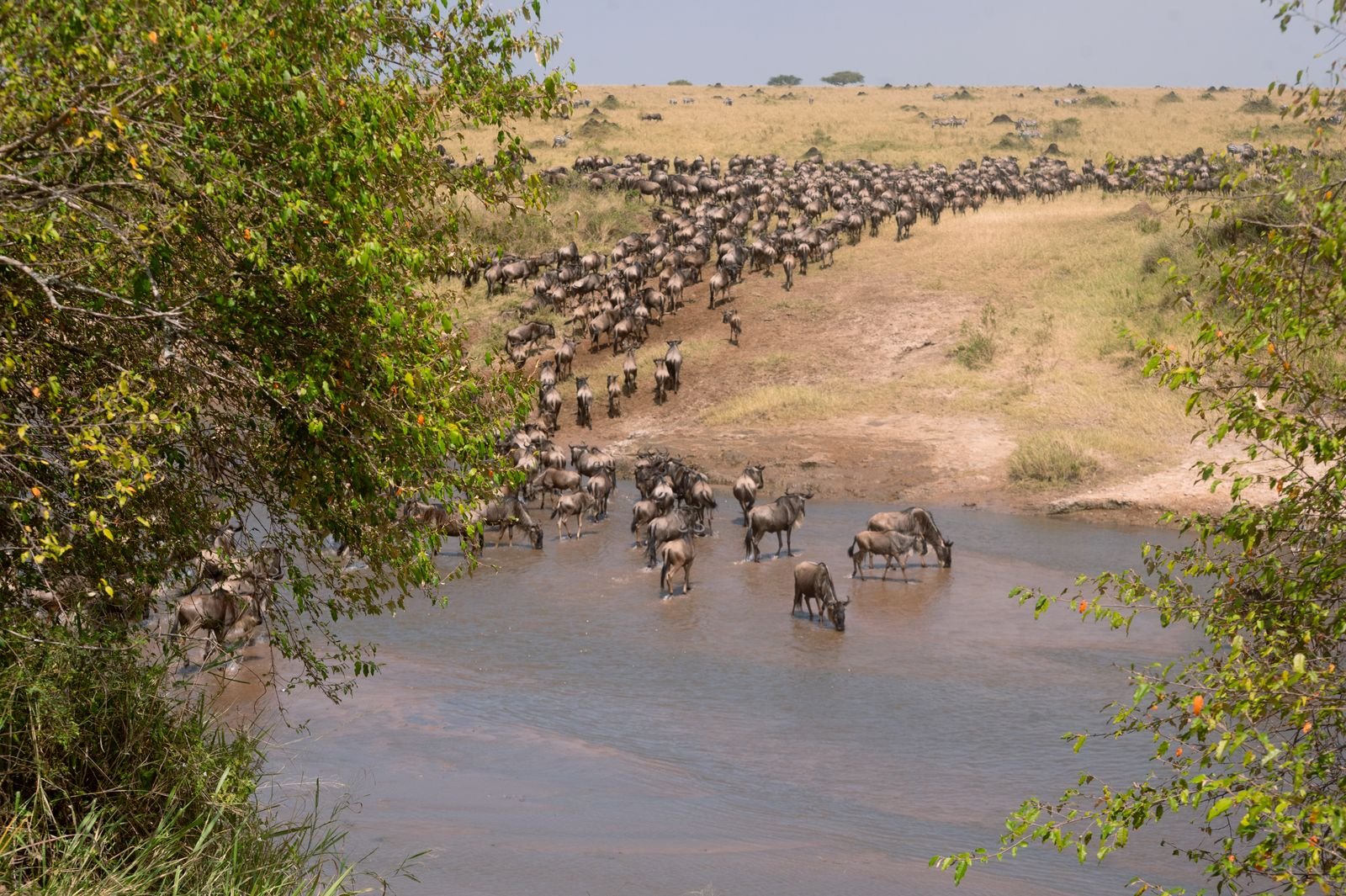
The wildebeest migration is the largest overland wildlife movement on Earth. About 1.3 to 1.4 million wildebeest, joined by roughly 200,000 zebra and 300,000 gazelle, walk a loop of 800 to 1,000 kilometres through Tanzania’s Serengeti and Kenya’s Masai Mara, all year, every year. There is no start date and no finish line. The herds follow rain and grass in a circle, and the month you travel decides where you should sleep — not the other way round.
That is the first thing most first-timers get wrong. They book a country, then a month. The migration rewards the opposite order: pick your month, find where the herds are that month, then book a camp within a short drive of that spot — sleep in the wrong slice and every game drive starts with two or three hours of driving.
The loop in one paragraph
After the short rains, the volcanic soils of the southern Serengeti grow short, mineral-rich grass that pregnant wildebeest need, so the herds calve there in January and February. As those plains dry out, the animals push north and west toward longer grass and the Mara River, the one river in the system that flows all year, crossing it again and again between July and October before walking back south. Rain sets the pace, so every date here is typical, never guaranteed — an early or late season can shift a stage by weeks.
One fact changes how you plan: the herds spend about ten months of the year in Tanzania. Kenya holds part of them only from about mid-July to late October. Book Kenya in February and the Serengeti herds are 300 kilometres south — you will still see the Mara’s resident cats and plains game, but not the migration.
The calendar, month by month
January — calving begins, southern Serengeti
The herds gather on the short-grass plains around Ndutu, Lake Masek and Kusini, and the first calves arrive late in the month. Base yourself at Ndutu or Kusini; crowds are low to medium.
February — calving peak, southern Serengeti
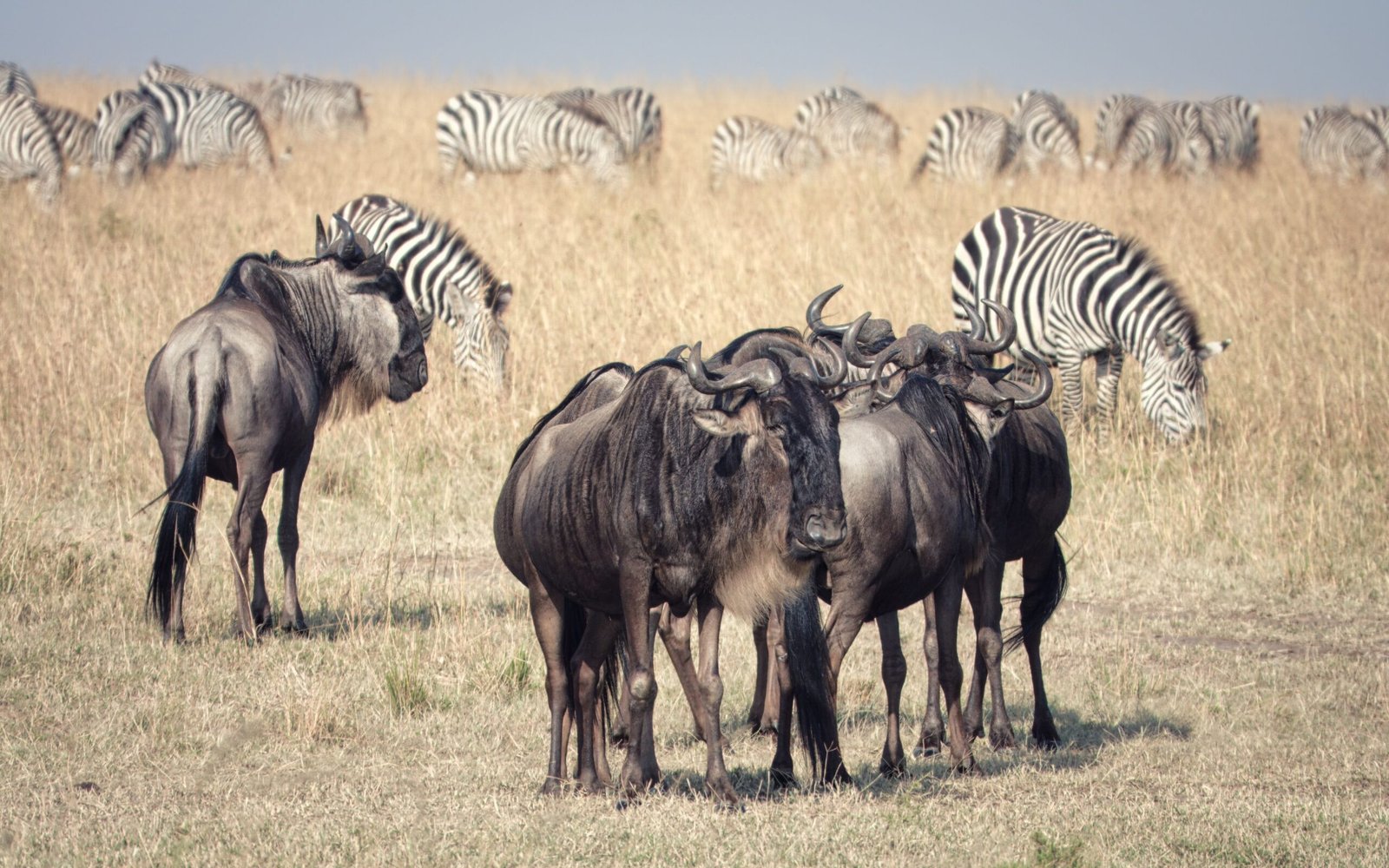
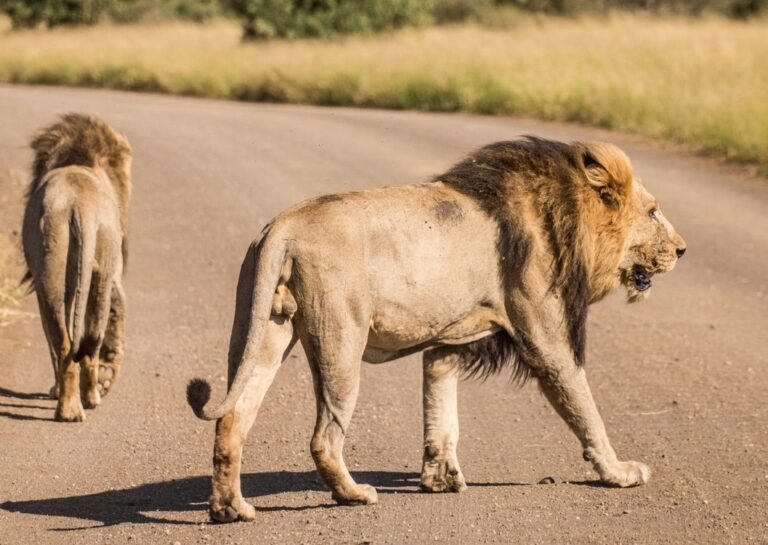
The month many guides rate above the river crossings. Around 500,000 calves are born in a season, most in a two-to-three-week window in February, at a rate that can pass 8,000 calves a day — too many for the predators to eat, so lion, cheetah, hyena and jackal work the open plains every morning in full view. Stay at Ndutu, and book early: the small Ndutu camps fill first.
Verdict: photographers and second-time safari travellers, this is your month. Soft light, green plains, and predator action that beats August.
March — late calving, herds start north
Calving ends, the calves run with the herd, and the long rains build. The herds drift north and west from Ndutu as afternoon storms arrive and the black cotton soil turns soft under the wheels. Fewer vehicles than February. Base at Ndutu early in the month, Seronera late.
April — long rains, central Serengeti
April is the wettest month and the cheapest. The herds leave Ndutu past the Simba and Moru Kopjes and funnel toward Seronera. Roads can close for a day after a storm and some camps shut — but you may sit at a sighting with no other vehicle in sight, at the lowest rates of the year.
Verdict: tight budget, flexible attitude, happy with afternoon rain? April is the best-value migration month there is.
May — the rut and the long columns
By May the herds are strung out in columns many kilometres long, heading for the Western Corridor — and it is the rut, bulls fighting over passing females while the grunting carries across the plains for hours. Base at Seronera or the Western Corridor; numbers and rates stay low.
June — Grumeti River crossings, Western Corridor
Here is the alternative most guides skip. Before the Mara River, there is the Grumeti. In June the herds bunch on its south bank, sometimes waiting a week or more before the first animals commit, while the river’s pools hold some very large Nile crocodiles. The crossings are smaller and faster than on the Mara — but the Western Corridor offers something August cannot: space. Few camps, few vehicles, and riverine forest along the Grumeti and Mbalageti, while the private Grumeti reserves also allow off-road driving, night drives and walking. One warning: not every animal goes west — a large share walks straight up the middle of the park through Seronera toward Lobo, skipping the Grumeti altogether.
Verdict: you want a river crossing without the August crowds? June on the Grumeti is your month — at green-season prices.
July — the herds reach the Mara River
July is a transition month. The herds move north through Grumeti, Ikorongo and Lobo, and the front runners reach Kogatende and cross into Kenya from mid to late month. Early July belongs in Tanzania; the last week belongs on the Mara Triangle or at Kogatende and Lamai. Book river camps nine to twelve months ahead — they sell out first.
August — peak Mara crossings, Masai Mara and northern Serengeti
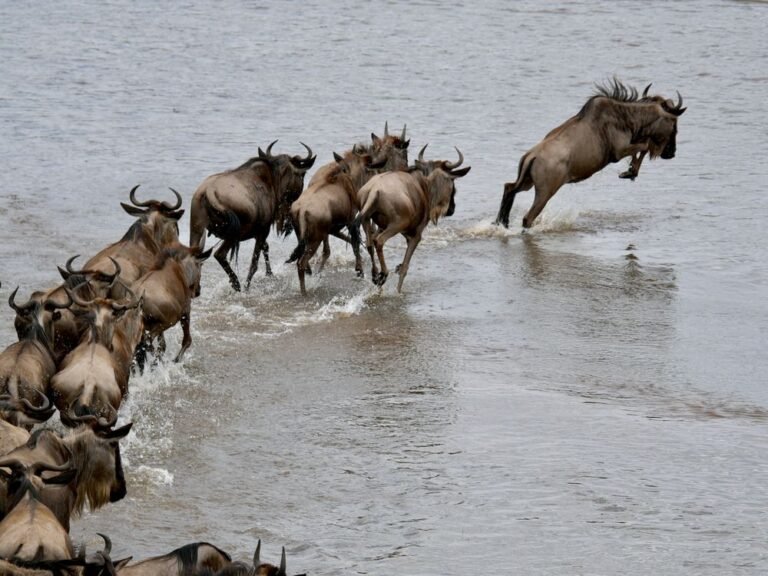
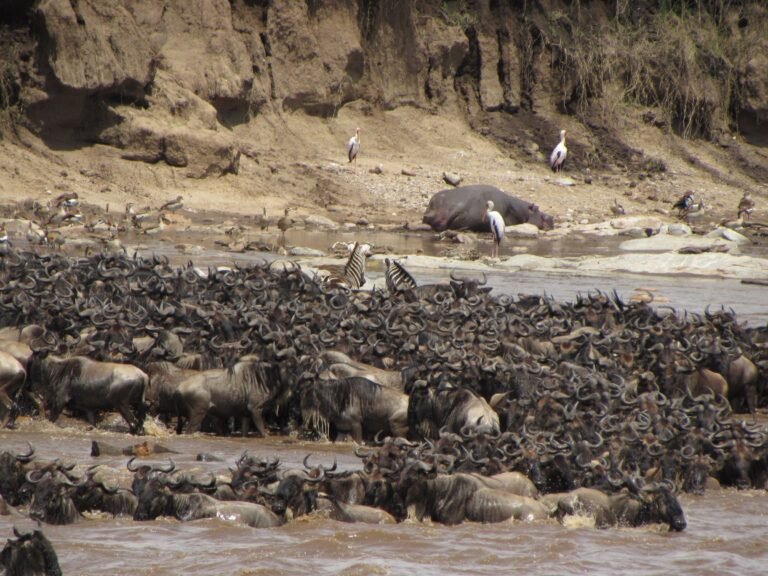
August is the month in every documentary: wildebeest bunching on a steep bank, one animal jumping, then thousands following into brown water while crocodiles move in. The crossings run along the Mara River on both sides of the border, with the herds at their densest in Kenya — and it is the busiest month of the year. At the best-known crossing points dozens of vehicles can line the bank, and guides have counted well over a hundred at a single crossing on the Tanzanian side in a busy year. The Mara Triangle, managed by the not-for-profit Mara Conservancy, enforces its track rules more strictly, which many visitors find makes for calmer viewing.
Verdict: first safari, one shot at the migration, and you can afford peak prices? August is the month to pick. Just go in with your eyes open about the crowds.
September — crossings continue, slightly fewer vehicles
The herds split between the Masai Mara and the northern Serengeti, crossing back and forth. Crossings are still frequent, and once the school holidays end there are slightly fewer vehicles — a strong second choice after August.
October — last crossings, the return begins
Late crossings in the first half of the month, then the herds thin out of the Mara and walk back into Tanzania. Base at Kogatende or in the Mara early in the month, at Lobo late. Camps get quieter as the short rains draw near.
November — the fast return south
When the short rains begin, usually in late October or November, the herds turn and walk fast down the eastern side of the Serengeti through Loliondo, Lobo and the Bologonja area — a different route from the one they took north. In a wet November they can cover the distance in a couple of weeks. The herds are moving rather than grazing, so a guide may drive two hours to reach them — but the plains turn green after each storm, numbers are low, and rates drop.
Verdict: you have already seen the crossings and want the migration cheap and crowd-free? November is the hidden month — as long as you accept that sightings take work.
December — back on the calving grounds
By December the main body has passed Seronera and is spreading back onto the southern plains toward Ndutu, usually settled by Christmas. Numbers stay low until the holiday fortnight, and the loop closes before calving starts again.
What each month costs
The migration is the one part of a Tanzania safari where timing changes the price as much as the camp does. These are typical per-person-per-night ranges, two sharing, from operator pricing checked November 2026 — indicative bands, not quotes. Comfort camps run $350–$550 a night in the green season (April–May, November) and $450–$750 at peak (July–September, Christmas–New Year); premium $550–$900 green and $750–$1,300 peak; luxury $900–$1,700 green and $1,300–$2,500+ at peak. A 7-day Serengeti migration safari starts from about $4,650 per person, an 8-day Mara River trip from about $6,100, and a 10-day trip from about $7,200 (operator from-prices, October 2026).
On top of the camp price, the park fees — the mandatory government cost, from published 2026 tariffs checked October–November 2026. Serengeti conservation fee: $70 + 18% VAT, about $82.60 per adult per 24 hours ($70.80 from 15 March to 15 May), plus about $60–$70 a night concession when you sleep inside the park. Ngorongoro fee, which applies to Ndutu: $70 + VAT, about $82.60 per adult per 24 hours. Masai Mara: $200 per adult per day from 1 July 2026 ($100 from 1 January to 30 June); children 9–17 pay $50, under 9 free. That doubling on 1 July is the single biggest reason the same trip costs hundreds more in August than in May. A light-aircraft leg, such as Arusha to Seronera, runs from about $250–$500 per person, with 15 kg of luggage in soft bags.
The honest downside
Three things, and the first is the one that ruins the most trips. No crossing is guaranteed. Crossings depend on rain far upstream in Kenya’s Mau catchment, the state of the riverbanks and the mood of the lead animals. Some days bring several, some weeks bring none. A herd will walk to the bank, panic, turn away and graze for an hour, then return and try again — travellers describe hours of waiting, a herd that turns away three times, and a crossing that comes when they had almost given up. When one animal jumps, the rest follow, and the whole event can be over in twenty minutes. Book the region and enough nights, not the event, and treat the strong dry-season game viewing as the trip itself.
Second, August is crowded, and the price knows it. Peak-season camps cost roughly double the green-season rate, the Mara fee doubles on 1 July, and the best-known crossing points draw dozens of vehicles. If crowds spoil a sighting for you, August will test you.
Third, the wrong month in the wrong country wastes the whole trip. The Mara in February has resident wildlife but no migration herds; Ndutu in August is empty plains. The calendar above is the fix — check it before you pay a deposit, not after.
Which month should you pick? The short version
- First safari, one shot at the famous crossing: August, Masai Mara or northern Serengeti — book 9–12 months ahead.
- Photographer or second safari, best predator action: February, Ndutu calving season.
- River crossing without the crowds: June, Grumeti River in the Western Corridor.
- Tight budget, flexible, happy with rain: April or May, central Serengeti — the lowest rates of the year.
- Already seen the crossings, want it cheap and quiet: November, the fast return south.
- Short on days: July’s last week or September — crossings still running, slightly fewer vehicles than August.
Pick the month first, then the region, then the camp. The herds will not rearrange themselves around your booking — but if you follow their calendar, you will be standing in the right place when they arrive.
The wildebeest migration rewards travellers who plan around the herds, not around a date on a brochure: pick your month, base yourself where the herds are that month, and give yourself enough nights for the crossings to happen. For the parks themselves, read our Serengeti Safari guide and Serengeti Map: Regions, Gates & Migration Routes, our Masai Mara Safari guide and Where Is the Masai Mara Located?, and the seasonal companions to this calendar — Best Time to Visit Kenya and Best Time to Visit Tanzania — plus How Much Does an African Safari Cost? and Africa Safari Tours: How to Pick an Operator before you book.
When is the best month to see the wildebeest migration?
August is the peak month for the Mara River crossings. February is best for calving and predator action in the southern Serengeti, and June is best for the quieter Grumeti River crossings. There is no single best month — it depends on what you want to see.
Where are the wildebeest in each month?
January to March in the southern Serengeti around Ndutu, April to May through the central Serengeti, June in the Western Corridor, July to October in the northern Serengeti and Masai Mara, and November to December moving south again. The herds spend about ten months a year in Tanzania and only mid-July to late October in Kenya.
How long does the wildebeest migration last?
All year. It is a continuous 800–1,000 km loop through the Serengeti-Mara ecosystem, driven by rainfall. The famous river crossings run roughly July to October, and calving runs late January to March.
Can you see a Mara River crossing from Tanzania?
Yes — roughly half the herd never leaves Tanzania. The Mara River runs through the northern Serengeti before it reaches the border, and you can watch crossings from camps at Kogatende and Lamai without a Kenyan visa.
Is a river crossing guaranteed?
No. Crossings depend on rainfall, river conditions and the herds themselves — some days bring several, some weeks bring none. Book the right region for your month and stay several nights, and treat the dry-season game viewing as the trip itself.
How much does a wildebeest migration safari cost?
Typically $350–$550 per person per night in a comfort camp in the green season, rising to $1,300–$2,500+ in a luxury camp at peak (operator pricing checked November 2026). A 7-day Serengeti trip starts from about $4,650 per person, plus park fees of roughly $82.60 a day in the Serengeti and $200 a day in the Mara from 1 July 2026.



One Comment