
Best Time to Visit Tanzania for a Safari (Month by Month)

Ask when the best time to visit Tanzania is and every guide will give you the same answer: June to October. It is the right answer — and it is also incomplete. June to October is the best time for the Great Migration river crossings in the northern Serengeti, and for easy game viewing in dry grass. It is also the most crowded and the most expensive time to go, by a long way. Lodge rates peak, the famous crossings draw dozens of vehicles, and the best camps are booked six to twelve months ahead.
So the honest answer is not a month. It is a match: the best time to visit Tanzania depends on what you want to see, how much you want to spend, and how many other people you are happy to share the plains with. This guide covers the seasons month by month, what each one actually costs, and which park to pick for your dates.
The short answer, by what you want
| You want… | Go… | Why |
|---|---|---|
| The Great Migration river crossings | July to October | Herds in the northern Serengeti; crossings peak August–September |
| Newborn calves and predator action | Late January to February | Calving season in Ndutu and the southern Serengeti |
| The easiest first safari, dry weather | June to September | Dry season, short grass, firm roads |
| The best value with good wildlife | June or November | Shoulder months; dry-ish, lower prices, fewer vehicles |
| The lowest prices and empty parks | April to May | Long rains; green-season rates 20–40% below peak |
| Safari plus Zanzibar beach days | June to October or December to February | The two dry windows overlap for both |
| Climbing Kilimanjaro | June to October or late December to February | Driest, clearest months on the mountain |
June to October: the long dry season (and the migration)
This is the classic Tanzania safari window, and for a first trip it is still the safest pick. From late June the rains stop, the grass thins, and animals gather around the rivers and waterholes that are left. Game drives get easier every week: short grass, clear tracks, and wildlife that comes to you instead of hiding in it. The mornings are cool, the skies stay clear for weeks, and the roads are firm and dusty rather than muddy.
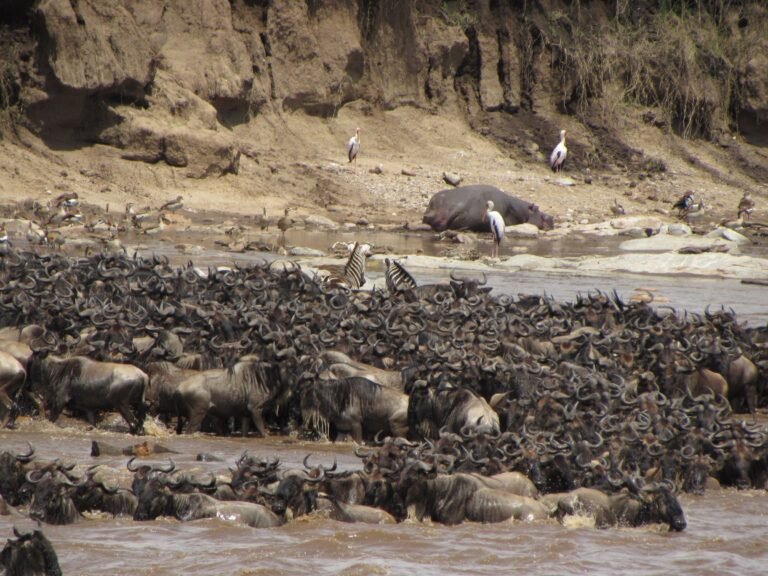
The Great Migration is the reason most people choose these months. Around two million wildebeest, zebras and gazelles move through the Serengeti ecosystem all year, and from July to October they are in the north, crossing the Mara River into Kenya and back — herds plunging into crocodile water while lions wait on the far bank. August and September are the most reliable months for a crossing.
The verdict, stated plainly: if this is your first Tanzania safari and the river crossings are the point, go in September. The herds are in the north, the crossings are still happening, the grass is at its shortest, and the worst of the August crowds have thinned. Book months ahead either way — July, August and September camps fill early, and the best ones are gone by spring.
The migration, honestly
Here is the part the brochures skip. The herds do not arrive in the north on a timetable. In January, February and March they are in the south, on the short-grass plains of Ndutu and the southern Serengeti. In April, May and June they move north-west through the central and western Serengeti — the Grumeti River crossings happen in June, and most guides never mention them. Only from July do the herds reach the northern Serengeti and the Mara River.
The crossings themselves happen when the herds decide, not when your itinerary says. A herd can gather on the bank for hours or days, then cross in minutes — or turn back. No operator can guarantee a crossing on a particular day. The honest fix is time, not timing: stay at least three nights near the Mara River, ask your guide where the herds are before every game drive, and treat a crossing as a bonus rather than a promise. From November the herds head south again with the short rains, and the Serengeti runs on its resident wildlife — which is still superb, just without the wildebeest.
Late January to February: calving season (the window most guides skip)
After the short rains, the southern Serengeti turns green and the migration settles on the short-grass plains of Ndutu. This is calving season: around half a million wildebeest calves are born within a few weeks, mostly in February. The plains fill with wobbly newborns — and with the lions, cheetahs and hyenas that follow them. It is the most intense predator action of the year, and it happens with far fewer visitors than the July peak.
The weather is warm and mostly dry, the light is some of the best of the year for photography, and migratory birds are still around. The catch is the festive-season hangover: late December and early January are busy and expensive over Christmas and New Year, so aim for late January into February, when the crowds thin and the calving peaks.
The verdict, stated plainly: if you have done a safari before, or if predator action matters more to you than river drama, February in Ndutu beats August in the north. You will see more kills, pay less, and share the sighting with a fraction of the vehicles.
June: the sweet spot nobody sells
June deserves its own mention, because it is the month the guidebooks rush past. The dry season is starting, the roads are firming up, and the herds are in the central and western Serengeti — which means the Grumeti River crossings, the migration’s first river drama of the year, with a fraction of the audience the Mara River gets. Tarangire starts to fill with elephants gathering at the river. Prices are still shoulder-season, and the parks are noticeably quieter than in July.
If your dates are flexible and you want dry-season game viewing without peak-season prices or crowds, June is the best-value dry month in Tanzania.
November to mid-December: the short rains (the quiet favourite)
The short rains arrive in November and run into mid-December — usually brief afternoon storms rather than all-day rain, with sunny spells between them. The plains turn green, the light softens, and the parks empty out. Migratory birds arrive, the herds start moving south, and this is one of the best times of year for birdwatching.
November is the quiet month. December gets busy again around Christmas, when rates rise and camps fill. If you can travel in November or early December, you get green scenery, young animals, good predator viewing and shoulder-season prices — the combination most first-time visitors never consider because every guide told them to go in August.
Mid-March to May: the long rains (honest, not romantic)
The long rains are the least popular time for a Tanzania safari, and the reasons are real. April is the wettest month. It can pour, roads get muddy, and some camps — especially in the southern circuit — close for the season. A game drive can be rained off, and the tall grass makes animals harder to spot.
But the long rains have their own case, and it is a strong one for the right traveller. Prices are at their lowest of the year — green-season lodge rates run 20–40% below peak — the parks are nearly empty, and the landscapes are at their most dramatic: lush green plains, huge skies, and newborn animals everywhere. March is the bridge month: showers increasing, game still good, and fine for flexible travellers.
The honest rule: if the long rains are your only dates, do not force the northern circuit at its wettest. Pick the parks that stay open and accessible, travel with a flexible operator, and go with your eyes open about the mud. And check camp openings before you book — some close in April, and a closed camp is not a bargain.
Where to go, when: the park-by-month guide
Tanzania is not one safari. Each park peaks at a different time, and the smartest trips match the park to the month.
Serengeti National Park — July to October for the river crossings in the north; late January to February for calving in the south (Ndutu); June for the Grumeti crossings and shoulder prices. The park is huge, so where you stay matters more than when you go — a camp in the wrong region in the wrong month is a long drive from the herds.
Ngorongoro Crater — Good all year, and the most reliable park in Tanzania in any month: the crater floor holds dense resident wildlife — lions, elephants, rhinos, hippos — whatever the season. It is at its best in the dry months, June to October, when the crater floor is firm and the animals concentrate. Come in the rains and you get green scenery and fewer vehicles, but a muddier, mistier crater.
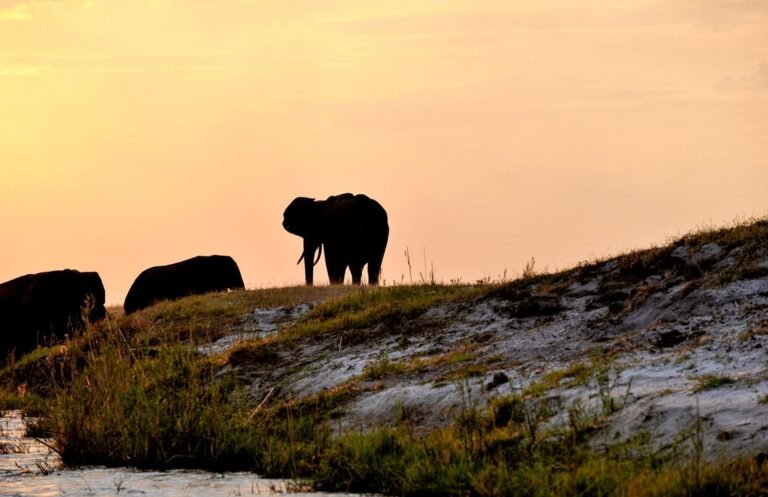
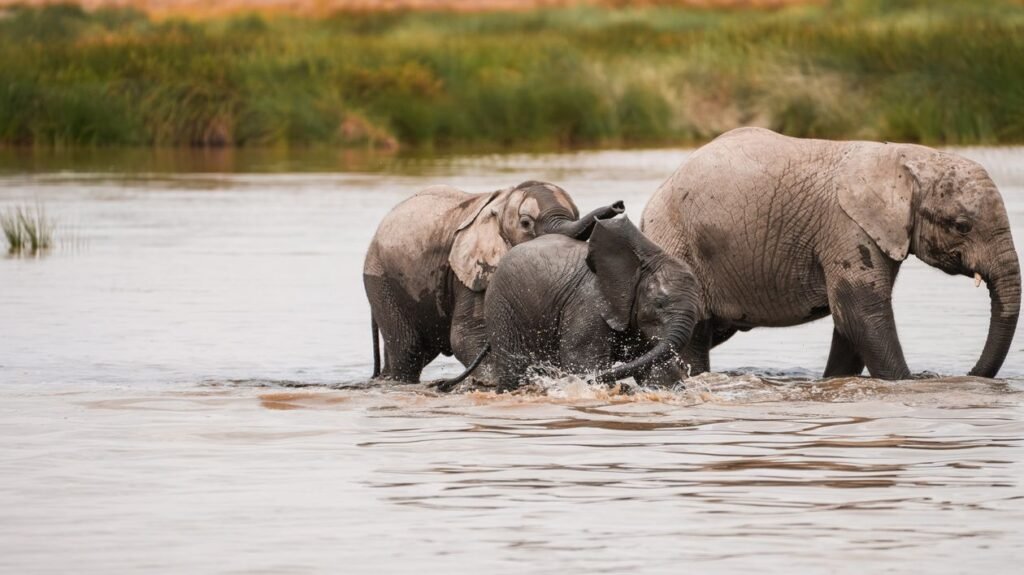
Tarangire National Park — June to October, when elephants gather at the Tarangire River in huge numbers — the park’s famous draw. In the wet months the elephants scatter and the park quiets down. About two hours’ drive from Arusha, so it works as the first or last stop on a northern-circuit trip.
Lake Manyara National Park — November to April for the best birdwatching, when flamingos and migrants fill the lake; also good in the dry season for tree-climbing lions and elephants. Small and close to Arusha, it works as a half-day add-on.
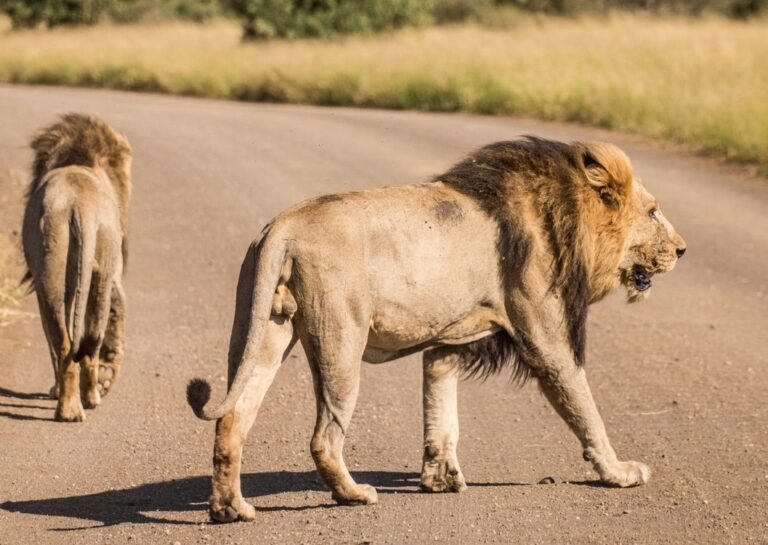
Ruaha, Nyerere and Katavi (the southern circuit) — These parks run on a different calendar from the north: one long wet season from about November or December to April, and their best months are June to October. Do not plan a southern-circuit trip in the long rains — many camps close, and the roads are at their worst. The reward for going in the dry season is the opposite of the north: vast parks, very few visitors, and some of the best wild-dog and lion viewing in Africa.
Zanzibar — June to October and December to February, the two dry windows. The long rains (March to May) bring heavy showers and rough seas, and many beach days are lost. Pair it with a June-to-October safari and the calendars line up perfectly.
Mount Kilimanjaro — June to October and late December to February, the driest and clearest months on the mountain. The long rains make the trails muddy and the summit often clouded in.
What it costs, honestly — by season
Here is the number that changes the “best time” answer more than any other. Park fees are the floor under every Tanzania safari price, and no operator can discount them. A non-resident adult pays about $82.60 per person per 24 hours in the Serengeti in high season, falling to about $70.80 between mid-March and mid-May (TANAPA tariff, VAT included, checked November 2026). Children aged 5 to 15 pay $23.60; under-5s enter free. Sleep inside the park and a concession fee is added for every night — about $70.80 per adult from July to September, $59 from October to June.
Then there is Ngorongoro, which charges separately. The conservation area fee is $70.80 per adult per 24 hours — and you pay it just to drive through on the way to the Serengeti, then pay it again for the crater day. A descent into the crater adds a crater service fee of $295 per vehicle, not per person. That is the fee most affected by group size: a couple pays $148 each for it, while a full car of six pays $49 each. Tarangire and Lake Manyara charge about $59 per adult per 24 hours.
Add it up for a classic six-day northern circuit and the fees alone run roughly $700 to $900 per person before a bed is booked. And the season swings the total hard: a private mid-range safari runs roughly $450 to $800 per person per day in peak season, against $250 to $400 for budget camping and $850 to $1,500+ for luxury camps (operator price ranges, October–November 2026). In the green season, lodge rates fall 20–40%, so the same mid-range trip can cost roughly $1,000 less per person over a week.
Two costs most guides written before autumn 2026 miss: a visa costs $50 for most nationalities ($100 for US citizens) through the official e-visa portal, and from 1 October 2026 Tanzania requires mandatory inbound travel insurance of about $44 per adult, valid up to 92 days. Budget both before you go.
The honest downside
Three things, said plainly. First, the peak season is genuinely crowded. In August and September, dozens of vehicles can gather at a single river crossing, and the northern Serengeti’s famous sightings are shared with everyone who booked the same week. If crowds will spoil the trip for you, do not go in August; go in September, February or June instead. Second, the fees add up fast. At roughly $83 a day for the Serengeti plus $71 a night in concession fees, plus Ngorongoro and the crater fee, a couple can pay well over $1,500 in government fees alone on a week-long trip — budget the park fees as their own line, not as an afterthought. Third, the distances are long. The northern circuit is a road trip: Arusha to the central Serengeti is a full day’s drive, much of it on rough roads, and the Ngorongoro highlands add hours. Fly between parks if your time is short; drive only if the journey is part of the fun.
The alternative most guides skip
Almost every “best time to visit Tanzania” guide is really a “best time to visit the Serengeti” guide. The alternative they skip is the February calving season in Ndutu — the most dramatic wildlife event of the year, with fewer people and lower prices than the crossings — and, for the dry season, June instead of August: the Grumeti crossings, firm roads, and shoulder-season rates. And if you have already seen the migration, the smartest Tanzania trip is not a worse Serengeti trip. It is the southern circuit — Ruaha or Nyerere in the dry season — where the parks are vast, the visitors are few, and the wildlife is just as good.
FAQ
What is the best time to visit Tanzania for a safari?
June to October is the best time for a first safari — dry weather, short grass, easy game viewing and the Great Migration river crossings in the northern Serengeti. For the best balance of sightings and crowds, go in September. For the best value, go in June or February, when the wildlife is superb and prices are lower.
When is the Great Migration in Tanzania?
The migration moves through the Serengeti all year: the herds are in the south (Ndutu) from December to March, move north-west through the central and western Serengeti from April to June, and reach the northern Serengeti and the Mara River from July to October. River crossings peak in August and September but are never guaranteed on a given day — stay at least three nights near the river.
What is the cheapest time to visit Tanzania?
April and May, the long rains, have the lowest lodge rates — green-season prices run 20–40% below peak — and the Serengeti entry fee drops to about $70.80. November is the next-cheapest good window, with green scenery and quiet parks. June offers the best value for money overall: dry weather, strong sightings and shoulder-season prices.
How much is the Serengeti entry fee in 2026?
Non-resident adults pay about $82.60 per person per 24 hours in high season and about $70.80 between mid-March and mid-May. Children aged 5 to 15 pay $23.60, and under-5s enter free. Sleeping inside the park adds a concession fee of about $59 to $70.80 per adult per night. Fees set by TANAPA, VAT included, checked November 2026.
Is Tanzania good to visit in the rainy season?
It depends on the month and the park. The November–December short rains are usually brief afternoon showers with sunny spells, and the parks are quiet and green — a good time to go. The March–May long rains are heavier: muddy roads, some camps closed, and a real risk of rained-off drives. If those are your only dates, travel flexibly and check camp openings before you book.
What is the best month for a Tanzania safari?
For wildlife and dry weather, September is hard to beat — the migration is in the north, the grass is short and the August crowds have thinned. For predator action and value, try February in Ndutu for the calving season. For the best all-round value, June is the sweet spot: dry season starting, Grumeti crossings, and shoulder-season prices.
Closing
The best time to visit Tanzania is the month that matches what you actually want. Go in September for the river crossings without the worst of the crowds. Go in February for the calving season, the most dramatic wildlife event most guides never mention. Go in June for dry-season game viewing at shoulder-season prices. Go in November for green plains, newborn animals and parks to yourself. Go in the long rains only with your eyes open about the mud — and the savings. Before you book, read our Serengeti Safari guide, our Tanzania Safari hub, and our Africa Safari Tours: How to Pick an Operator guide so the season you choose is the season you actually get. For the money side, our How Much Does an African Safari Cost? guide breaks down the full budget, our Safari Lodges in Africa: How to Choose guide covers where to stay, and our Best Time to Visit Kenya and Best Time to Visit South Africa guides cover the neighbours. Pick the month for the trip you want — not the month every guide repeats.