Best Time to Visit Kenya for a Safari (Month by Month)

Ask when the best time to visit Kenya is and every guide will give you the same answer: June to October. It is the right answer — and it is also incomplete. June to October is the best time for the Great Migration in the Masai Mara, and for easy game viewing in dry grass. It is also the most crowded and the most expensive time to go, by a long way. The Masai Mara entry fee doubles on 1 July. Lodge rates roughly double. The reserve fills with vehicles.
So the honest answer is not a month. It is a match: the best time to visit Kenya depends on what you want to see, how much you want to spend, and how many other people you are happy to share the plains with. This guide covers the seasons month by month, what each one actually costs, and which park to pick for your dates.
The short answer, by what you want
| You want… | Go… | Why |
|---|---|---|
| The Great Migration and river crossings | July to October | Herds in the Mara; crossings peak August–September |
| The easiest first safari, dry weather, big cats | September | Migration still in, crowds easing, grass short |
| Big cats and good value, few people | January to February | Short dry season; predators easy to find |
| Birdwatching and newborn animals | November to December | Short rains; migrants arrive; calving begins |
| The lowest prices and empty parks | March to May | Long rains; green season rates; some camps close |
| Elephants with Kilimanjaro behind them | January–February or June–October | Amboseli at its clearest in the dry months |
June to October: the dry season (and the migration)
This is the classic Kenya safari window, and for a first trip it is still the safest pick. From June the rains stop, the grass thins, and animals gather around the rivers and waterholes that are left. Game drives get easier every week: short grass, clear tracks, and wildlife that comes to you instead of hiding in it. Mosquitoes thin out too, and the days are warm rather than hot.
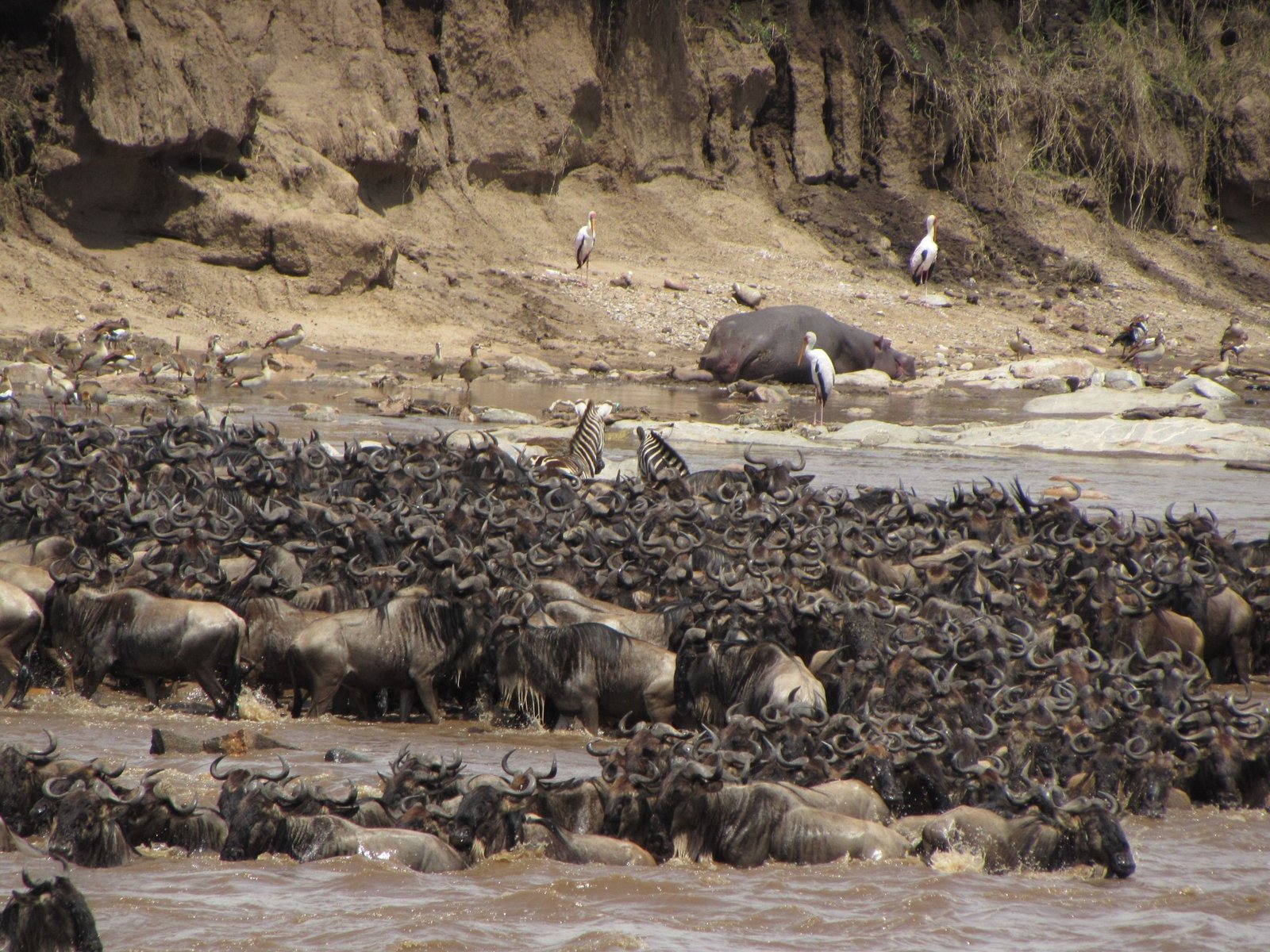
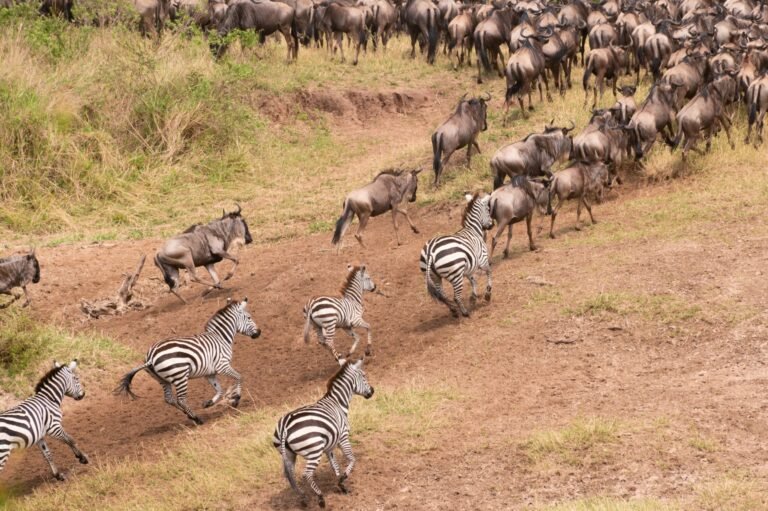
The Great Migration is the reason most people choose these months. Millions of wildebeest, zebras and gazelles move up from Tanzania’s Serengeti into the Masai Mara, and the Mara River crossings — herds plunging into crocodile water while lions wait on the far bank — are the most famous wildlife spectacle on earth. Predators are at their most active, following the herds.
The verdict, stated plainly: if this is your first Kenya safari and the migration is the point, go in September. The herds are in, the crossings are still happening, the grass is at its shortest, and the worst of the August crowds have thinned. Book months ahead either way — July, August and September camps fill early, and the best ones are gone by spring.
The migration, honestly
Here is the part the brochures skip. The herds do not arrive in Kenya on a timetable. In June and most of July they are usually still in northern Tanzania, working their way towards the border. The Mara is excellent for general game viewing then — resident lions, cheetahs and elephants are there all year — but a river crossing in June is far from guaranteed.
The crossings themselves happen roughly between July and October, and even then they happen when the herds decide, not when your itinerary says. No operator can guarantee a crossing on a particular day. The honest fix is time, not timing: stay at least three nights in the Mara, ask your camp where the herds are before every game drive, and treat a crossing as a bonus rather than a promise. From mid-November until the following July the herds are mostly back in Tanzania, and the Mara runs on its resident wildlife — which is still superb, just without the wildebeest.
January to February: the short dry season (the window most guides skip)
After the short rains end, Kenya gets a second dry season — warm, mostly dry, and far quieter than the summer. The grass is still thin from the dry months, animals are concentrated around permanent water, and big-cat sightings are excellent. Migratory birds are still around, so birdwatching is strong too.
This is the best-value window in Kenya. Lodge rates sit well below peak, the parks are uncrowded, and the light is some of the best of the year for photography. The catch is heat: January and February are hot, and the midday sun is fierce. Plan your game drives for early morning and late afternoon, rest at midday, and drink more water than you think you need.
The verdict, stated plainly: if you have done a safari before, or if your budget matters as much as your sightings, January or February beats August. You will see the same lions and elephants with a fraction of the vehicles around them.
November to December: the short rains (the quiet favourite)
The short rains arrive in November and run into early December — usually brief, heavy showers rather than all-day rain, with sunny spells between them. The plains turn green, the light softens, and the parks empty out. This is the start of calving season for herbivores, which draws predators in, and it is one of the best times of year for birdwatching as migrants arrive from Europe and Asia.
November is the quiet month. December gets busy again around Christmas, when rates rise and camps fill. If you can travel in November, you get green scenery, young animals, good predator viewing and low-season prices — the combination most first-time visitors never consider because every guide told them to go in August.
March to May: the long rains (honest, not romantic)
The long rains are the least popular time for a Kenya safari, and the reasons are real. It can pour. The Mara gets muddy, some roads become impassable, and some camps close for the season. Humidity rises, mosquitoes return, and a game drive can be rained off.
But the long rains have their own case, and it is a strong one for the right traveller. Prices are at their lowest of the year, the parks are nearly empty, and the landscapes are at their most dramatic — lush green plains, huge skies, and newborn animals everywhere. March is the bridge month: showers increasing, game still good, and fine for flexible travellers.
The honest rule: if the long rains are your only dates, do not force the Mara. Go to Laikipia instead, where the rain bites less and the conservancies stay open, or to Samburu, which sits in a drier rain-shadow. The wrong park in the rains is a miserable trip; the right one is a bargain.
Where to go, when: the park-by-month guide
Kenya is not one safari. Each park peaks at a different time, and the smartest trips match the park to the month.
Masai Mara National Reserve — July to October for the migration; January to February for big cats and value; November for quiet green-season game viewing. Avoid March to May unless you accept mud and closures. A 5–6-hour drive from Nairobi, or a short flight to one of the reserve’s airstrips.
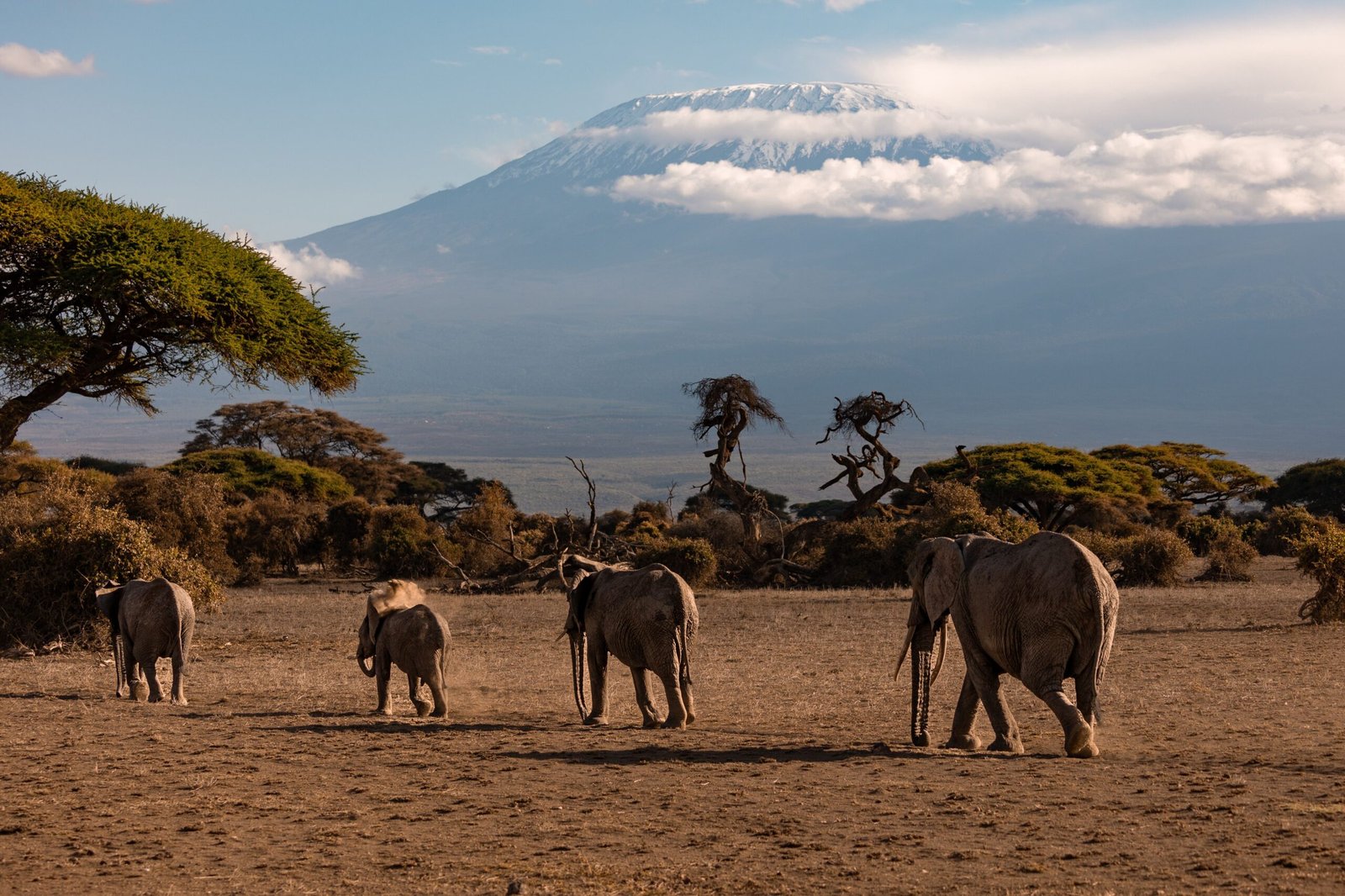
Amboseli National Park — January to February and June to October, when the skies are clearest and Kilimanjaro shows itself behind the elephant herds. About 4 hours’ drive from Nairobi on good roads, or a flight to the Amboseli airstrip. The park’s big-tusked elephants are the draw; the mountain is the bonus, and it hides behind cloud in the wet months.
Samburu National Reserve — Good all year, and one of the best choices in the long rains because it sits in a drier region. About six hours from Nairobi on rougher roads, which keeps it quiet. Come for the “Samburu Special Five” — Grevy’s zebra, Somali ostrich, reticulated giraffe, gerenuk and Beisa oryx — animals you will not see in the Mara.
Tsavo East and Tsavo West — June to October for the driest, easiest game viewing; the parks are split by the Nairobi–Mombasa road, so they are the most accessible for self-drivers. Famous for elephants coated in red dust, and for lions, hippos and huge bird numbers.
Lake Nakuru National Park — November to April for the best birdwatching, when flamingos and migrants fill the lake; also a rhino sanctuary. Just 2–3 hours from Nairobi, it works as a day trip or a weekend add-on.
Laikipia — The all-year alternative. Private conservancies with limited beds and vehicles, walking safaris, and far fewer visitors than the Mara. Best in the long rains, when the Mara struggles — and worth considering in any month if crowds are your main worry.
What it costs, honestly — by season
Here is the number that changes the “best time” answer more than any other. The Masai Mara’s conservation fee for a non-resident adult is $100 per person per day from January to June 2026, and $200 per person per day from July to December 2026 — it doubles on 1 July, right at the start of migration season. Children aged 9 to 17 pay $50 a day all year; under-9s enter free. The fee is set by Narok County, checked November 2026, and it applies per calendar day, not per 24 hours.
That doubling is not a detail. A couple spending four days in the Mara in August pays $1,600 in entry fees alone; the same four days in February cost $800. Lodge and camp rates follow the same curve — peak-season rates in July to October run roughly double green-season rates, and the best camps are booked months ahead.
The other parks are cheaper and steadier. Kenya Wildlife Service parks charge non-resident adults $90 a day at Amboseli and Lake Nakuru and $80 a day at Tsavo East, Tsavo West, Meru and Nairobi National Park (KWS schedule, October 2025, checked November 2026). KWS tickets run for 24 hours from the moment you enter, and are bought online through eCitizen — the gates are cashless.
And one trap to know before you go: the Mara ticket runs 6am to 6pm. If you are staying outside the reserve and your vehicle leaves after 6pm, you can be charged for another full day. Plan your last game drive to be back at the gate in good time — or stay inside the reserve, where the rule does not bite the same way.
The honest downside
Three things, said plainly. First, the peak season is genuinely crowded. In August, dozens of vehicles can gather at a single river crossing or a lion sighting, and the Mara’s main reserve — unlike the private conservancies on its edge — has no limit on vehicle numbers. If crowds will spoil the trip for you, do not go in August; go in September, February or November instead. Second, the fees add up fast. At $200 a day in peak season, a family of four pays $800 a day before a single night’s stay — budget the park fees as their own line, not as an afterthought. Third, the roads are rough. The Mara is a 5–6-hour drive from Nairobi on roads that get worse in the rains, and inside the reserve the tracks are dirt. Fly in if your time is short; drive only if the journey is part of the fun.
The alternative most guides skip
Almost every “best time to visit Kenya” guide is really a “best time to visit the Masai Mara” guide. The alternative they skip is the January–February short dry season — the best-value big-cat window of the year — and, for the rains, Laikipia and Samburu instead of the Mara. If you have already seen the migration, or if your dates fall in the long rains, the smartest Kenya trip is not a worse Mara trip. It is a different park, in the season that suits it.
FAQ
What is the best time to visit Kenya for a safari?
June to October is the best time for a first safari — dry weather, short grass, easy game viewing and the Great Migration in the Masai Mara. For the best balance of sightings and crowds, go in September. For the best value, go in January or February, when big-cat sightings are excellent and prices are far lower.
When is the Great Migration in Kenya?
The herds are in the Masai Mara roughly from July to October, with river crossings most likely from August to September. In June and July the herds are usually still in northern Tanzania, and from mid-November they are mostly back in Tanzania. A crossing is never guaranteed on a given day — stay at least three nights to give yourself a real chance.
What is the cheapest time to visit Kenya?
March to May, the long rains, has the lowest lodge rates and the lowest Masai Mara entry fee — $100 a day instead of $200. November is the next-cheapest good window, with green scenery and quiet parks. January and February offer the best value for money overall: dry weather, strong sightings and mid-level prices.
How much is the Masai Mara entry fee in 2026?
Non-resident adults pay $100 per person per day from January to June 2026 and $200 per day from July to December 2026. Children aged 9 to 17 pay $50 a day all year, and under-9s enter free. The ticket runs 6am to 6pm per calendar day. Fees set by Narok County, checked November 2026.
Is Kenya good to visit in the rainy season?
It depends on the month and the park. The November–December short rains are usually brief showers with sunny spells, and the parks are quiet and green — a good time to go. The March–May long rains are heavier: muddy roads, some camps closed, and a real risk of rained-off drives. If those are your only dates, pick Laikipia or Samburu, where the rain bites less.
What is the best month for a Kenya safari?
For wildlife and dry weather, September is hard to beat — the migration is in, the grass is short and the August crowds have thinned. For quieter days and better value, try late June, October or February. For birdwatching, November to April is best, when migrants arrive from Europe and Asia.
The best time to visit Kenya is the month that matches what you actually want. Go in September for the migration without the worst of the crowds. Go in January or February for big cats, clear skies and prices that leave room for an extra night. Go in November for green plains, newborn animals and parks to yourself. Go in the long rains only if you pick the right park — Laikipia or Samburu — and go with your eyes open about the mud. Before you book, read our Masai Mara Safari guide for the reserve itself, our Where Is the Masai Mara Located? guide for getting there, our Kenya Safari hub for the whole country, and our Africa Safari Tours: How to Pick an Operator guide so the season you choose is the season you actually get. For the money side, our How Much Does an African Safari Cost? guide breaks down the full budget, our Safari Lodges in Africa: How to Choose guide covers where to stay, and our Best Time to Visit South Africa guide covers the other side of the continent. Pick the month for the trip you want — not the month every guide repeats.



One Comment