Safari Lodges in Africa: How to Choose (Budget to Luxury)

A safari lodge is the biggest single cost on most African safaris — and the easiest one to get wrong. Pick the wrong lodge and you pay luxury money for a bed that sits an hour from the animals. Pick the right one and a mid-range camp can give you a better trip than a lodge costing three times as much.
Here is the fact that makes the whole choice simpler: the wildlife is the same at every price. A lion does not care whether you arrived in a packed minibus or a private 4×4 with a glass of champagne. Kruger, the Masai Mara, the Serengeti and the Okavango Delta all host extraordinary game, and budget travellers see world-class sightings every day (Private Tours Cape Town, checked November 2026). What your money buys is everything around the wildlife — how close you get, how exclusive the sighting is, and how comfortable your day feels.
The three tiers: what you pay, what you get
Set your per-night ceiling before you fall in love with a photo gallery. That one number shrinks a list of hundreds of lodges to a shortlist in minutes (Wildlodge, checked November 2026). Rates below are per person per night, sharing — a couple should roughly double them — and they are ranges across operators and guides, not quotes.
Budget — roughly $150–$350 per person per night. Group tours, self-drive, basic lodges, rest camps or simple tented camps, often with shared or simple facilities. In Kruger, the national rest camps offer clean, functional self-catering chalets at very affordable rates. The accommodation is comfortable enough to rest after a day in the field, but it is about function, not indulgence (Private Tours Cape Town, checked November 2026).
Mid-range — roughly $350–$700 per person per night. Comfortable lodges and quality tented camps, en-suite bathrooms, smaller groups, good food, professional guides. This is the value sweet spot for most first-timers: real comfort without luxury prices, and the wildlife experience is usually identical to what pricier lodges offer (Wildlodge; Cabin MMS, checked November 2026).
Luxury — roughly $700–$1,500+ per person per night, with ultra-luxury reaching $2,500–$3,500. Private reserves, off-road and night drives, gourmet dining, plunge pools, expert private guides, low vehicle density, personalised service. A luxury tented camp is a “tent” in name only: four-poster beds, air conditioning and uninterrupted views over a waterhole (Private Tours Cape Town, checked November 2026).
A week-long budget safari might cost $1,000–$2,500 per person; a luxury week can run $5,000–$20,000+ depending on the lodges chosen (Private Tours Cape Town, checked November 2026).
What the rate actually includes — and what it does not
Most safari lodge rates are effectively all-inclusive: accommodation, all meals, and two daily game drives in open vehicles with a professional guide, usually 3–4 hours each (Cabin MMS; Wildlodge, checked November 2026). That is why a $500-a-night rate is easier to justify than it first looks — it covers far more than a bed.
But not every “all-inclusive” quote means the same thing, and the differences are where budgets get blown. Before you compare any two lodges, ask each one to itemise the extras in writing:
- Park and conservation fees. Usually billed on top of the room rate, and they can add a meaningful amount per person per day. They change regularly — ask the lodge for the current amount rather than relying on a blog figure.
- Drinks. The most common surprise. Many luxury lodges include house wine and soft drinks; budget and mid-range properties often charge for everything beyond water and tea or coffee.
- Transfers. Bush flights make remote camps practical — the flight from Nairobi to the Masai Mara takes about 45 minutes, while getting from Arusha to the Serengeti typically takes 1–2 hours — but confirm which airstrip your lodge uses and whether the transfer is included (Cabin MMS, checked November 2026).
- Single supplements and child rates. Solo travellers at some lodges pay a surcharge that is not obvious in the base rate, and some lodges charge nearly full adult rates for kids over a certain age. Confirm both before booking (Wildlodge, checked November 2026). Laundry, tips, night drives, bush walks and balloon trips are also usually billed separately.
The practical move: ask the lodge for a sample final invoice for a stay like yours. That one document shows the real number — room rate plus fees, levies, transfers and taxes — and it is the only honest way to compare two lodges. A lodge that looks 15% more expensive on paper can end up cheaper once everything is included (Cabin MMS; Wildlodge, checked November 2026).
Lodge styles: permanent lodge, tented camp, or mobile camp
The word “safari lodge” covers everything from a thatched suite with a private plunge pool to a canvas tent you can hear lions through at night. The three main styles differ in comfort, atmosphere and price — and choosing the wrong one for your travel style is one of the most common booking mistakes (Cabin MMS, checked November 2026).
Permanent lodges offer solid walls, reliable hot water and often the best facilities — pools, spas, sometimes fenced perimeters. They suit travellers who want comfort and predictable facilities over raw immersion, and they can feel a little hotel-like.
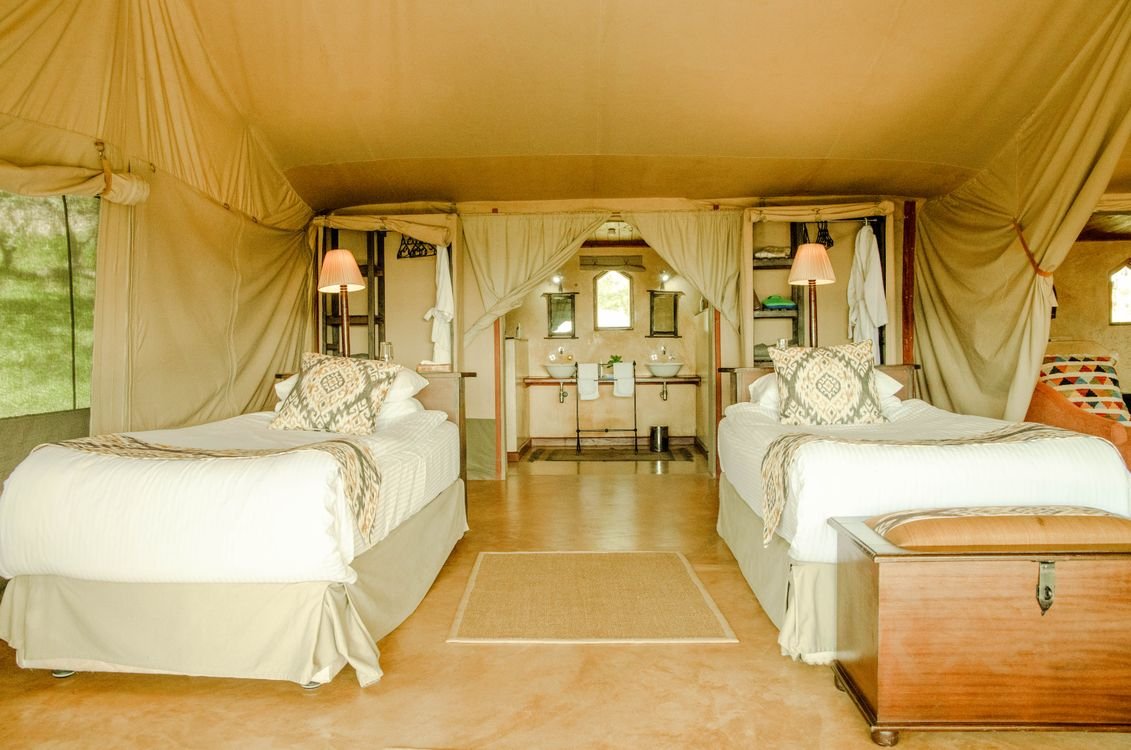
Luxury tented camps strike the middle ground: real beds, en-suite bathrooms and fine dining, all under canvas, so you fall asleep to the sounds of the bush. Expect candlelit dinners and early nights, because many camps limit generator hours and lighting to preserve the bush atmosphere. The tent interior in the photo below is from Entumoto Safari Camp in the Masai Mara — twin beds, rustic decor, and a proper room under canvas.
Mobile camps move with the wildlife, especially during the migration, and offer the most authentic experience, usually with simpler comforts and lower prices. Your tent may be in a different spot than the brochure photo — but your game drives can be dramatically shorter to reach the action (Cabin MMS, checked November 2026).
If you are travelling with children, prioritise lodges with genuine family rooms and structured child programmes such as junior ranger activities, rather than simply asking for an extra bed. If you want a personal experience, look at smaller camps with under 20 tents, where guides and staff learn your name by day two (Cabin MMS, checked November 2026).
National park or private conservancy: the game-viewing difference
This is the one distinction that directly changes what you see — and the main reason luxury costs more.
Public national parks are budget-friendly. In parks like Kruger, the Serengeti and the Masai Mara reserve, vehicles must stay on designated roads. You can still enjoy fantastic sightings, but you cannot drive off-road to follow a leopard into the bush, and popular sightings can attract several vehicles (Private Tours Cape Town, checked November 2026).
Private reserves and conservancies — Sabi Sands, Timbavati, the Mara conservancies — permit off-road driving and night drives, and limit vehicle numbers at each sighting. Guides radio one another to track specific animals, so you can follow a leopard hunt or sit quietly with a lion pride with no other vehicles in sight. You might watch a leopard with two other cars instead of a dozen. This off-road freedom is the single biggest reason luxury safaris deliver such intimate big-cat viewing (Private Tours Cape Town; Cabin MMS, checked November 2026).
The verdict, plainly: if close-up, exclusive, off-road predator sightings are your priority, a private reserve is worth the splurge. If you are happy viewing from the road, public parks deliver superb wildlife at a fraction of the cost.
Location inside the reserve matters more than the label
Two lodges with identical rooms and similar rates can deliver completely different safaris depending on where they sit. A slightly pricier camp in a better spot often beats a cheaper one that spends half the day getting to the action (Cabin MMS, checked November 2026).
Three checks, in order. First, near water or a migration corridor: in the dry season (June–October), animals concentrate around rivers and permanent waterholes, so a camp near these features often produces sightings from the deck itself, before you even start a game drive. Second, distance to gates and airstrips: lodges inside a national park save 1–2 hours of daily gate transfers versus staying outside — an extra hour each morning and evening actually looking for animals instead of waiting in line at a gate (Wildlodge; Cabin MMS, checked November 2026). Third, which side of the reserve: some parks have multiple gates spread far apart, and a camp near the wrong one can add hours to your arrival day (Cabin MMS, checked November 2026).
Then read recent reviews about wildlife sightings from camp — not the generic service ratings. Search reviews from the last few months for phrases about elephants at the waterhole or leopards near camp. If reviews are thin, message the lodge directly and ask what guests typically see from camp in the month you plan to visit (Cabin MMS, checked November 2026).
Season changes the price — and the trip
The same lodge can deliver two completely different experiences depending on when you visit, and cost dramatically different amounts. Getting your dates right is arguably the biggest lever you have when you choose a safari lodge (Cabin MMS, checked November 2026).
Dry season (June–October in East and Southern Africa): the best game viewing. Vegetation is thin, animals gather around rivers and waterholes, and spotting wildlife becomes noticeably easier. The trade-off is demand — lodges are fullest, rates are at their highest, and the weeks around July–August are the busiest of all. Aim for the edges of the dry season rather than its peak if you want lower rates and quieter camps.
Green season (November–March, and into April in the south): the budget traveller’s window. Rates can be 30–50% lower than peak season, which might mean the difference between a mid-range and a luxury camp for the same money. You will likely see some rain, the landscape will be lush and photogenic, animals will be more dispersed, and birding is often excellent (Private Tours Cape Town; Cabin MMS; Wildlodge, checked November 2026). Rain usually comes in short bursts rather than all-day downpours, though some days will be washed out. One caution: some lodges close or reduce services during heavy rains, so confirm directly that your chosen dates fall within the lodge’s full-service season (Wildlodge, checked November 2026).
The skipped alternative: mix the tiers, night by night
Here is the option almost no lodge guide mentions, and it is the smartest way to spend safari money: you do not have to choose one lodge level for your whole trip.
Permits, park fees, the vehicle and the guide cost the same whatever you sleep in. Lodges are the main part of a safari price you can control — so choose each night’s stay on its own merits. A simple, comfortable lodge for transit nights and early starts. Mid-range where you spend a little more time. Luxury for one or two nights where the lodge itself is part of the experience (Dusk2Dawn Explorers, checked November 2026).
The pattern that works best: save on arrival nights, transit stops and early-start nights, and splurge where the lodge is part of the experience — or on your last night. A popular version is a few nights in a comfortable mid-range lodge or a self-drive in Kruger, then two or three nights at a luxury private reserve for the off-road big-cat experience (Private Tours Cape Town; Dusk2Dawn Explorers, checked November 2026). Location matters more than the label here too: a cheaper lodge in the wrong place can cost you more in transfers and lost game-drive time than the saving is worth (Dusk2Dawn Explorers, checked November 2026).
The honest downside
Two things, said plainly. First, the wrong location wastes your trip in a way no room upgrade can fix. A beautiful lodge an hour outside the gate means an hour of bumpy driving at the start and end of every stay, and gate opening times can cut your early and late drives short. That is two hours a day, every day, spent in transit instead of watching animals. No plunge pool compensates for it. Check the map before you check the photos.
Second, the green-season discount has a real cost. Rates 30–50% lower sound like free money, but animals are dispersed across thick green bush instead of gathered at waterholes, and some lodges close or run reduced services in the rains. If this is your one safari and big cats are the point, the saving can cost you the sightings you came for. Go green season for value, birding and newborn animals — not for peak predator viewing.
Who should pick what
- First safari, one week, watching the budget: mid-range, in a national park, in the dry-season edges (June or November). En-suite comfort, professional guiding and the same animals as the luxury camps, for roughly half the money.
- Big cats are the whole point: two or three nights in a private reserve or conservancy — Sabi Sands, Timbavati or a Mara conservancy — even if the rest of the trip is mid-range. Off-road tracking is the one thing money genuinely buys.
- Honeymoon or milestone trip: luxury, and spend the splurge on the last nights. The lodge becomes part of the memory, and you end the trip on the high note.
- Self-drive and independent travellers: Kruger’s rest camps. World-class Big Five viewing, your own vehicle, your own pace, at the lowest cost on the continent (Private Tours Cape Town, checked November 2026).
- Families with young children: a permanent lodge with family rooms and a junior ranger programme, not a small tented camp. Check minimum ages for game drives before you book.
- Photographers: a small camp, under 20 tents, with a low maximum guests per vehicle. A crowded row of eight seats means someone is always shooting over someone else’s shoulder (Wildlodge, checked November 2026).
Booking checklist: before you pay a deposit
Good safari lodges in the best locations are scarce by design — the best-positioned camps often have only a handful of tents or rooms, so a single wedding or group booking can wipe out weeks of availability (Cabin MMS, checked November 2026).
- Match your lead time to the season. For peak-season dates in popular parks like the Serengeti or Masai Mara, book 9–12 months ahead. Green-season camps often have space 3–6 months out (Cabin MMS; Wildlodge, checked November 2026).
- Plan a minimum stay of 3 nights at one lodge. Shorter stays rarely justify the bush flight or road transfer costs, and three nights gives you time to settle into the rhythm of morning and afternoon game drives (Cabin MMS, checked November 2026).
- Get the fine print in writing before paying a deposit. Confirm the cancellation policy, any single-supplement charges and child rates by email — verbal assurances will not help if plans change. Safari deposits are often non-refundable within 30–60 days of arrival (Cabin MMS; Wildlodge, checked November 2026).
- Check what the rate actually includes. An all-inclusive rate covering accommodation, meals and two daily game drives can be better value than a cheaper room-only quote with activities billed on top.
- Read recent reviews for red and green flags. Green flags: a lodge that states its maximum guests per vehicle and keeps it low; a quote that itemises inclusions, park fees and exclusions in writing. Red flags: reviews complaining about rushed drives, or sales staff who push a long pre-paid multi-lodge package before answering basic questions about vehicles and guides (Wildlodge, checked November 2026).
FAQ
How much does a safari lodge cost per night?
Budget lodges run roughly $150–$350 per person per night, mid-range roughly $350–$700, and luxury roughly $700–$1,500+, with ultra-luxury reaching $2,500–$3,500. Rates are per person sharing, and most cover accommodation, all meals and two daily game drives — but park fees, drinks, transfers and tips are often extra (Private Tours Cape Town; Cabin MMS, checked November 2026).
What is included in a safari lodge rate?
Usually accommodation, all meals and two daily game drives of 3–4 hours each with a professional guide. Drinks beyond water, tea and coffee, park and conservation fees, airstrip transfers, laundry and tips are commonly billed separately — always ask for an itemised quote and a sample final invoice before comparing lodges.
Is a luxury safari lodge worth it?
It depends on what you value. If exclusivity, comfort, off-road game viewing, gourmet food and personalised guiding matter — or it is a honeymoon or once-in-a-lifetime trip — yes. If your priority is simply seeing wildlife, a budget or mid-range safari delivers the same animals at a fraction of the cost. For most travellers, mid-range — or a hybrid mixing value nights with a few luxury nights — is the sweet spot.
Should I stay inside a national park or in a private conservancy?
Inside a national park saves 1–2 hours of daily gate transfers. A private conservancy costs more per night but usually allows off-road driving, night drives and guided walks, and caps vehicles at sightings — so you might watch a leopard with two other cars instead of a dozen. For big-cat viewing, the conservancy is worth it; for general game viewing on a budget, the park is fine.
Can I mix budget and luxury lodges on one safari?
Yes — and it is the smartest way to spend safari money. Permits, park fees, the vehicle and the guide cost the same whatever you sleep in, so save on arrival and transit nights and splurge for one or two nights where the lodge itself is part of the experience, or on your last night (Dusk2Dawn Explorers, checked November 2026).
Choosing a safari lodge gets much easier when you work in order. Set your per-night budget first, then match the park, the season and the lodge style to that number instead of falling for a beautiful website. A mid-range tented camp in the right reserve during the right month will beat a luxury lodge chosen at random — and a mixed trip, value nights plus one or two nights of real luxury, will beat both. Before you compare operators, read our African Safari Cost guide for the full trip budget and our Africa Safari Tours: How to Pick an Operator guide for choosing who books it. Then match the lodge to the park with our Masai Mara Safari guide, Serengeti Safari guide and Kruger National Park Safari guide — and plan the whole trip with our How to Plan a Safari guide.





2 Comments