How to Plan a Safari: First-Timer’s Step-by-Step Guide

A safari is the easiest trip in the world to get wrong before you even leave home. Book the wrong month and the animals you came for are somewhere else. Book one night per camp and you spend the trip in transfer vehicles. Book late and the good lodges are gone — peak-season Africa sells out 8 to 12 months ahead.
This guide fixes the order of decisions. It works for any safari — wildlife in Africa, tigers in India, jungle rivers in Asia, desert in the UAE — because the steps are the same and only the details change. Follow them in this order and you will not have to undo anything later.
The 9 steps, in the right order
- Decide what you want to see — animal first, not country first.
- Match the season to the animal — the season picks the country, not the other way round.
- Set a real budget — three tiers, four safari types.
- Choose your safari type and parks.
- Decide how long, and how many camps — the 3-night rule.
- Book in the right order — permits and lodges first, flights second.
- Sort paperwork and health — passport, visas, vaccines, insurance.
- Decide DIY vs operator — what you can safely book yourself.
- Pack and prepare.
Step 1 — Decide what you want to see
Start with the animal, not the map. “I want to see the Great Migration” and “I want to see a tiger” are two different trips, on two different continents, in two different seasons. “I want to go to Africa” is not a plan — it is a continent with fifty-odd countries in it.
Pick one headline animal or moment, then let it choose the place: wildebeest crossings point to the Serengeti and Masai Mara; gorillas to Uganda and Rwanda; tigers to Ranthambore; orangutans to Borneo’s Kinabatangan River; dunes and a camp dinner to Dubai. Every choice after this has one test: does it get me closer to that animal?
Step 2 — Match the season to the animal
Most first-timers get this backwards. They pick dates, then hope the wildlife cooperates. Do it the other way: pick the season, then the country.
The Great Migration follows the rains, so river crossings cluster around July to October in the northern Serengeti and Masai Mara — and those are the months that book out first. Tiger sightings in India are best in the dry heat of March to June, when animals come to the waterholes. Gorilla permits in Uganda and Rwanda are limited every day of the year, so the “season” there is really about how far ahead you booked. And a desert safari in Dubai is a different trip in July than in January — October to April is the comfortable season.
The honest rule: name your animal, find its best window, then check whether your dates fit. If they do not, change the animal or change the dates — do not just go anyway and hope. A safari in the wrong month is the most expensive disappointment in travel.
Step 3 — Set a real budget
Safari prices are the least transparent part of the whole trip. Operator sites love to say “we cost your actual route” and show you nothing; agency guides quote only the luxury tier. Here is the honest spread, from the sources we checked in November 2026 — labelled as ranges, because the exact price depends on season, camp and how far ahead you book.
| Safari type | Budget tier | Mid-range | Luxury |
|---|---|---|---|
| Tanzania private safari, per person per day | Camping ~US$250–390 | ~US$550–990 | ~US$990–2,500+ |
| Premium East/Southern Africa camps, per person per night | — | — | ~US$1,200–2,500+ all-inclusive |
| Chitwan 2N/3D package, per person | ~US$200–350 | — | — |
| Kinabatangan 3D2N, per person | From RM730 (~US$155) | — | Up to ~RM3,955 |
| Dubai evening desert safari, per person | ~AED 100–250 | — | Private car ~AED 650–800 |
Sources: Tanzania tiers and premium-camp figures from footslopestours.com and dpptravel.com; Chitwan and Kinabatangan figures from this site’s own research packs; Dubai figures from operator and platform listings. The premium tier is why a typical first-timer couple spends US$15,000–40,000+ for 10–14 days before international flights (dpptravel.com).
The verdict, stated plainly: if your budget is under about US$500 a day per person, do not try to force a luxury East Africa safari — you will end up with the worst version of an expensive trip. Take the budget tier properly instead: a Chitwan package, a Kinabatangan river safari or a Dubai desert safari delivers a real safari at a fraction of the price. One honest downside: the headline price is rarely the whole price — park fees, conservation levies, gorilla permits, tips, transfers and inter-camp flights often sit outside the nightly rate, so ask for the all-in number before comparing operators.
Step 4 — Choose your safari type and parks
Once the animal, season and budget are set, the type chooses itself. Four kinds of safari cover almost every first trip:
- Wildlife safari (Africa): the classic — savanna, big cats, elephants, the migration. Start with our African Safari Beginner’s Guide, then the Serengeti and Masai Mara guides.
- Tiger safari (India): jeep safaris with a real chance of a tiger. Start with Ranthambore and our Tiger Safari in India guide.
- Jungle and river safari (Asia): slower, greener, cheaper — rhinos in Chitwan, leopards in Yala, orangutans on the Kinabatangan.
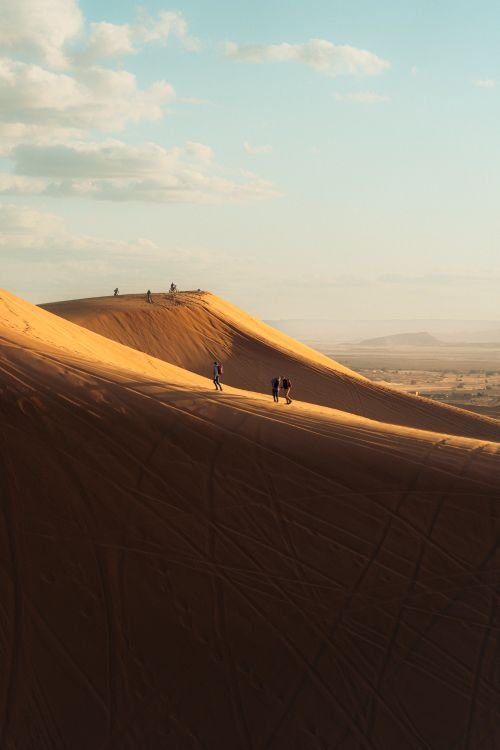
- Desert safari (UAE): the shortest and cheapest first safari — dunes, a camp dinner, back the same night. Start with our Desert Safari Dubai guide or the Abu Dhabi guide.
The skipped alternative most guides never mention: the desert safari as a first safari. Every planning guide assumes your first safari must be Africa. But if you have three days, a modest budget, or you simply are not sure safaris are for you, a Dubai evening desert safari is a genuine safari — wildlife, dunes, a camp under the stars — for the price of one night in a mid-range African camp. Nobody in the Africa-only SERP will tell you that, because they sell Africa.
Step 5 — How long, and how many camps
The consensus is clear: 7–10 nights on the ground for a first safari, with a minimum of about 3 nights per camp and two camps in different ecosystems. A Tanzania-focused version says 5–7 days actually on safari.
The 3-night rule exists for a reason. Night one, you arrive tired and see little. Night two, you settle in. Night three is when the good sightings happen — because you are finally in the right place at the right time instead of in a transfer vehicle. One-night stays are the single biggest beginner mistake: you pay for a transfer, a check-in and a check-out, and get one rushed drive for it.
Step 6 — Book in the right order
Book in this order, and do not rearrange it: permits and lodges first — gorilla permits are capped daily and sell out months ahead; Indian tiger-park permits open roughly 90 days before your date; peak-season African lodges need 8–12 months’ lead time. Flights second — international flights and the small planes between camps come after the ground is secured. Insurance third, but before you pay in full — medical cover plus emergency evacuation is the non-negotiable part; a safari airstrip is a long way from a hospital.
The typical booking deposit is around 30% (pristinetrails.com). Pay it when the lodge and permits are confirmed, not before — a deposit on an unconfirmed itinerary is the hardest money in travel to get back.
Step 7 — Paperwork and health
The dull step, and the one that ruins trips when skipped. Check these six before you pay anything in full:
- Passport: valid for 6 months beyond your travel dates, with blank pages.
- Visas: Kenya now requires an approved eTA before travel, applied for through the official portal at etakenya.go.ke. Other countries differ — check the official portal for yours.
- Vaccines: yellow fever is required for entry in some countries and regions — check the official requirement for your exact route.
- Malaria: talk to your doctor early, not the week before you fly — some courses start before departure.
- Evacuation insurance: medical cover plus emergency evacuation, confirmed in writing. Read the evacuation clause — “medical cover” alone does not always include a bush airstrip pickup.
- Copies: passport and insurance details on your phone and with someone at home.
Step 8 — DIY vs operator: what to book yourself, what not to
Every planning guide we read sells planning services, so none of them will say this plainly: some of a safari you can safely book yourself, and some you should not try.
Safe to book yourself: a Dubai desert safari (book direct with a known operator); a Chitwan package through a Sauraha agency on arrival — walk-in agencies there are the normal way it works; flights and hotels in the gateway city; your insurance.
Use an operator or agent: any multi-camp African safari — lodges, transfers and small-plane connections are one moving system and a missed link breaks the chain; gorilla trekking, where the permit is the whole trip and the operator holds it; any itinerary with more than two internal flights.
The middle ground most people miss: book the safari through a specialist, but your own international flights separately once the ground dates are fixed. You keep control of the expensive part; the operator keeps control of the part that actually breaks.
Step 9 — Pack and prepare
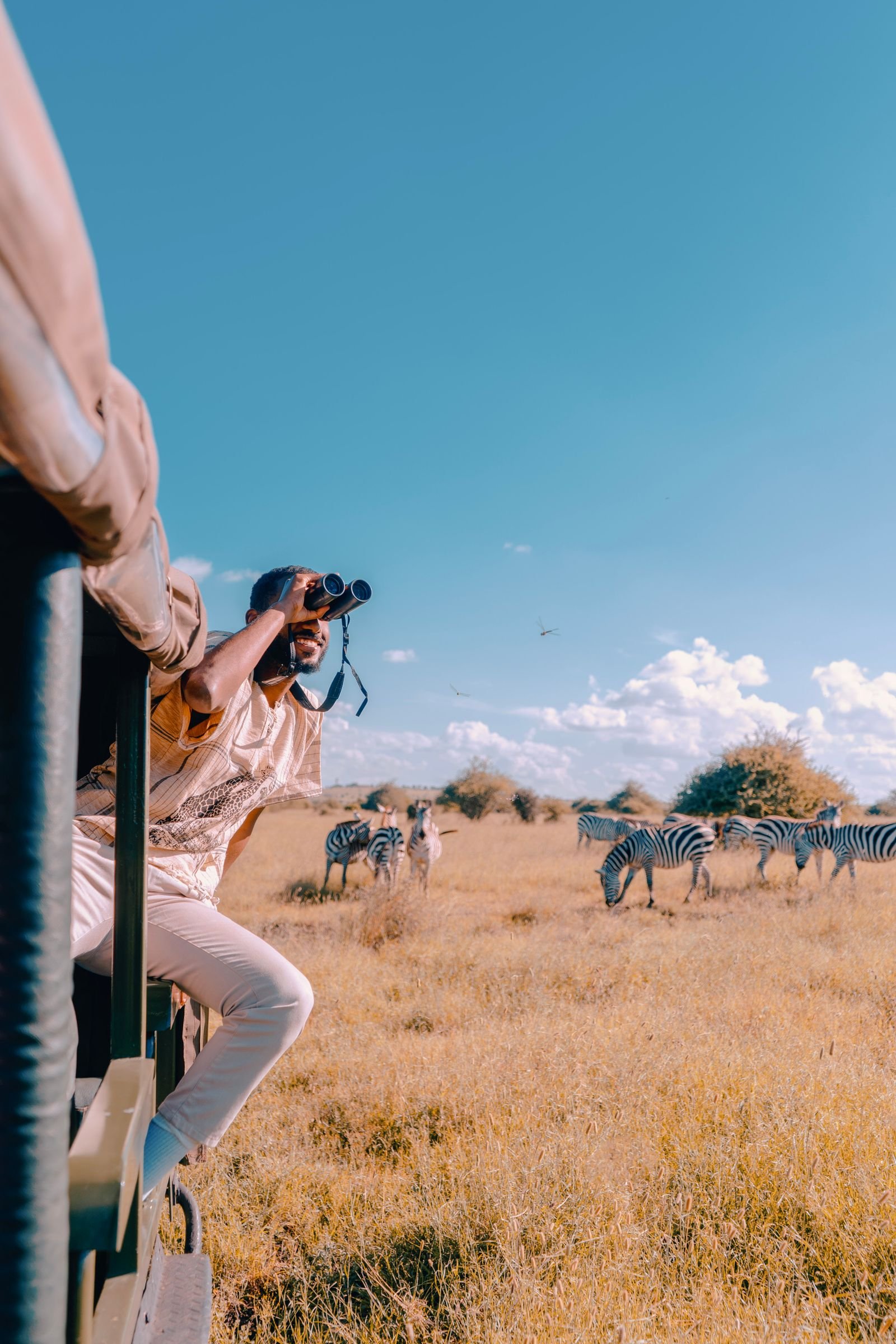
Packing is the last step, not the first — and it depends on everything already decided. A desert safari needs a warm layer for after sunset; an African safari needs neutral colours and binoculars; a tiger safari needs patience and a zoom lens. Our full list is in What to Pack for a Safari — the desert-specific version, the Desert Safari Packing List, is coming next in this series.
The one packing rule for every safari: pack for the coldest hour, not the hottest. Dawn drives are cold everywhere — desert, savanna, jungle river, all at 6 AM. The layer you bring for dawn is the thing you will actually use.
The countdown checklist: 12 months out to the day before
- 12–8 months out: pick the animal and the season; book peak-season Africa lodges and gorilla permits now.
- 6 months out: check your passport’s expiry and blank pages; start the visa research.
- ~90 days out: Indian tiger-park permit window opens — book your zones.
- 3 months out: flights booked, insurance bought, malaria conversation with your doctor done.
- 1 month out: visas and eTAs approved and printed; confirm pickup times with your operator.
- 1 week out: pack using the checklist, charge everything, copies of passport and insurance on your phone.
- Day before: light bag, early night. The dawn drive starts before you think it does.
FAQ
How far in advance should I plan a safari?
For peak season in Africa, 8–12 months ahead — the good lodges and migration-month dates sell out first. Gorilla permits are capped daily and go months ahead too. For an Indian tiger safari, the permit window opens roughly 90 days before your date. A Dubai desert safari can be booked days ahead.
How much does a safari cost per person?
It depends on type and tier. A Tanzania private safari runs roughly US$250–390 per person per day camping, US$550–990 mid-range, and US$990–2,500+ luxury (footslopestours.com, November 2026). Premium East and Southern Africa camps run about US$1,200–2,500+ per person per night all-inclusive. At the other end, a Chitwan 2N/3D package runs about US$200–350 per person and a Kinabatangan 3D2N starts from RM730 per person. Full breakdown: How Much Does an African Safari Cost?
How many days do I need for a first safari?
Plan 7–10 nights on the ground, with at least 3 nights per camp and two camps in different ecosystems. A shorter trip works as a taster — a Dubai desert safari is a single evening — but a proper first wildlife safari needs the time.
Can I plan a safari myself or do I need an operator?
Both, depending on the trip. Book a Dubai desert safari or a Chitwan package yourself. Use an operator for any multi-camp African safari, gorilla trekking, or any itinerary with more than two internal flights. The middle ground: operator for the ground safari, your own international flights booked separately.
What is the best month for a safari?
There is no single best month — it depends on the animal. July to October is the window for the Great Migration river crossings; March to June is best for tiger sightings in India; October to April is the comfortable season for a Dubai desert safari. Pick the animal first, then the month.
What documents do I need for a safari?
A passport valid for 6 months beyond travel with blank pages, the right visa or eTA for your country (Kenya requires an approved eTA via etakenya.go.ke), yellow-fever vaccination where required, and medical plus emergency-evacuation insurance confirmed in writing. Keep copies on your phone.
Planned in the right order, a safari stops being overwhelming and starts being exciting: one animal, one season, one honest budget, then the bookings fall into place. For the next step — what to put in the bag — read our What to Pack for a Safari guide, and browse the full Safari Planning hub.



One Comment