
Tiger Safari India: Best Parks, Season & How to Plan One

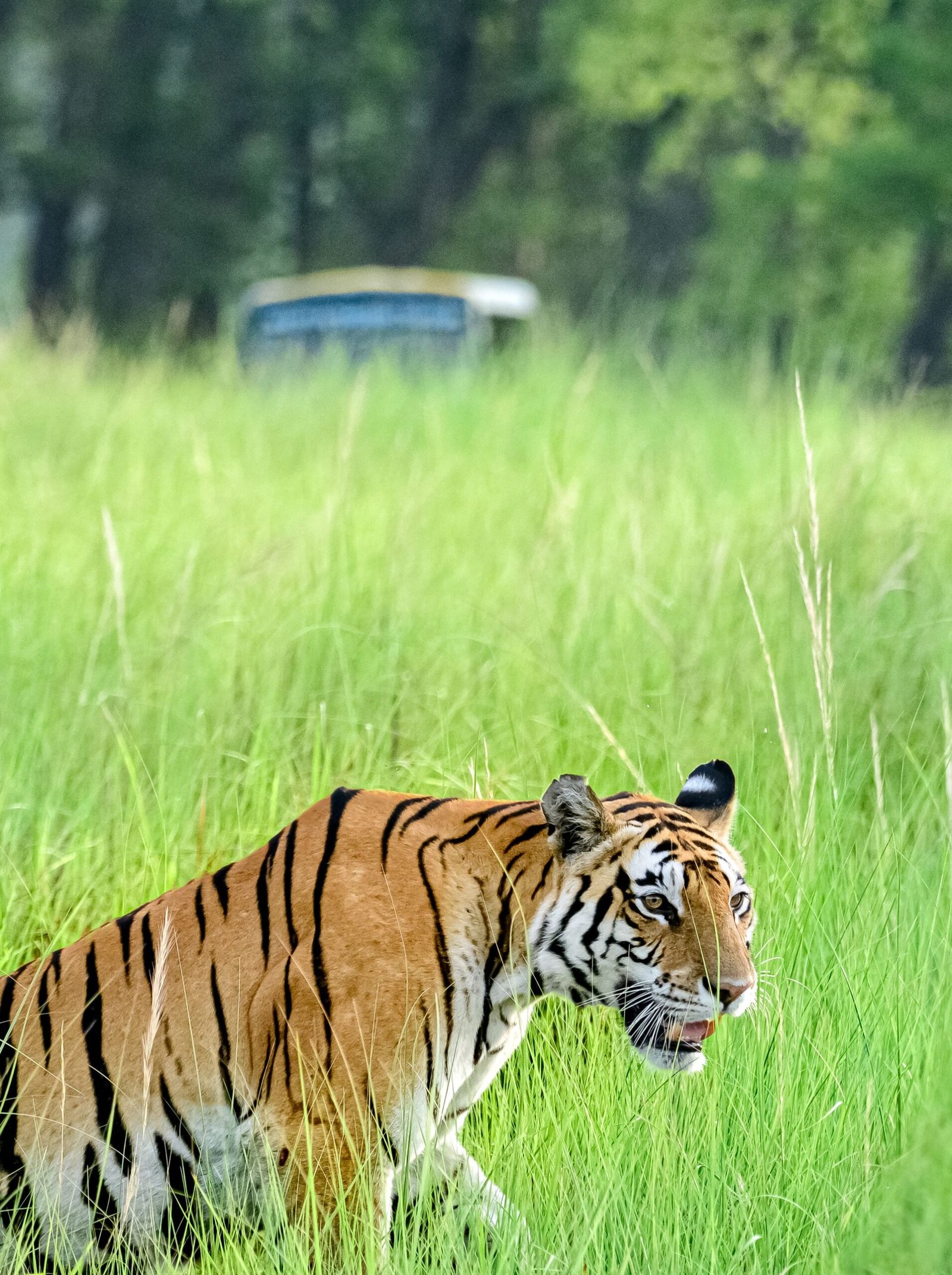
India is the best place on Earth to see a wild tiger. That is not a slogan — it is arithmetic. The 2022 All India Tiger Estimation counted 3,682 wild tigers in India, roughly 75% of the world’s wild tigers, up from 2,967 in 2018. There are 58 tiger reserves (as of March 2025), and the first of them, under Project Tiger, dates back to 1973.
But “India has the most tigers” does not mean “you will see a tiger.” Every guide that ranks parks by sighting chance is guessing — the percentages you see online (“80–90% on a multi-safari trip”) come with no data behind them. This guide does something different. It compares the five big parks by what kind of trip each one suits, explains how permits and zones actually work, prices one real trip honestly, and tells you how many drives to budget before you book a flight.
Tiger safari in India: the 60-second version
- The animal: Bengal tiger, in 58 reserves across India. Madhya Pradesh holds the most of any state — 785 tigers (NTCA 2022) — and Corbett holds the most in a single reserve, 260.
- The season: most reserves open October to June. Core zones close in the monsoon, July to September. Best sightings March to June, when animals gather at shrinking waterholes. Best comfort October to February.
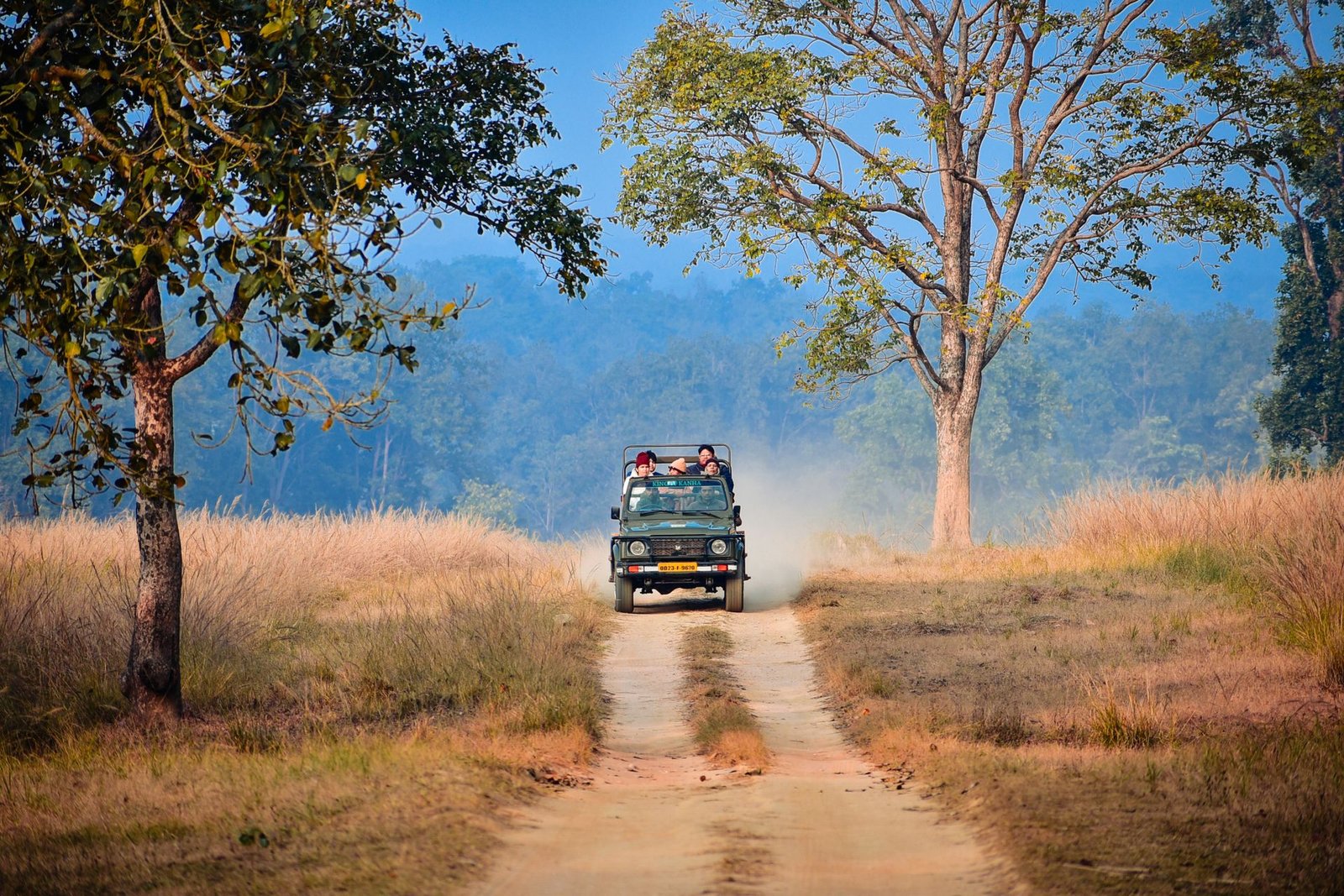
- The format: open Gypsy jeeps, two drives a day (morning and afternoon), with a forest guide and driver. You book a zone, not a tiger.
- The booking rule: permits open roughly 90 days in advance on state forest department portals, and the popular zones sell out in peak season.
- The honest odds: no park guarantees a tiger. Budget 2–3 drives minimum per park, and treat a sighting as the bonus, not the promise.
The big five parks compared
Forget the rankings. The right park depends on the trip you are already planning.
| Park | Best for | Know before you go |
|---|---|---|
| Bandhavgarh (Madhya Pradesh) | Tiger-or-nothing trips | Highest tiger density of the big parks; the park to pick if a tiger is the whole point |
| Ranthambore (Rajasthan) | First-timers, Taj Mahal trips | Easiest to reach — fly to Jaipur, train to Sawai Madhopur; fort and lakes as the backdrop |
| Kanha (Madhya Pradesh) | Landscape and photography | Wide meadows, the “Jungle Book” link; Mukki and Kisli zones carry the strongest tiger reputations |
| Corbett (Uttarakhand) | Elephants and foothills | India’s oldest park; most tigers in a single reserve (260) plus elephants and riverine forest |
| Tadoba (Maharashtra) | Rising sighting rates, fewer crowds | The quiet climber — strong recent sighting reports without Ranthambore’s booking crush |
A note on that Kanha row: the park’s core zones are Kanha, Kisli, Mukki and Sarhi, and the guides’ word is that Mukki and Kisli have the strongest tiger reputations. That is a reputation, not a guarantee — tigers do not read zone maps.
Bandhavgarh — if a tiger is the whole point
Bandhavgarh is the park you pick when the trip has one job. Its core area is compact — around 453 sq km — and its tiger density is the highest of the big five. The reserve is credited with 150+ tigers in total (an operator-grade estimate; treat it as such, not as a census figure).
The trade-off is the journey. Bandhavgarh is not on the way to anywhere else. You fly to Jabalpur or Khajuraho and drive several hours, or take an overnight train. It is a destination in itself, and that is exactly why it works for a tiger-focused trip: you arrive, you stay put, and you drive the same forest morning and afternoon until the forest gives something up.
If you can only visit one park and a tiger sighting is the point of the holiday, this is the honest pick. If you want a tiger and a Taj Mahal and a city, read the next section instead.
Ranthambore — the first-timer’s park
Ranthambore is India’s easiest first tiger park, and the one most visitors should start with. It sits in Rajasthan around the town of Sawai Madhopur, about 3–4 hours by train from Jaipur and roughly 6–7 hours by road from Delhi. You can pair it with the Taj Mahal in Agra and the Pink City in one week — no other big tiger park fits a Golden Triangle trip this cleanly.
The park’s calling cards are its scenery and its access: a 1,000-year-old fort on a hill above the forest, lakes where tigers come to drink in the dry months, and a railway station at the gate. It has 10 zones — Zones 1–5 core, Zones 6–10 buffer — and the lakeside Zones 3 and 4 are the most requested in India. The honest version, which our full guide spells out: zones are allotted by availability, tigers move between them, and a buffer-zone safari is a good safari, not a consolation prize.
Full guide: Ranthambore Safari.
Kanha, Corbett and Tadoba — who each suits
Kanha suits the traveller who wants the landscape as much as the animal. Its meadows are wide and open — the setting that inspired Kipling’s Jungle Book — and that openness is a photographer’s advantage: when a tiger crosses a Kanha meadow, you see it coming. It pairs naturally with Bandhavgarh in one Madhya Pradesh trip (see below), which is the combination most guides never mention.
Corbett suits the traveller who wants more than tigers. It is India’s oldest national park, set in the Himalayan foothills, with elephants, riverine forest and a very different feel from the dry central-Indian parks. It also holds the most tigers of any single reserve — 260 in the 2022 estimation — which surprises people who think of Corbett as the “elephant park.”
Tadoba suits the traveller who has done the homework and wants to dodge the crowds. Its sighting reports have been climbing for years, and because it is not on the standard first-timer circuit, its booking windows are kinder and its drives quieter. If Ranthambore’s core zones are sold out for your dates, Tadoba is the better answer than a panic-booked Canter in a zone you did not want.
When to go: sightings vs comfort, and the monsoon closure
Every park runs on the same seasonal rhythm, and the choice is always the same trade-off.
March to June — best sightings. The heat dries the waterholes, the grass thins, and animals come to the lakes to drink. This is when tigers show themselves most reliably. The price is the heat: May and June in central India are genuinely hot, and the afternoon drive can be brutal.
October to February — best comfort. Cool mornings, clear light, easy drives. The price is the sightings: with water everywhere, tigers spread out, and tall grass hides them. Winter mornings can also be foggy, which delays the start.
July to September — closed. Core zones shut for the monsoon across the big parks. Some buffer zones stay open in some years, but the department decides annually — never plan a monsoon tiger trip on the assumption that a buffer zone will be running.
The sweet spot for most first-timers is November to February for comfort, or March and April for a balance of decent sightings and bearable heat. There is no month that guarantees a tiger, and no month with zero chance.
How permits and zones work (and why you book 90 days out)
This is the part the listicles skip, and it is the part that decides whether your trip happens at all.
Tiger safaris in India are run by state forest departments, not by tour companies. You (or your agent) book a permit on the official state portal — Ranthambore through Rajasthan, Bandhavgarh and Kanha through Madhya Pradesh, Corbett through Uttarakhand, Tadoba through Maharashtra. Permits open roughly 90 days in advance, and the popular zones in the popular parks sell out in peak season.
Three rules that catch first-timers out:
- You book a zone, not a tiger. The department allots zones by availability through its computerised system. Your preferred zone is a request, not a promise. Book early for the best chance of the zone you asked for.
- Permits are issued per person, in your name, with ID. A confirmed permit is generally non-refundable and non-transferable — check the terms for your park before you pay.
- Buffer zones are a strategy, not a defeat. They are cheaper, less crowded, and their tiger numbers are improving as populations spread. If the core zones are sold out for your dates, a buffer-zone drive beats no drive — and it beats a last-minute scramble every time.
A note on prices, because honesty matters here: permit fees vary by state and by park, and the states do not publish one clean national table. The one fee schedule we can quote exactly is Ranthambore’s, in force since 1 April 2026: ₹1,611.80 (Indian) or ₹3,024.80 (foreign) per person in a Gypsy, and ₹986.63 or ₹2,399.63 in a Canter, with vehicle and guide charges collected separately. Other parks’ fees are different and must be checked on each state portal before you budget — any article that quotes a single “India tiger safari price” is inventing one.
What a tiger safari trip actually costs
With that warning in place, here is one honest worked example — a first-timer’s Ranthambore trip, using the verified fee schedule and the reseller ranges our Ranthambore guide documents.
The permit layer (official fees, 1 April 2026 schedule): a foreign visitor pays ₹3,024.80 per Gypsy seat per drive, or ₹2,399.63 per Canter seat, plus vehicle and guide charges at boarding-pass pickup. An Indian visitor pays ₹1,611.80 (Gypsy) or ₹986.63 (Canter).
The all-in layer (what resellers were quoting in 2026): roughly ₹1,600–2,000 per Canter seat and ₹2,200 per Gypsy seat for Indian visitors; roughly ₹4,000–5,000 per seat for foreign visitors. These bundle the entry fee, vehicle, guide, transfers and the operator’s margin — which is why the numbers online disagree so wildly.
A realistic 3-drive trip: two nights in Sawai Madhopur, three drives. On reseller pricing, a foreign visitor should expect roughly ₹12,000–15,000 for the three safari seats alone, before the hotel, transfers and meals. Add a mid-range hotel and the Jaipur train, and a long weekend in Ranthambore is a real but manageable trip — not a luxury-safari price tag, and not a backpacker one either. For Bandhavgarh, Kanha, Corbett or Tadoba, price the same way from that park’s state portal: official fee, plus vehicle and guide, plus whatever the reseller bundles — never from a single number on a tour page.
How many drives do you need? Sighting odds, honestly
More than one. A single drive is a coin toss — a tiger may be sleeping in the grass fifty metres from the track and you will never know. Two or three drives across two days is the sensible minimum for a real chance, and it is also how a tiger park is meant to be seen: different zones, different light, different animals.
The combination most guides never mention: Bandhavgarh + Kanha in one Madhya Pradesh trip. Both parks sit in the same state, the drive between them is manageable, and together they give you five or six drives across two different forests instead of three in one. It is the best odds-per-day plan in India for a tiger-focused traveller — and it only works if you book both parks’ permits in the same 90-day window, which means planning the whole trip before either portal opens.
A good first trip is two nights in one park, three drives — two mornings and an afternoon, or the reverse. Book different zones if you can: one core zone for the waterholes, one buffer zone for the quiet. And remember the golden rule of every tiger park: the forest does not owe you a sighting. The drive itself — the fort on the hill, the meadow at dawn, the langurs in the trees — is worth the trip even on a tigerless day.
Which is the best national park in India to see a tiger?
It depends on your trip. Bandhavgarh has the highest tiger density and is the best pick if a tiger is the whole point. Ranthambore is the best first-timer’s park — easiest to reach, and it pairs with the Taj Mahal. Kanha suits photographers, Corbett suits travellers who want elephants and foothills too, and Tadoba suits anyone who wants strong sightings without the booking crush. No park guarantees a tiger.
How many safaris should I book to have a real chance of seeing a tiger?
Two or three drives across two days is the sensible minimum. A single drive is a coin toss. The best odds-per-day plan is combining two parks — Bandhavgarh and Kanha in Madhya Pradesh — for five or six drives across two different forests.
When is tiger safari season in India?
Most reserves are open October to June. Core zones close in the monsoon, July to September. Best sightings are March to June, when animals gather at waterholes; best comfort is October to February. November to February suits most first-timers, or March and April for a balance of sightings and bearable heat.
How much does a tiger safari in India cost?
Permit fees vary by state and park, and there is no single national price. For Ranthambore, the official fee in force since 1 April 2026 is ₹3,024.80 per foreign visitor in a Gypsy (₹1,611.80 Indian) per drive, plus vehicle and guide charges; resellers bundle it all into roughly ₹4,000–5,000 per seat for foreign visitors. A three-drive Ranthambore trip runs roughly ₹12,000–15,000 for the safari seats alone, before hotel and travel. Price other parks from their own state portals — never from a single number on a tour page.
Can I combine a tiger safari with the Taj Mahal?
Yes — Ranthambore is the park for it. Fly to Jaipur, take the train to Sawai Madhopur, do two or three drives, then visit Agra on the way back. No other big tiger park fits a Golden Triangle trip this cleanly.
Are tiger sightings guaranteed?
No. No park, operator or guide can guarantee a tiger, and any page quoting a sighting percentage without a data source is guessing. What you can control is the number of drives, the zones you book, and how early you book them.
India’s tigers are not hard to find because they are rare — there are 3,682 of them. They are hard to find because they are wild, and wild animals keep their own schedule. The traveller who books early, picks the park that fits their trip, budgets three drives, and treats the forest as the reward — not just the tiger — is the one who comes home happy either way. Start with our Ranthambore Safari guide for the first-timer’s park, then browse our Asian Safaris hub for Yala, Chitwan and the rest of Asia.



2 Comments