Dubai Desert: Names, Locations & Best Areas to Visit

Ask ten people where the Dubai desert is and you will get ten different answers. A red dune an hour from the city. A conservation reserve with oryx. A lake in the sand with flamingos. A camp with a barbecue and a belly dancer. They are all right, and that is exactly the problem: “the Dubai desert” is not one place. It is a handful of named areas around the city, each with its own sand, its own distance, its own rules and its own price — and the safari you book depends entirely on which one your operator drives to.
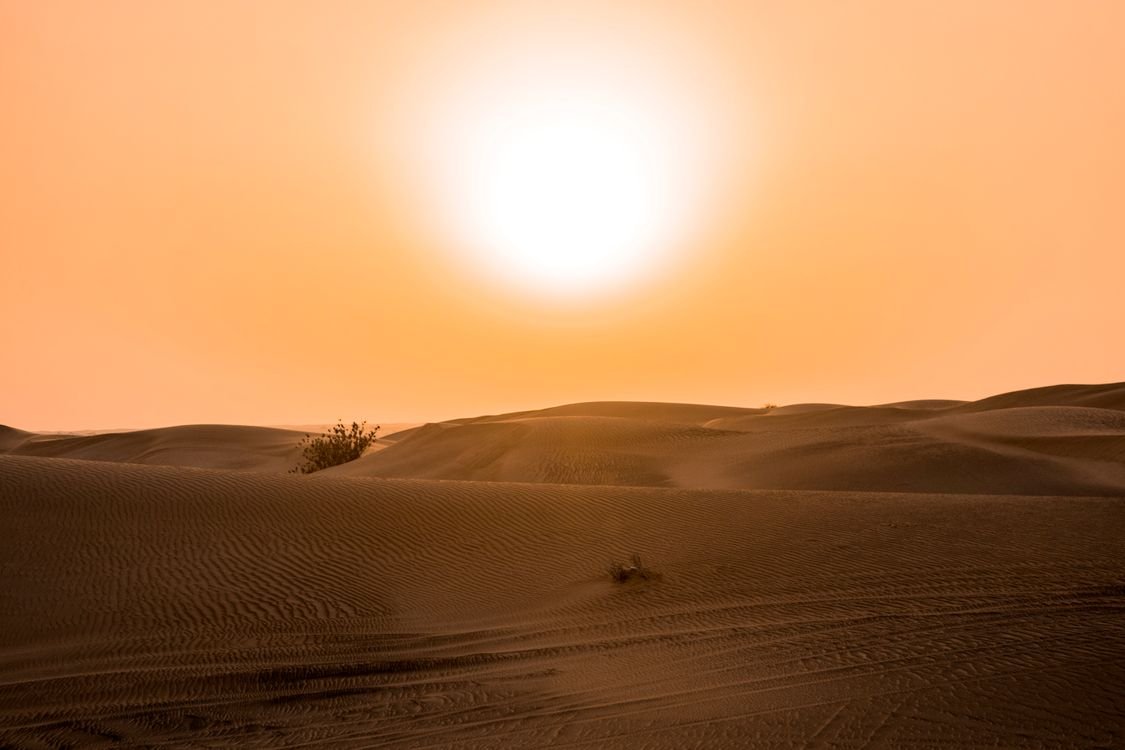
Dubai sits on the edge of the Arabian Desert, and what tourists call the Dubai desert is really the ring of dune country 35 to 70 kilometres from the city centre, plus the far bigger Empty Quarter country a three-hour drive away. Once you know the names, choosing becomes simple. Here is the map, in plain language.
The names, untangled first
The confusion starts with spelling. The famous red-dune area is Lahbab — and you will also see it written Lehbab on operator and marketplace pages. Same dunes, same place, two spellings. Some operators call it the Red Dunes Desert. If a listing says “red dunes”, it means Lahbab.
Then there are the two reserves, and their names trip people up too. The Dubai Desert Conservation Reserve (DDCR) is the UAE’s first national park, a protected area covering about 5% of the emirate, set aside for Arabian oryx, gazelles and controlled, low-impact tourism. Al Marmoom Desert Conservation Reserve is a different and much larger protected area — Dubai’s largest, covering almost 23% of the emirate around Saih Al Salam. Two reserves, two purposes, and mixing them up is the most common mistake in Dubai desert planning.
And the Empty Quarter — Rub’ al Khali — is the largest continuous sand desert in the world, but it is not a day trip from Dubai. It starts more than 300 kilometres away. Any listing that promises you the Empty Quarter on a standard evening safari is selling you Lahbab with a grander name.
Lahbab: the red dunes (about 50 km, 45–55 minutes)
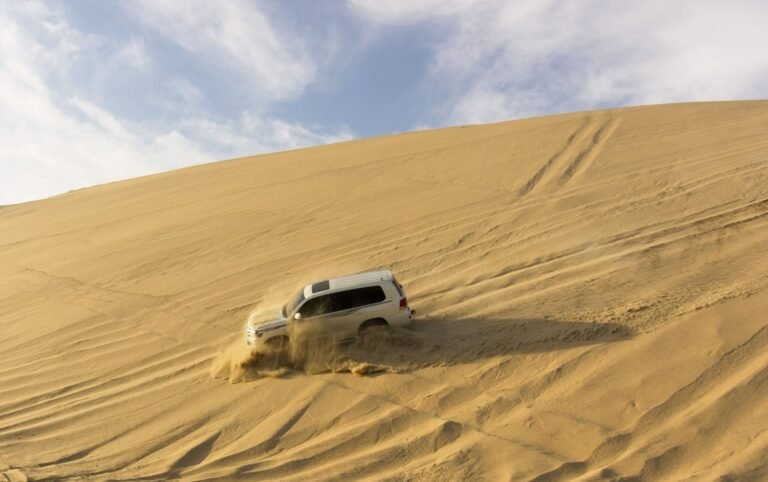
This is the desert most people picture, and the one most safaris actually visit. Lahbab sits about 50 kilometres south-east of the city, a 45 to 55-minute drive each way, and its dunes are a deep red-orange — the most photographed sand in the UAE. The dunes here are tall and steep, which is why this is the dune-bashing capital: 4x4s crest and drop through the ridges, sandboards run down the faces, and quad bikes and buggies work the flats between the dunes.
A standard evening safari — the product almost everyone books — drives out to Lahbab for the bashing and the sunset photos, then moves on to a camp for dinner and the shows. If your priority is big dunes, adrenaline and dramatic photographs, Lahbab is the answer.
The verdict, stated plainly: first desert trip, short on time, or you want the classic safari with bashing, sunset and camp — book Lahbab. It is the best all-rounder in Dubai, and the red sand photographs like nowhere else in the emirate.
Al Awir: the closest desert (about 35 km, 35–45 minutes)
Al Awir, on the eastern edge of the city near Al Awir Road, is the closest dune area to Dubai — about 35 kilometres from the centre, 35 to 45 minutes by car. Its dunes are lower and flatter than Lahbab’s, and that is both its strength and its limit. It is the best choice for a short trip, for families with small children, and for anyone staying near the airport or Deira who does not want an hour each way in a 4×4. Many operators put their desert camps here, so the evening barbecue-and-show half of a safari often happens on Al Awir sand even when the bashing happened in Lahbab.
The honest trade-off: if dune bashing is the point of your trip, Al Awir will feel tame after Lahbab. If a short, easy desert evening is the point, it is the smartest pick in Dubai.
Dubai Desert Conservation Reserve: the quiet, wild one (about 55 km, about an hour)
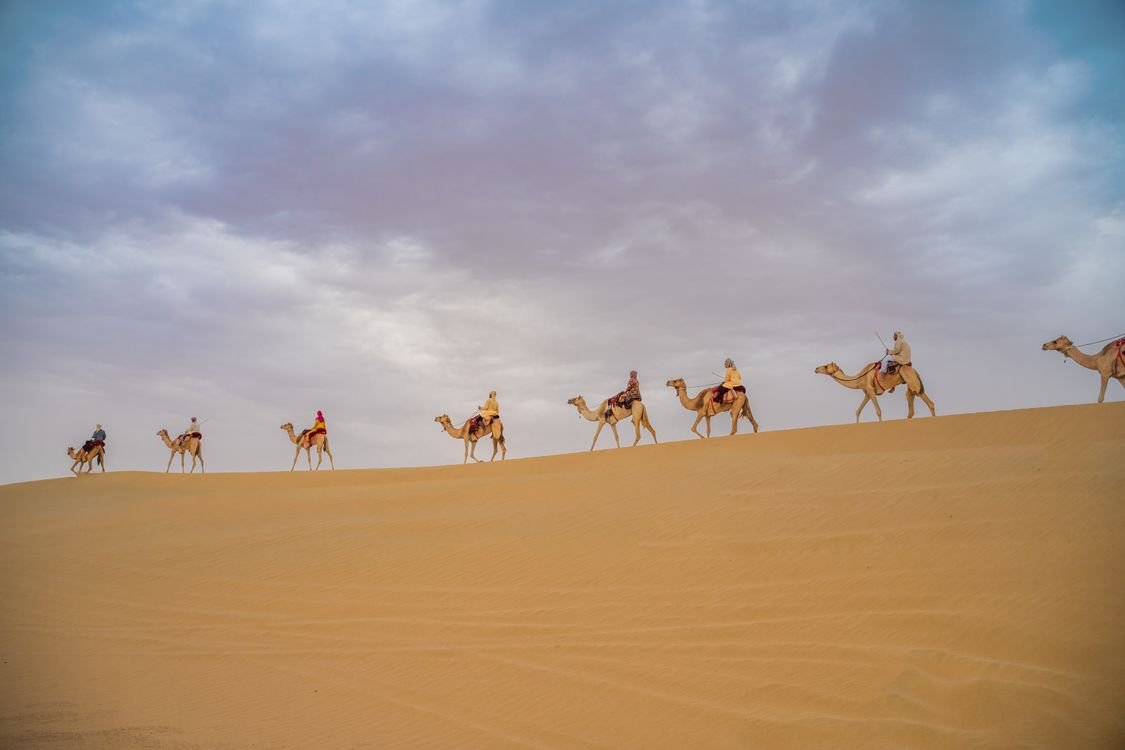
The DDCR is the desert for people who want the place itself, not the rides. About 55 kilometres from the city, it is a protected reserve where tourism is controlled: heritage-style safaris in vintage Land Rovers, falconry, camel treks and wildlife watching, with Arabian oryx and gazelles as the stars. There is no dune bashing here, and no quad bikes — that is the point. The experience is deliberately slow: a drive through the dunes at golden hour, a falcon on your glove, dinner in a torch-lit camp that feels a century away from the city.
This is also the luxury end of the Dubai desert. Heritage safaris here cost several times a standard evening trip, and they are worth it only if the wildlife and the quiet are what you came for. If you want bashing, do not book the DDCR — you will pay a premium for the one thing it does not offer.
Al Marmoom: the big reserve (about 40–45 km)
Al Marmoom is Dubai’s largest protected area, and the easiest to reach after Al Awir — about 40 to 45 kilometres from the city, towards Al Qudra. It is the reserve for nature lovers, photographers and families: Arabian oryx, gazelles and desert birds, camel experiences, cycling on the Al Qudra track, and sunset views over the lakes. The atmosphere is relaxed rather than thrilling, and the camps here are quieter than the big Lahbab operations.
Al Qudra: lakes, sunsets and the cycling track
Al Qudra is not a dune-bashing area at all — it is a desert of lakes and open landscapes, famous for Al Qudra Lakes and Love Lake, the heart-shaped lake that has become one of Dubai’s most photographed sunset spots. The cycling track that loops through it is one of the best rides in the UAE, and the birdlife around the lakes draws photographers at dawn and dusk.
Come here on your own, in your own car, for a sunset picnic or a cycle — it is one of the few Dubai desert areas that works brilliantly without a tour. But do not book a “desert safari” expecting Al Qudra and get Lahbab instead: they are different trips, and the listing should say which one it is.
Big Red and Fossil Rock: the self-drive dunes
Two more names you will meet, both on the Dubai–Hatta road towards Sharjah. Big Red — also called Bidayer or Al Hamar — is a single steep red dune about 50 kilometres from the city, and it is the weekend playground for self-drivers and locals. Fossil Rock (Jebel Maleihah), a little further on past 60 kilometres, is a rocky outcrop studded with ancient marine fossils, and the surrounding desert suits photography and small groups far better than big tour buses.
Here is the honest warning, from an operator’s point of view: dunes punish inexperienced drivers. A 4×4 on tarmac is not a 4×4 on sand — tyres need deflating, momentum matters, and a stuck vehicle in soft sand at midday is a serious problem, not an adventure. Big Red is where rental cars get bogged down every weekend. If you have never driven dunes, go with a guide or an organised tour, and save the self-drive for the Al Qudra lakes, where the roads are sealed.
Liwa and the Empty Quarter: the real deep desert (about 250 km, about 3 hours)
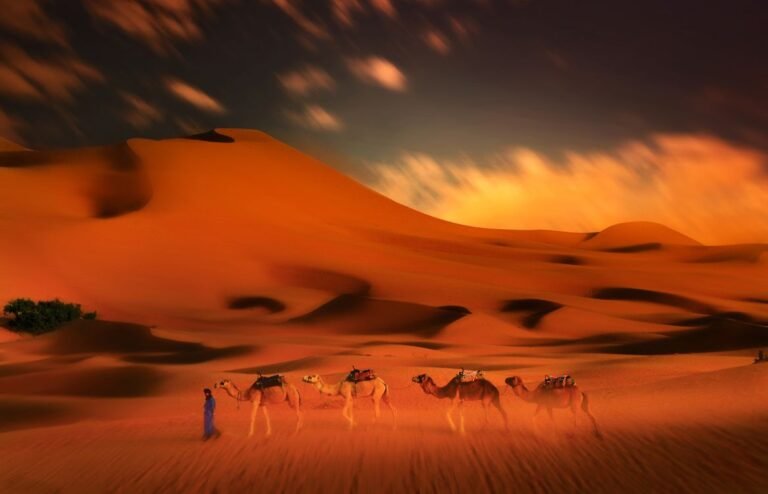
Liwa, in Abu Dhabi’s Al Dhafra region, is where the dunes get serious. About 250 kilometres south-west of Dubai — a drive of around three hours — it sits on the edge of the Empty Quarter, and its dunes are enormous. Tel Moreeb, one of the region’s most famous dunes, rises above the oasis town like a sand mountain. This is the desert for photographers, overnight campers and stargazers, and the night sky over Liwa is the darkest within easy reach of Dubai.
But be honest with yourself about the distance. Liwa is not a half-day trip from Dubai — it is a full day at minimum, and it is best as an overnight. A standard Dubai evening safari will never take you there. If the Empty Quarter is the dream, plan it as its own trip, stay the night, and watch the stars.
Which area is yours? The quick decision
| You want… | Go to… | Distance from Dubai |
|---|---|---|
| Classic safari, big dunes, dune bashing | Lahbab | ~50 km, 45–55 min |
| Shortest trip, easy evening | Al Awir | ~35 km, 35–45 min |
| Wildlife, quiet, heritage luxury | DDCR | ~55 km, ~1 hour |
| Nature, families, sunrise wildlife | Al Marmoom | ~40–45 km |
| Lakes, sunset photos, cycling | Al Qudra | ~40 km, self-drive |
| Self-drive dunes, weekend thrill | Big Red (Bidayer) | ~50 km |
| Fossils, photography, small groups | Fossil Rock / Mleiha | 60+ km |
| Huge dunes, overnight, stargazing | Liwa / Empty Quarter | ~250 km, ~3 hours |
What it costs, honestly — by area, not by listing
Here is the part the booking sites blur: the same “evening safari” costs three times as much depending on where it goes and what it includes, and nobody explains why. Operator listings checked in November 2026 show shared evening safaris in the Lahbab–Al Awir corridor from roughly AED 80 to AED 250 per person, with the cheapest listings stripping out dune bashing, camp size and food quality to hit the headline price. A premium shared evening runs around AED 200 to AED 250; a private evening in your own 4×4 runs roughly AED 400 to AED 700; a standard overnight camp runs about AED 500 to AED 900; and a luxury overnight near Liwa runs AED 1,200 to AED 2,500+ per person. DDCR heritage safaris sit at the top of the Dubai range, well above a standard Lahbab evening.
What the extra dirhams actually buy: the dune area (Lahbab’s tall red dunes versus flatter Al Awir sand), the bashing time, the camp size, food cooked on site versus brought in, and shared versus smaller groups. A AED 79 listing and a AED 240 listing are not the same trip at different prices — they are different trips. Read the inclusions, not the headline.
The honest downside
Three things, said plainly. First, the safari you book is probably not the desert you imagined. Most standard evening safaris visit the same Lahbab–Al Awir corridor and the same large camps, and the “Bedouin camp” is a purpose-built tourist camp with a buffet and a stage show — enjoyable, but not a night in the Empty Quarter. If you want the deep desert, you have to book it deliberately. Second, the red dust gets everywhere. Lahbab’s fine rust-red sand stains light clothing, fills shoes and works into hair at speed — do not wear white trainers you care about, and tie long hair back before dune bashing. Third, summer is brutal. Lahbab reaches around 48°C on summer afternoons, and the sand itself is far hotter underfoot — the desert in July is a different trip from the desert in January, and the best months are November to March.
The alternative most guides skip
Almost every Dubai desert guide stops at the safari areas. The one most of them skip is Mleiha in Sharjah — an archaeological desert with fossil sites, ancient tombs and dune landscapes, about an hour from Dubai, where the experience is history and exploration rather than rides. If you have already done the classic safari and want a desert day that feels completely different, Mleiha is the one to book.
Where is the Dubai desert?
The Dubai desert is not one place — it is a ring of named desert areas 35 to 70 kilometres from the city, including Lahbab, Al Awir, the Dubai Desert Conservation Reserve, Al Marmoom and Al Qudra. Dubai sits on the edge of the Arabian Desert, and the far bigger Empty Quarter lies more than 300 kilometres away.
Which desert area is best for a Dubai desert safari?
Lahbab is the best all-rounder: tall red dunes about 50 kilometres from the city, ideal for dune bashing, sandboarding and sunset photos. Al Awir is best for the shortest trip, the DDCR for wildlife and heritage luxury, and Al Marmoom for families and sunrise wildlife watching.
How far is the Dubai desert from the city?
Al Awir is the closest at about 35 kilometres (35–45 minutes). Lahbab is about 50 kilometres (45–55 minutes), Al Marmoom about 40–45 kilometres, and the Dubai Desert Conservation Reserve about 55 kilometres (about an hour). Liwa and the Empty Quarter are about 250 kilometres away — roughly three hours.
What is the difference between Lahbab and Lehbab?
Nothing — they are two spellings of the same red-dune area south-east of Dubai. Operator and marketplace pages use both. If a listing says “red dunes”, it means Lahbab.
Can you visit the Dubai desert on your own?
Yes, for some areas. Al Qudra’s lakes and cycling track work well self-drive, and Big Red is popular with self-drivers — but dune driving without experience is risky, and the Dubai Desert Conservation Reserve is a protected area you cannot simply drive into. For dune bashing, book a licensed tour.
How much does a Dubai desert safari cost?
Shared evening safaris in the Lahbab–Al Awir corridor run roughly AED 80 to AED 250 per person, private evenings about AED 400 to AED 700, standard overnight camps about AED 500 to AED 900, and luxury Liwa overnights AED 1,200 to AED 2,500+. DDCR heritage safaris sit at the top of the Dubai range. Prices from operator listings checked November 2026.
The Dubai desert rewards the traveller who knows which desert they are booking. Pick Lahbab for the classic safari, Al Awir for the short evening, the DDCR for wildlife and quiet, Al Marmoom for the family sunrise, Al Qudra for a self-drive sunset — and save Liwa for the night you really want the Empty Quarter. Before you book, read our Desert Safari Dubai: The Complete Guide for the full safari breakdown, our Morning Desert Safari Dubai and Evening Desert Safari Dubai guides for the two classic trips, our Desert Safari Dubai Price & Cost guide for the full price picture, our Best Time for a Desert Safari in Dubai guide for the season to choose, and our What to Wear for a Desert Safari in Dubai guide so the red dust does not ruin your favourite shoes. If the desert has you thinking bigger, our Desert Safari Abu Dhabi Guide covers the capital’s dunes, and our How to Plan a Safari guide covers the whole trip. Start with the area, not the listing — and the desert will do the rest.