Africa Safari Tours: How to Pick an Operator

An Africa safari tour is not a hotel booking. The company you choose controls your guide, your vehicle, your lodges — and what happens when something goes wrong a hundred kilometres from the nearest town. Pick the wrong operator and no lodge upgrade fixes the trip. Pick the right one and the rest mostly takes care of itself.
This guide is about that one decision: the three kinds of safari company, how to check that one is real, what a fair quote looks like line by line, and the red flags that should stop you before you pay a deposit.
The three kinds of safari company
Every Africa safari tour is sold by one of three kinds of company, and knowing which kind you are talking to changes every question you ask.
Planners build a whole trip across many lodges and countries, but they do not run the safari themselves. Go2Africa, Timbuktu Travel and Stanley Safaris are the names most often cited. They are strongest on multi-country routes and complicated trips — Kenya plus Tanzania plus a beach finish, for example — and they charge for the planning and the protection that comes with it.
Tour operators run their own journeys, with their own guides and vehicles. Micato Safaris and Abercrombie & Kent are the classic examples. They suit travellers who want one company accountable for the whole trip, from the airport pickup to the last game drive.
Camp owners own the lodges and camps themselves — Wilderness, andBeyond, Asilia Africa, African Bush Camps. Book with them and you are staying in their camps, with their guides, on their land. They are strongest when you want one region done deeply rather than four countries skimmed.
The verdict, plainly: first safari, one country, seven to ten days — book a local operator based in that country. They know the parks, they hold the lodge relationships, and their price is usually the honest one. Three or more countries, or a trip with a wedding, a honeymoon or a specialist interest like photography — use a planner. The 15–30% premium a planner charges over a direct local booking (africatouroperators.org, November 2026) buys coordination across borders and consumer protection under your home country’s travel rules, and on a complex trip that is money well spent.
How to check an operator is real
This is the part most guides wave at and never explain. Here is how to actually do it, before any money moves.
Check the association, then check the licence. In Tanzania, look for registration with the Tanzania Association of Tour Operators (TATO). In Kenya, membership in the Kenya Association of Tour Operators (KATO). In South Africa, the Southern Africa Tourism Services Association (SATSA). In Uganda, a licence from the Uganda Tourism Board and ideally membership of the Association of Uganda Tour Operators (AUTO). The Africa Travel and Tourism Association (ATTA) spans several countries. These are real memberships with real standards — a company either holds one or it does not, and the association’s own directory will confirm it.
Then ask for the government-issued tour operator licence for the country where the company is registered. In Kenya, safari operators hold Class C enterprise licences, which expire on 31 December each year and must be renewed annually — so a licence dated last year is not a licence. A physical registered address, a named director or owner, and a certificate of incorporation are all reasonable to ask for before paying a deposit. A company that stalls on any of these is telling you something.
Read the reviews like a detective, not a counter. A thousand reviews mean nothing if the newest is two years old. Prioritise reviews from the past 12 to 18 months — companies change guides, vehicles and management, and a 2022 review does not describe the 2026 trip. Look for reviews that name the guide, describe a specific sighting or a specific problem, and include photos from the actual trip. And read the ones about things going wrong: a breakdown, a missed flight, an illness. How a company handles a problem is the most honest measure of it there is. Read the company’s replies too — a factual reply that explains what happened and what changed is a good sign; a generic apology or a defensive reply is not.
Ask when their team last visited your camp. This is the single most revealing question you can ask, and it comes from the operators’ own advice: ask ‘when did a member of your team last personally visit this specific camp or park?’ A specialist will answer with a month and a name. A booking agent will answer with a brochure.
The guide and the vehicle matter more than the lodge
Ask any experienced safari traveller what made their trip and the answer is almost always the guide. A great guide is a naturalist, a driver, a storyteller and a fixer in one person, and the difference between a good one and an average one is the difference between seeing a leopard and driving past one.
In Kenya, the Kenya Professional Safari Guides Association (KPSGA) certifies guides in tiers — bronze, silver, gold — based on field experience, wildlife knowledge and formal assessment. Ask what certification level your assigned guide holds, and how long they have worked in the specific park on your itinerary. In reviews, look for the guide’s name appearing again and again: that is a company whose guiding is consistently good, not one that got lucky once.
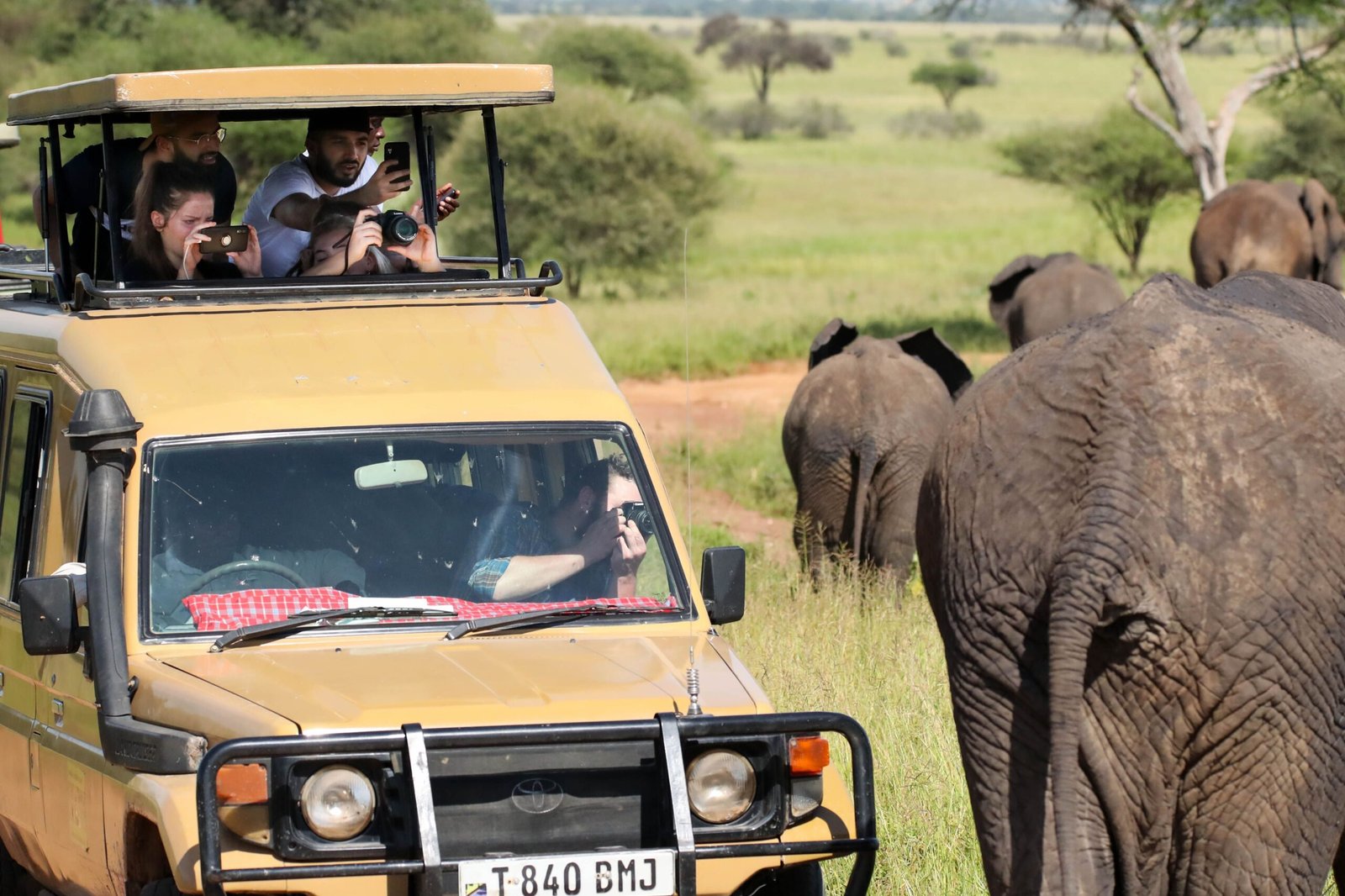
The vehicle is the second thing to check. The standard game-drive vehicle across East and Southern Africa is a Toyota Land Cruiser 4×4, custom-modified with a pop-up roof hatch, reinforced suspension, long-range radio and, in South Africa, a Certificate of Fitness renewed annually. Ask three things: how many people share the vehicle (a responsible operator seats no more than six or seven, so everyone gets a window seat), how old the fleet is, and whether the vehicle carries a first aid kit, spare tyres and a satellite communicator for remote areas. A quote that is far cheaper than the others is often cheap because the vehicle is shared with strangers, or old, or both.

What a fair quote looks like, line by line
Never compare two quotes by their bottom line. Compare them line by line, for the same number of nights, the same parks, the same accommodation standard and the same vehicle arrangement. A reputable company produces an itemised breakdown without being asked. If one will not, walk away.
A full package should include, as standard: private airport and airstrip transfers, all national park entry fees, a private or shared 4×4 vehicle with a certified guide, full-board accommodation at named lodges or tented camps, and 24/7 on-trip support. Domestic flights between safari destinations are usually included in fly-in packages but may be an add-on in road-based ones. Ngorongoro Crater descent fees should be in the price for any itinerary that covers the crater.
Commonly excluded: premium drinks, laundry, tips for guides and lodge staff, travel insurance, and optional activities — a hot air balloon safari over the Serengeti runs about $500 to $600 per person (africatouroperators.org, November 2026). Gorilla permits are priced separately: Uganda $800 per person per trek, Rwanda $1,500 per person (2026 figures).
What safaris cost in 2026 — labelled ranges, checked November 2026. Budget group safaris with shared vehicles and basic camping or budget lodges run about $150 to $300 per person per day. Mid-range safaris with comfortable lodges run about $400 to $700 per person per day. Premium and luxury safaris with private vehicles, fly-in transfers and high-end tented camps run about $1,000 to $2,500 per person per day. A seven-day mid-range Tanzania package covering the Serengeti, Ngorongoro and Lake Manyara runs about $2,000 to $3,000 per person. For the full cost picture by tier, see our How Much Does an African Safari Cost? guide.
The skipped alternative: book direct with a local operator
Most guides skip this, because most guides are written by the companies selling you the trip. Here it is plainly: for a single-country safari, booking direct with a registered local operator is usually the best value you will find. They run the trip themselves, they know the parks, they answer the phone when something goes wrong, and there is no middleman’s margin in the price.
The trade-off is real and worth naming. A local operator’s consumer protection is the law of their country, not yours. If the company fails, your home country’s travel protection scheme may not cover you. That is exactly what the planner’s 15–30% premium buys — and for a first trip, a multi-country route or a big honeymoon spend, it can be worth it. For a straightforward seven-day Kenya or Tanzania safari with a well-reviewed local operator, it usually is not. Book direct, but verify first — the checks above are the price of the saving.
The honest downside
Three things, said plainly. First, the subcontracting trap is real: some companies sell safaris they do not run, and hand you to a local operator you never spoke to, at a quality you never checked. Ask, in writing, ‘who will actually run this trip day to day?’ If the answer is another company’s name, judge that company, not the one that sold you the tour.
Second, a quote far below the others means something was removed. Budget pricing is sometimes achieved by cutting guide training, running an ageing fleet, crowding the vehicle, or booking you into lodges that are not the ones in the photos. A suspiciously cheap quote is a question, not a bargain — ask what was taken out to reach that price.
Third, deposits are serious money. Across the industry, deposits run 30 to 50 percent of the total cost, and non-refundable clauses are standard. Read the cancellation and refund terms before you pay anything, and arrange comprehensive travel insurance independently at the time of booking. That insurance is the practical answer to the deposit risk — do not skip it.
Before you pay: the checklist
Get these answers in writing, from every operator you are comparing, before any deposit moves: which specific parks and conservancies the itinerary covers, and why those fit your dates; the maximum group size on the vehicle; the vehicle type and model, and when it was last serviced; an itemised list of what is included and excluded; the cancellation and refund policy, and exactly when a refund is issued; how long your assigned guide has worked in this destination and what certification they hold; references from past clients who took a similar itinerary in the past six months; and what 24/7 emergency support looks like mid-trip. A company that answers each of these promptly, specifically and without hurry is showing you the standard of service to expect on the trip itself. Rushed, vague or evasive answers are a reason to keep looking.
If you are still choosing a country, start with our African Safari Beginner’s Guide and our How to Plan a Safari guide — pick the place and the season first, then pick the operator who knows that place best.
What is the best company to use for an African safari?
There is no single best company — the right one depends on your trip. For a first safari in one country, a registered local operator in that country usually gives the best value. For a multi-country route, use a planner who builds trips across borders. For a luxury trip in one region, consider a company that owns its own camps. Judge any of them by licence, association membership, guide quality and recent reviews — not by their website photos.
How do I know if an African safari company is legitimate?
Check association membership — TATO in Tanzania, KATO in Kenya, SATSA in South Africa, AUTO in Uganda — and ask for the company’s current government-issued tour operator licence. In Kenya, Class C licences expire on 31 December each year, so check the year. Cross-check the company on TripAdvisor, SafariBookings and Google, and ask for a registered address and a named director before paying a deposit.
How much does an African safari tour cost?
As labelled ranges checked November 2026: budget group safaris about $150–$300 per person per day, mid-range about $400–$700, premium and luxury about $1,000–$2,500. A seven-day mid-range Tanzania package runs about $2,000–$3,000 per person. Gorilla permits are extra — Uganda $800, Rwanda $1,500 per person — and a Serengeti balloon safari about $500–$600. Full detail is in our African Safari Cost guide.
Should I book with a local operator or an international company?
For a single-country safari, a registered local operator usually offers the best price and the deepest local knowledge. For multi-country trips, an international planner is usually worth its 15–30% premium for coordination and consumer protection under your home country’s travel rules. Either way, ask in writing who will actually run the trip day to day.
What should an African safari package include?
Private transfers, all park entry fees, a 4×4 vehicle with a certified guide, full-board accommodation at named lodges or camps, and 24/7 on-trip support. Domestic flights are usually included in fly-in packages. Commonly excluded: premium drinks, laundry, tips, travel insurance and optional activities like balloon safaris. Get the full list itemised in writing before you pay.
How much deposit do safari companies ask for?
Typically 30 to 50 percent of the total cost, and non-refundable clauses are standard across the industry. Read the cancellation and refund terms before paying, and arrange comprehensive travel insurance independently at the time of booking.
The operator is the trip. The lodge is where you sleep; the guide is what you remember, the vehicle is what you spend your days in, and the company is who answers the phone when the plan changes. Spend the extra week choosing them properly — check the licence, name the guide, read the quote line by line — and the safari takes care of itself. For the wider picture, read our African Safari Beginner’s Guide and our How to Plan a Safari guide, and check the cost tiers in our African Safari Cost guide before you compare quotes.