Etosha National Park Guide: Waterholes, Wildlife & Costs

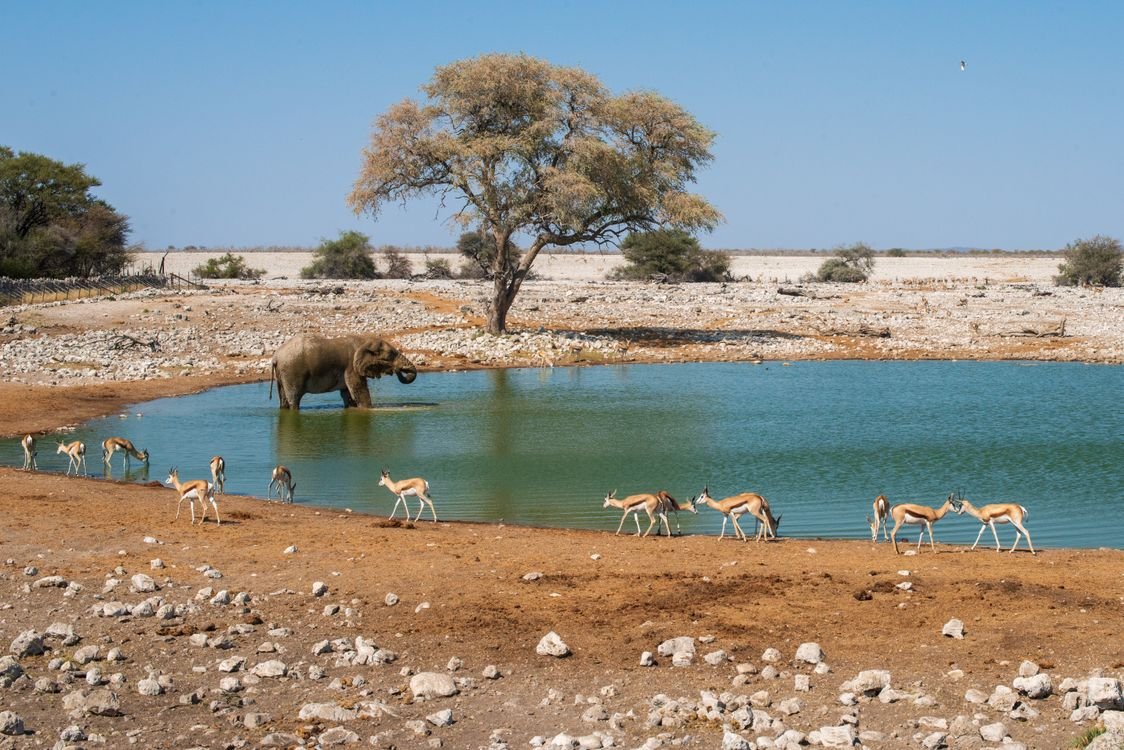
Most safaris are a search. You drive for hours, scanning the bush, hoping something crosses the road. Etosha National Park works the other way round. You park at a waterhole, switch the engine off, and wait — and the park comes to you.
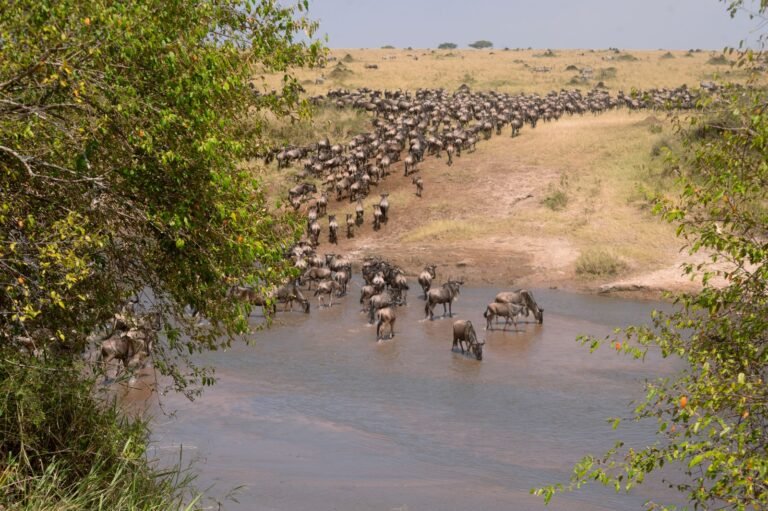
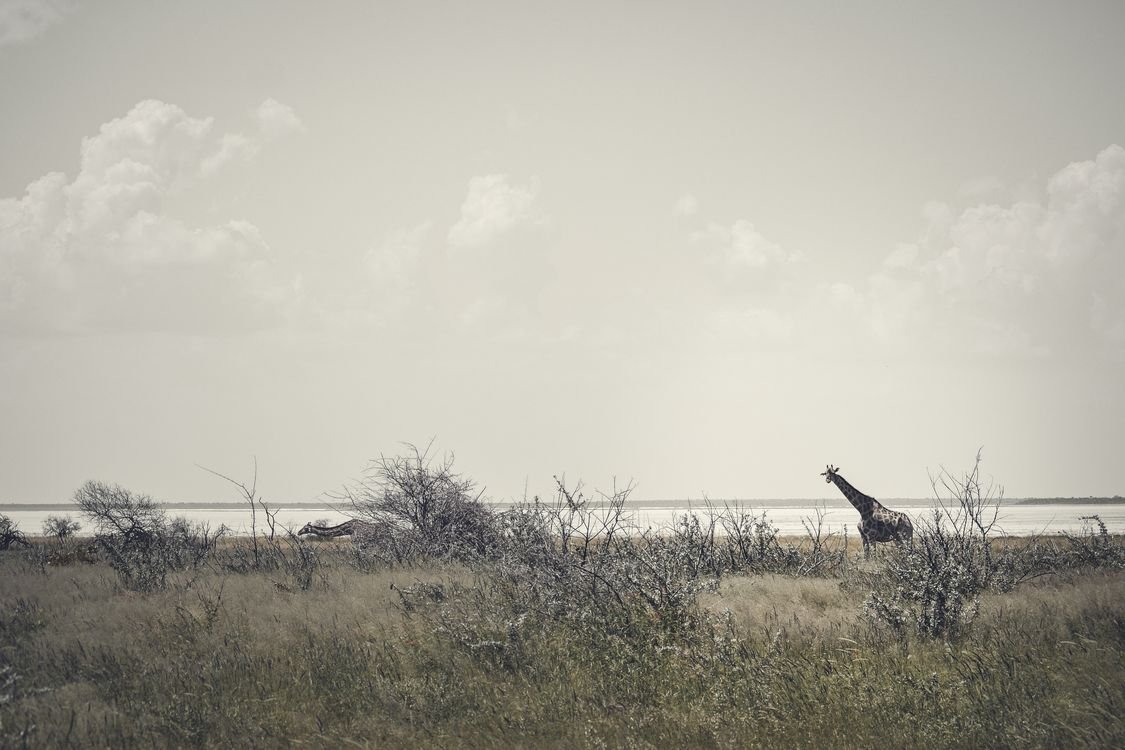
That is the whole idea of Etosha, and it is what makes it different from every other big African park. At its centre sits the Etosha Pan, a flat white salt flat of 4,730 square kilometres — about a fifth of the park, big enough to see from space, the dry bed of a lake that vanished thousands of years ago. In the dry season there is almost no surface water anywhere else, so the wildlife is forced to a fixed set of waterholes, many of them spring-fed and permanent. Elephants, lions, black rhino, giraffe and great herds of plains game all drink at the same water, often in the same afternoon. You do not track animals in Etosha. You wait, and they arrive.
The park itself covers 22,935 square kilometres of northern Namibia — slightly larger than Wales — and has been protected since 1907, a national park since 1967. It holds 114 mammal species and more than 340 bird species. Its name comes from the Oshindonga word often translated as “the great white place”, and on a dry-season afternoon, standing at the edge of that white pan with heat shimmering off it, the name makes perfect sense.
When to go: the dry season is the whole point
The season matters more in Etosha than in most African parks, because the game viewing depends entirely on the waterholes. The scarcer the water, the more animals at the waterholes.
July to October is the peak. The land dries out, the seasonal pools are gone, and the waterhole spectacle is at its height — huge concentrations of game, thin vegetation, easy viewing. September and October are the very best months. October is also the hottest: it averages 34 °C and regularly tops 35 °C, and the dust gets into everything. Mornings in July and August can be close to freezing, so pack a warm layer for the early drive even if the afternoon is hot.
May to June is the early dry season. The bush is still green in early May and starts to dry. Animals begin gathering at the permanent waterholes, nights turn cold, and the park is quieter than in the peak months. This is the sweet spot if you want good viewing without peak-season crowds and prices.
November to April is the green season. The first rains fill temporary pans and the animals spread across the whole park, so sightings take more patience. But the park turns green, newborn springbok and zebra appear, birding is at its best — November to April is the best birding window — and rates are lower. In wet years the pan itself floods a few centimetres deep and flamingos arrive in their tens of thousands to breed. They only succeed in about one year in nine, so a flamingo year is a lucky one, not a plan.
The verdict, plainly: for a first visit, come between July and October. If you have been before and want birds, green landscapes and lower prices, the rains are your season. Two-thirds of the annual rain falls from January to March, so that is the wettest stretch.
The waterholes: how to plan your day around them
Etosha rewards patience more than mileage. A good waterhole in September will deliver elephant, giraffe, zebra, oryx, springbok, kudu, black rhino and lion across a single afternoon, often in the same frame. The trick is picking the right waterhole for the right light — something no other guide bothers to spell out.
Morning waterholes: Chudop and Okondeka. Choose waterholes for their light, not only their animals: you want the sun behind you and a clean background, which means east-facing parking in the morning. Chudop and Okondeka are the classic morning stops on the southern edge of the pan.
Midday waterhole: Nebrownii. Most waterholes go quiet and harsh in the middle of the day. Nebrownii works even at midday because its white ground acts like a giant reflector. If you are driving between camps at noon, this is the one to stop at.
Late afternoon into the blue hour: Okaukuejo. The camp waterhole at Okaukuejo is at its best from late afternoon onwards, and it is the one waterhole you can watch after dark. It is floodlit, and sitting there after sunset is one of the most reliable black rhino sightings on the continent — black rhino come most nights in the dry season, often several at once, and often at very close range. Many people come to Etosha for this one evening alone.
The pan-edge waterholes between Okaukuejo and Halali are among the most reliable in the park for big herds and predators. The waterholes along the southern edge of the pan are where the big concentrations gather, and the drive between the two camps is one of the most productive stretches of road in Etosha.
One rule governs all of it: the gates open at sunrise and close at sunset, and you must be inside a rest camp or out of the park by closing time. Plan your last waterhole stop with the drive back in mind — the speed limit is 60 km/h on gravel, and you drive slower than that with animals by the road anyway.
Where to stay: inside the park beats outside it
You have two choices: the government rest camps inside the park, run by Namibia Wildlife Resorts (NWR), or private lodges on the boundaries, mostly around the Andersson and Von Lindequist gates. The private lodges offer more style, guided drives into the park and a quieter atmosphere. But the rest camps have the one advantage that matters most — location.
Okaukuejo is the main camp, 17 km past Andersson Gate in the south, and the park’s administrative centre. Its floodlit waterhole is the famous one. Halali sits in the centre of the park, between Okaukuejo and Namutoni, among mopane trees at the base of a dolomite hill — thicker vegetation here makes it popular with leopard, rhino and elephant — with its own floodlit waterhole. Namutoni is in the east, near Von Lindequist Gate, built into an old German fort dating from 1897, overlooking the floodlit King Nehale waterhole and close to Fisher’s Pan. Onkoshi is a small camp right on the edge of the pan, looking out over the white expanse. Olifantsrus in the west is a campsite with a two-storey hide above a waterhole. Dolomite is the western resort, in the quieter half of the park.
Staying inside means you are already at the waterhole when the gates open and when they close. Staying outside means a gate transfer at both ends of every day — and, more importantly, you miss the floodlit waterhole after dark entirely, because day visitors must be out of the park by sunset. A cheaper lodge outside the gates can look like a saving until you count the one experience it costs you. If the night waterhole matters to you — and it should — stay inside.
Book early, and understand the booking rules. The waterhole-view chalets at Okaukuejo go 9 to 12 months ahead for peak months. NWR wants full payment no later than 30 days before arrival, and says unpaid bookings are cancelled without notice. NWR sells the beds only — the park entry fee is separate and is paid at the gate, not to the camp. Book rest camps and boundary lodges early for July to October; the peak months sell out first.
What it costs
Park entry fees are set by Namibia’s Ministry of Environment, Forestry and Tourism, and new rates took effect on 1 April 2026. Foreign adults aged 16 and over pay N$280 per person per day, children aged 9 to 15 pay N$180, and children up to 8 go free. On top comes N$60 per vehicle per day (up to 10 seats). Pay at the gate office or at the rest-camp reception at Okaukuejo or Namutoni, and keep the permit for the length of your stay. The Namibian dollar is pegged one-to-one to the South African rand, and rand is accepted.
Rest camp rates for the 2026–27 season, per person sharing per night with breakfast: an Okaukuejo double room runs N$1,900 in low season (1 November 2026 to 30 June 2027) and N$2,380 in high season (1 July to 31 October 2027). Halali is cheaper — N$1,400 low season, N$1,690 high. Namutoni sits between them at N$1,840 and N$2,310. Campsites run N$460 to N$560 per person per night. That puts a bed inside the park at roughly US$100–160 a night — the most affordable inside-the-park Big Four access in southern Africa.
Guided game drives from the camps cost around N$650 per person, and guided night drives around N$750 per person (Halali rates, checked November 2026). A fully private, professionally guided safari runs roughly $350–$750 per person per day for comfortable to premium lodges, and $800–$1,800 a day for the finest luxury lodges and private reserves. A classic three-night stay runs roughly $1,000–$4,500 per person depending on tier and how you travel. Because Namibia suits self-drive so well, total costs can come in lower than in many safari countries — and the dry-season wildlife rivals anywhere on the continent.
Getting there and driving yourself
Most travellers reach Etosha by road from Windhoek, Namibia’s capital. From Windhoek to Andersson Gate is about 450 km and five hours on tar — take the B1 north through Okahandja to Otjiwarongo, then go via Outjo. For Von Lindequist Gate, stay on the B1 through Otjiwarongo and Tsumeb; that drive is five to six hours. Ondangwa airport (OND) has domestic flights from Windhoek and is closer to the King Nehale and Von Lindequist gates. There are also airstrips near the park served by light aircraft and charter flights, usually as part of a fly-in safari package.
Etosha is one of the most self-drive-friendly parks in Africa. The roads inside the park are well-maintained gravel, a standard car manages them in the dry season, and no 4×4 is required. The rules are strict and they apply to everyone, guides included: stay in the vehicle — you may only get out in the camps and at the fenced rest areas. The speed limit is 60 km/h. Overnight stays are only allowed in the camps, never anywhere else in the park.
A knowledgeable private guide still changes the trip — knowing which waterholes are productive on the day, reading animal behaviour, spotting well-camouflaged predators and handling the logistics. For first-time visitors, families and photographers, a guided safari is usually the better call. For confident, adventurous travellers, a guided-plus-self-drive blend works well: a guide for the first day to learn the waterholes, then your own wheels.
The skipped alternative: go west
Here is the part of Etosha almost every guide skips. The west of the park — reached through Galton Gate in the southwest — has only been open to visitors since about 2014. It is quieter, hillier, and home to Hartmann’s mountain zebra as well as the usual plains game. Cheetah do well on the open plains out west, and the black-faced impala, a subspecies found almost nowhere else, is a western speciality along with the tiny Damara dik-dik.
Most visitors never get west of Okaukuejo. The main camps and the famous waterholes are all in the east and centre, and the classic three-night route runs Okaukuejo to Namutoni and back. That is exactly why the west is worth a day: fewer vehicles, wilder country, and the animals behave differently when they are not used to a queue of cars. If you have four nights, spend the extra one at Dolomite or Olifantsrus and drive the western roads. If you only have three, the east is still the right call — but know the west is there for the return trip.
What you will see
Etosha is home to four of the Big Five — elephant, lion, leopard and both black and white rhino. Only buffalo are absent, so a true Big Five sighting is not possible inside Etosha itself. What the park lacks in buffalo it more than makes up for in sheer numbers and ease of viewing.
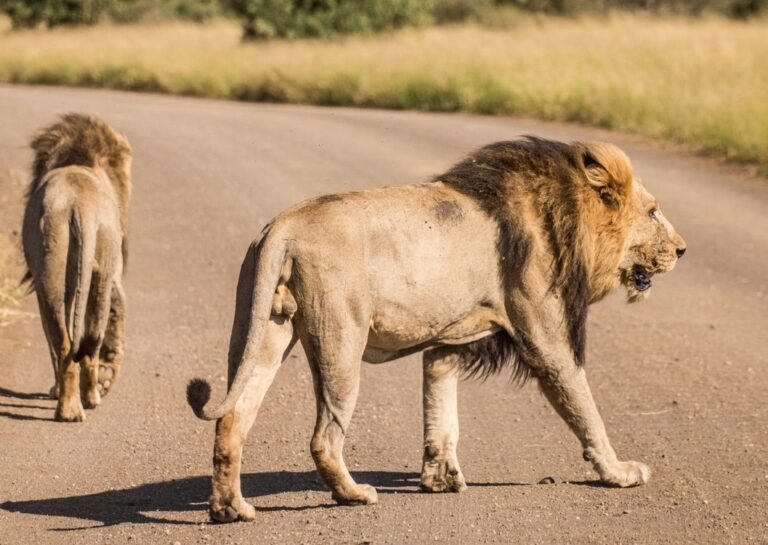
The black rhino is the headline: Etosha holds one of the largest black rhino populations anywhere and is the single best place in Africa to see them. The elephants are among the largest-bodied in Africa and often look pale grey or white from the pan dust they throw over themselves. Lion are common and highly visible, using the open ground around waterholes to hunt. Leopard are present but harder work in this terrain. Cheetah do well on the open plains. Great herds of zebra, springbok, oryx, kudu and giraffe move across the plains, and the dust-pale elephants, the black-faced impala and the tiny Damara dik-dik are the specials worth knowing by name. Around 340 bird species live here, and in a wet year the flooded pan brings greater and lesser flamingo in enormous numbers to breed, along with white pelican.
The honest downside
Three things, said plainly. First, October is brutally hot and dusty. The best wildlife month is also the month that regularly tops 35 °C, with dust that gets into your camera, your clothes and your lungs. If heat ruins your day, come in July or August instead and accept slightly thinner concentrations.
Second, the rest camps are basic for the money. NWR rooms are clean and functional, but they are government rest camps, not lodges — self-catering or restaurant meals bought separately, no game drives included, and the waterhole chalets everyone wants are gone 9–12 months out. If you book late, you will be sleeping in a double room a walk from the waterhole, not on its edge. That is still a good trip, but it is not the trip in the brochure photos.
Third, Etosha is not a Big Five park, and it is not a tracking safari. If your heart is set on buffalo, or on following a leopard through thick bush with a tracker on foot, you will be disappointed. The magic here is patience at a waterhole, not pursuit. Travellers who arrive expecting a chase get bored by midday; travellers who arrive expecting a vigil get the best wildlife afternoon in Africa.
Who should go, and how long
Three nights is the sweet spot, ideally split between two areas of the park so you can explore different waterholes without long backtracking. Two nights is a good minimum. One night barely does the park justice given its size.
- First safari, or a family with children: three nights in the rest camps, July to October, self-drive with a guided drive on day one. Etosha is the most family-friendly of Africa’s great parks — good gravel roads, fenced camps, low malaria risk in the dry season, and animals that come to you.
- Photographers: three or four nights, Okaukuejo for the late-afternoon waterhole light plus a night in the west for open-plains cheetah. Bring a lens reaching 300–400 mm and a beanbag for the car window — patience at one waterhole beats driving.
- Big-cat watchers: the dry-season peak, September to October, with at least one night at Okaukuejo for the floodlit rhino and an evening at Halali, where leopard and elephant use the thicker bush.
- Budget travellers: the rest camps, in a standard car, in May–June or November. A bed inside the park for roughly US$100–160 a night plus N$280 a day in park fees is the cheapest way into serious African wildlife anywhere in the south.
- Luxury travellers: a private lodge on the boundary — Ongava, Onguma or Mokuti near the gates — with guided drives into the park and activities like guided walks and rhino tracking on private land. You trade the floodlit camp waterhole for comfort and guiding; make sure the lodge’s drives still get you to Okaukuejo’s waterhole at dusk.
A simple three-night plan: arrive through Andersson Gate and spend two nights at Okaukuejo, working the pan-edge waterholes by day and the floodlit waterhole by night. Drive east on day three, stopping at the waterholes between Okaukuejo and Halali, and spend the last night at Namutoni for the eastern plains and Fisher’s Pan. Leave through Von Lindequist Gate. Etosha is usually one chapter of a longer Namibian journey — Sossusvlei’s dunes, Damaraland’s desert elephants and the Skeleton Coast all sit on the same circuit — but even on its own, three nights at the waterholes is a complete safari.
FAQ
When is the best time to visit Etosha National Park?
The dry season from May to October is by far the best time for game viewing. As the seasonal pools dry up, animals are forced to gather at the permanent waterholes, creating extraordinary concentrations of wildlife. The peak months of July to October are the most rewarding of all, with September and October at the very top. The green season from November to April brings lush scenery, newborn animals and superb birdlife, but the wildlife disperses and sightings take more patience.
How much is the entrance fee for Etosha National Park?
Since 1 April 2026, foreign adults aged 16 and over pay N$280 per person per day, children aged 9 to 15 pay N$180, and children up to 8 go free. On top comes N$60 per vehicle per day (up to 10 seats). Fees are paid at the gate or at the rest-camp reception and are separate from accommodation.
Can you self-drive in Etosha National Park?
Yes — Etosha is made for self-drivers. The roads between the waterholes are gravel and well maintained, a standard car manages them in the dry season, and no 4×4 is required. You must stay in the vehicle except in the camps and at fenced rest areas, the speed limit is 60 km/h, and the gates open at sunrise and close at sunset.
Where should you stay in Etosha National Park?
In the rest camps inside the park — Okaukuejo, Halali and Namutoni — or in lodges outside the gates. The three main camps each have a floodlit waterhole, and staying inside means you are at the waterhole at dawn and after dark. Book the waterhole-view chalets 9–12 months ahead for peak season, and remember full payment is due 30 days before arrival.
How many days do you need in Etosha National Park?
Three nights is the sweet spot, ideally split between two areas of the park — two nights at Okaukuejo and one at Namutoni covers both ends without long backtracking. Two nights is a good minimum; a single night barely does the park justice given its size.
Are there rhinos in Etosha National Park?
Yes — black and white rhinos, and Etosha is one of the most important areas for the black rhino anywhere. Your best chances are in the evening at the floodlit waterholes of the camps, especially Okaukuejo, where black rhino come to drink most nights in the dry season. The exact number of black rhinos in the park is not published, to protect them.
Etosha is the easiest great safari in Africa to do well — and the easiest to waste by rushing it. The park does not reward the most kilometres driven. It rewards the traveller who picks one good waterhole, sits down, and waits for the park to come to them. Book the camp early, come in the dry season, stay inside the gates, and give the floodlit waterhole at Okaukuejo one full evening. That is the whole trip, and it is enough. Before you plan the rest of Namibia, read our African Safari Beginner’s Guide and our African Safari Cost guide for the full trip budget, our Safari Lodges in Africa guide for choosing where to sleep, and our How to Plan a Safari guide for the whole trip. If Etosha leaves you wanting more big-cat country, our Kruger National Park Safari and Okavango Delta Safari guides cover the two parks that pair best with it.