South Africa Tours: Which Type Is Right for You?

South Africa is the one African country where a single trip can hold a Big Five safari, a world-class wine region, a mountain city and a coastal road trip — and that is exactly why choosing a tour here is confusing. Search “south africa tours” and you get two things: operators selling their own trips, and listicles naming 18 or 25 “best tours” with no way to tell which one fits you.
The real question is not which tour is best. It is which type of tour is best for you. There are six, and they differ far more in price, pace and freedom than in the places they visit.
The six types at a glance
| Tour type | Typical price (pp, land only) | Days | Best for |
|---|---|---|---|
| Small-group overland | ~$160–$265 per day | 9–22 | First-timers, solo travellers, tight budgets |
| Private guided | ~$365–$1,500+ per day | 10–21 | Couples, families, travellers who want control |
| Self-drive | ~$100–$200 per day + car hire | Flexible | Confident drivers, repeat visitors |
| Luxury rail (Rovos Rail / Blue Train) | ~$1,000+ per day | 3 nights on the train, as part of 10–14 | Slow travel, special occasions |
| Safari-only lodge package | ~$350–$1,500+ per day | 3–7 | Wildlife-first trips, honeymoons |
| Day tours from a base city | ~$50–$250 per day | 1 | Short stays, cruise stops, add-ons |
Prices are ranges from the operator pages named in the footer, checked November 2026. They exclude international flights unless stated.
1. Small-group overland tours — the best value way to see it all
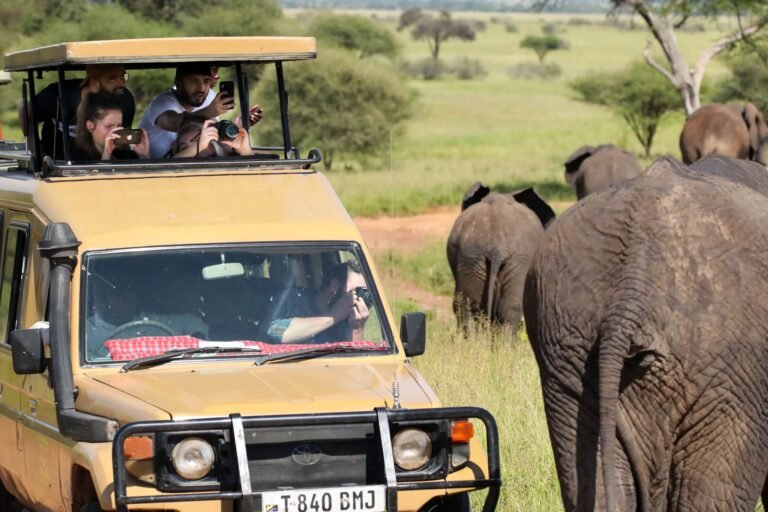
This is the classic South Africa tour: a small group, a local leader, a purpose-built truck or minibus, and a route that runs Johannesburg to Cape Town (or the reverse) over two to three weeks. Intrepid’s Kruger, Coast & Cape is the benchmark — 21 nights from Johannesburg through Kruger, the Drakensberg, the coast and the Garden Route to Cape Town, from about $3,650 per person (TourRadar, December 2026 departures), roughly $160–$165 a day. G Adventures’ 16-day Kruger Safari & the Garden Route runs from about $4,199 per person, roughly $262 a day, with hotels instead of camping.
What you get is the country in one ticket: safari, mountains, coast, wine and two big cities, with transport, a leader and most accommodation handled. What you give up is control — group sizes run up to 22, the minimum age is usually 15, and the itinerary is fixed. Expect long driving days: Johannesburg to Kruger alone is about 460 km, and a “see it all” route means several 5–6 hour days in the vehicle.
The verdict, stated plainly: if this is your first trip to South Africa, you have two to three weeks, and your budget is under $200 a day, a small-group overland tour is the right pick. It is the cheapest way to cover the whole country, and the group solves the two things first-timers worry about most — driving on the left and where to stay each night.
2. Private guided tours — the best trip, at two to three times the price
A private tour means a registered guide and a private air-conditioned vehicle for your party only, with the itinerary built around you. African Sky, operating since 1998, lists the shape of it honestly: a 10-day Wildlife & Culture tour from $3,658–$5,851 per person sharing, a 15-day A World in One Country tour from $4,480–$8,388, a 21-day In Depth tour from $8,325–$12,907, and an 18-day luxury combination from $21,540–$27,819 (africansky.com, checked November 2026).
The premium buys three things a group tour cannot: pace, privacy and expertise. Your guide stays with you, adjusts the day around what interests you, and knows the habitats and animal behaviour that turn a drive into a sighting. Families get room configurations, malaria-free areas and realistic driving times built in. The honest trade-off is cost — a private tour typically runs two to three times the per-day price of a group tour — and you still need to book early: African Sky advises nine to fifteen months ahead for peak periods and small lodges.
The verdict, stated plainly: if you are a couple or a family, you want the trip shaped around you, and your budget starts around $400 a day, go private. If your budget is under $250 a day, a private tour will force compromises on lodges that a group tour does not.
3. Self-drive — the cheapest safari, and the one that needs the most planning
South Africa is one of the few African safari countries where self-drive is a real option, because Kruger National Park is built for it: tarred roads, nine gates, rest camps with shops and restaurants, and no vehicle fee — you drive yourself and pay only the daily conservation fee. That fee is R692 per international adult per day (about $41), and R345 per child aged 2–11, under the SANParks tariff running 1 November 2026 to 31 October 2027 (checked November 2026). Stay three nights and two adults pay R4,152 in fees alone — before a bed or a litre of fuel.
A self-drive Kruger trip can run roughly $100–$200 per person per day including a rest-camp bungalow, car hire and fees — the cheapest real safari in South Africa. The catch is that you are your own guide, planner and driver. Rest camps must be booked months ahead for peak season, and your sightings depend on your own eyes — no tracker, no radio network, no guide reading the bush for you. In the December–January festive season, day visitors at the busy southern gates must pre-book online, pay a non-refundable R59 administration fee per adult, and arrive inside an assigned time slot.
The verdict, stated plainly: if you are a confident driver, you have done a safari before, and you want Kruger on your own terms at the lowest cost, self-drive wins. If this is your first safari, the money you save is not worth the sightings you will miss — book a guided safari for Kruger and self-drive the Garden Route instead, where the driving is the pleasure.
4. Luxury rail journeys — the slowest, most romantic way across the country
South Africa has two famous luxury trains, and they turn the dullest leg of a tour — the long haul between Cape Town and the interior — into the highlight. Rovos Rail runs a three-night journey between Cape Town and Pretoria through the semi-arid Karoo, with stops at Matjiesfontein and Kimberley; Audley Travel builds it into a 13-night Cape Town to Kruger trip that ends with three nights at a high-end lodge in the Sabi Sands.
Rail suits one kind of traveller: someone who wants the journey to be the experience, not just the transport. The trains are slow by design, the suites are polished wood and silver service, and the price reflects it — roughly $1,000 or more per person per day once the train, hotels and safari are combined. Book well ahead: departures are limited and the best suites go first.
The verdict, stated plainly: pick the train if the trip is a honeymoon, an anniversary, or a once-in-a-lifetime journey and you genuinely enjoy slow travel. If you want maximum wildlife or maximum places per day, the train is the wrong way to spend three of your nights.
5. Safari-only lodge packages — wildlife first, everything else later
If the safari is the point and Cape Town can wait, skip the grand tour and book a lodge package: three to seven nights at one reserve, with game drives, meals and guiding included. The sweet spot is a private reserve next to Kruger — Sabi Sands or Timbavati — where off-road driving and night drives are allowed and the wildlife density is the highest in the country. Our Kruger National Park Safari guide covers the park itself, and our Safari Lodges in Africa: How to Choose guide explains the lodge tiers.
Prices run from roughly $350 per person per day at a comfortable lodge to $1,500+ at a top-end one. The trade-off is narrowness: you will see more wildlife in four days at a Sabi Sands lodge than in two weeks anywhere else in South Africa — but you will see nothing of Cape Town, the Winelands or the Garden Route.
The verdict, stated plainly: if wildlife is the reason you are going and your trip is a week or less, a lodge package beats a grand tour. If you have two weeks and want the whole country, the lodge is a chapter, not the book — pair three safari nights with a week in the Cape.
6. Day tours from a base city — the right choice for short stays
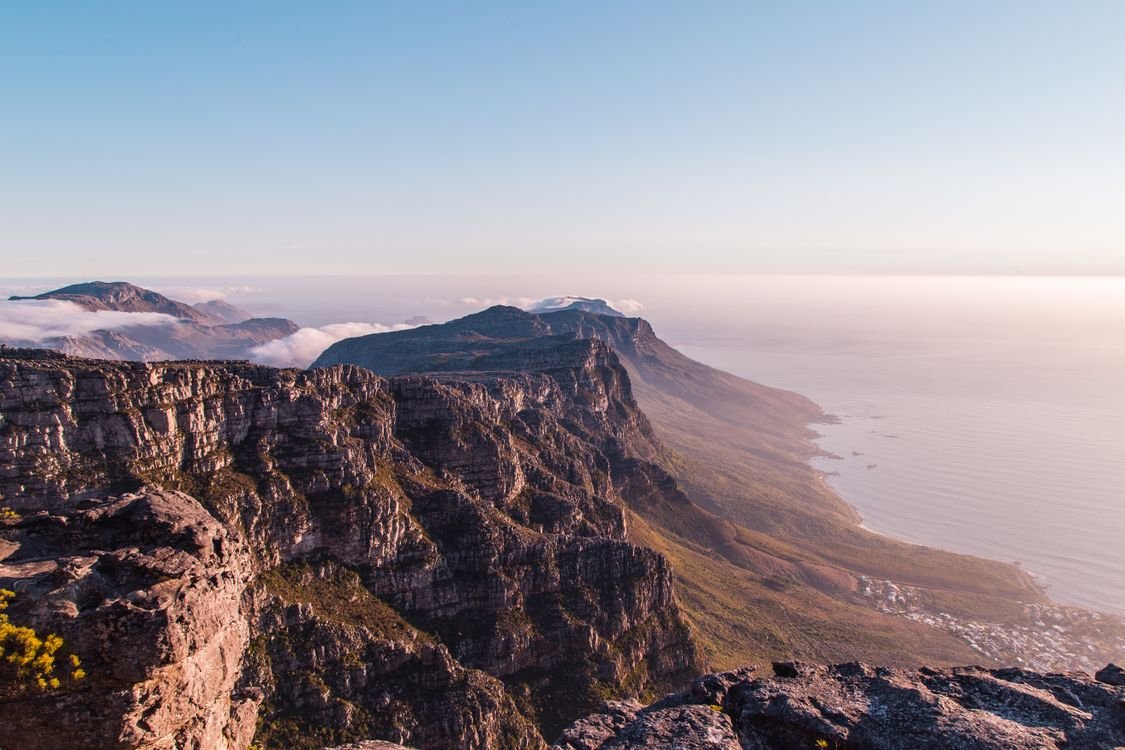
Not every South Africa trip needs a tour at all. If you have three or four days in Cape Town, the best format is day tours from one hotel: Table Mountain by cable car, the Cape Peninsula and the penguins at Boulders Beach, a Winelands tasting day in Stellenbosch and Franschhoek (the Franschhoek Wine Tram is the easy way to do it), and Robben Island, where former inmates often guide. From Johannesburg, the equivalents are Soweto and the Apartheid Museum. From the Garden Route towns, whale watching in Hermanus (June to November), shark cage diving in Gansbaai and the Cango Caves near Oudtshoorn.
Day tours run roughly $50–$250 per person depending on length and inclusions, and they are the most flexible format of all — you keep your evenings, your hotel and your freedom. They are also the only format that works for a cruise stop or a business-trip extension.
The verdict, stated plainly: if you have under a week, base yourself in Cape Town and book day tours. A multi-day tour in that little time spends more of your trip in transit than at the places you came to see.
What it really costs — the honest total
Headline prices mislead, because three costs usually sit outside them. First, the Kruger conservation fee: R692 per international adult per day, every day you are in the park, not once per stay. Second, internal flights: Cape Town to Kruger (Mpumalanga airport) is a flight, not a drive. Third, tips: on a 21-day group tour, budget roughly $380 in tips on top of the land price. One all-in estimate for Intrepid’s Kruger, Coast & Cape puts the real total near $4,650 per person including a typical flight and tips, against a $3,650 land price (18-35.travel, checked November 2026). For the full money picture, read our How Much Does an African Safari Cost? guide and our Best Time to Visit South Africa guide before you pick dates.
The honest downside
Three things, said plainly. First, the distances are the trip. South Africa is a big country and every “see it all” tour is also a driving tour — long days on the road between places that look close on a map and are not. Second, the headline price is never the total. Park fees, internal flights and tips add 20–30% to a group tour and more to a private one; budget them as their own lines. Third, peak season needs a long runway. The best lodges and the small-group departures with the best dates are booked nine to fifteen months ahead, and the festive season adds gate quotas and pre-booking rules at Kruger — a last-minute December trip will cost more and see less.
The alternative most guides skip
Almost every “south africa tours” guide assumes Kruger, and Kruger is the right answer for most people. The alternative they skip is the malaria-free Eastern Cape: Addo Elephant Park plus the Garden Route. Addo holds one of the densest elephant populations in Africa, it is a comfortable drive from Port Elizabeth and the Garden Route towns, and — unlike Kruger — it needs no malaria precautions, which makes it the better safari for families with children under five. Pair three days at Addo with the Garden Route’s coast, forests and ostrich farms at Oudtshoorn, and you have a complete South Africa trip without a single internal flight. If your children are small, or you would rather not take malaria tablets, this is not the compromise option. It is the better trip.
FAQ
What is the best South Africa tour for first-timers?
A small-group overland tour of 2–3 weeks, such as Intrepid’s Kruger, Coast & Cape from about $3,650 per person. It covers Kruger, the Drakensberg, the Garden Route and Cape Town in one ticket.
How much does a South Africa tour cost?
Roughly $160–$265 per person per day for a small-group tour, $365–$1,500+ for a private guided tour, $100–$200 a day for a Kruger self-drive, and $350–$1,500+ a day for a safari lodge package. Add the Kruger conservation fee (R692 per international adult per day), internal flights and tips on top of the headline price.
Is it better to self-drive Kruger or join a tour?
Self-drive is cheaper and freer, and Kruger is built for it — tarred roads, nine gates, rest camps. But your sightings depend on your own eyes, with no tracker or guide. First-timers see more on a guided safari; experienced drivers get the best value from self-drive.
How far in advance should I book a South Africa tour?
Nine to fifteen months ahead for peak season and small lodges, according to African Sky. For a December–January trip, also pre-book Kruger day-visitor entry online — the busy southern gates use quotas and assigned time slots in the festive season.
What is included in a South Africa tour price?
Usually accommodation, transport during the trip, a guide or leader, and some meals — Intrepid’s 21-night tour, for example, includes 41 meals. International flights, the Kruger conservation fee (R692 per adult per day), some park entries and tips are usually extra.
Are South Africa tours good for families with young children?
Yes — but pick the right region. Kruger is a malaria area and many lodges set minimum ages, while group tours often require age 15+. The malaria-free Eastern Cape — Addo Elephant Park plus the Garden Route — is the better family pick.
Closing
South Africa tours are not one product. They are six different trips that happen to visit the same country: a group overland for first-timers on a budget, a private tour for couples and families who want control, a self-drive for confident drivers who want Kruger cheap, a luxury train for slow travellers, a lodge package for wildlife-first trips, and day tours for short stays. Pick the type first, then the operator — and total the real cost, fees and flights included, before you compare prices. Before you book, read our Kruger National Park Safari guide for the park itself, our Best Time to Visit South Africa guide for when to go, our Africa Safari Tours: How to Pick an Operator guide for vetting the company, and our How to Plan a Safari guide for the trip around the tour. Pick the tour type that fits your trip — not the one with the loudest advert.