Chobe National Park: Botswana’s Elephant Safari Guide

There is a moment on the Chobe River
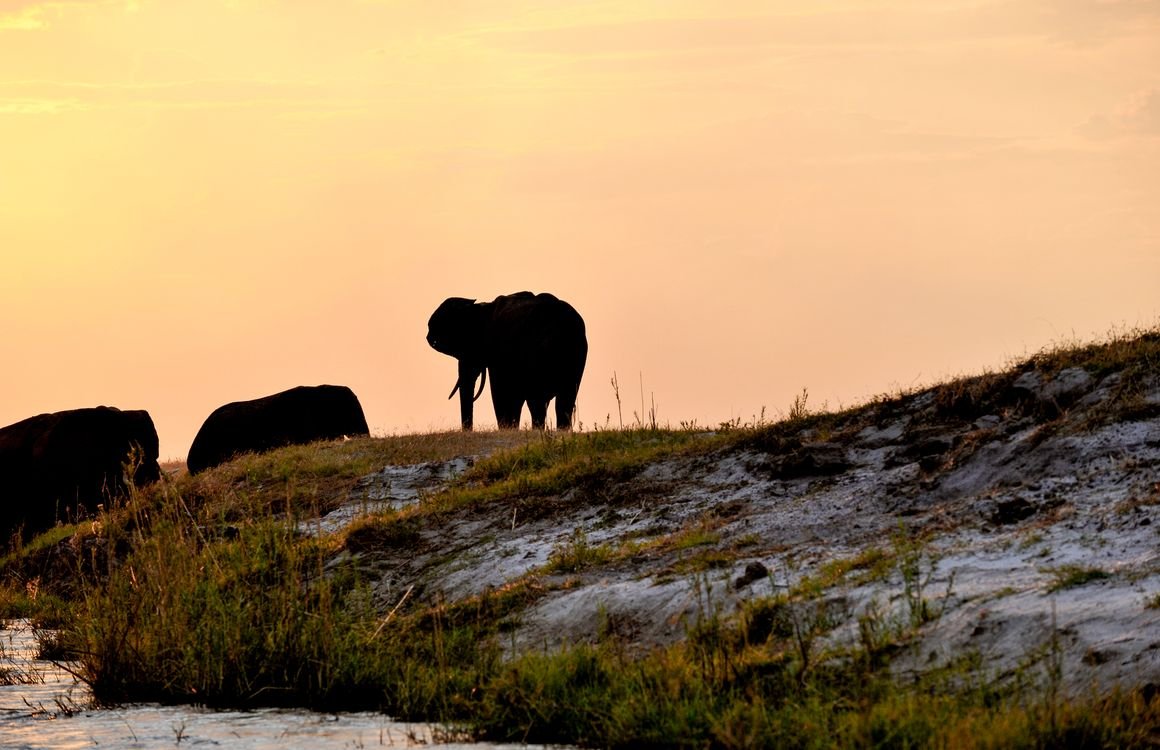
There is a moment on the Chobe River, late in the afternoon, when the light goes gold and the elephants come down to drink in herds so large they fill the far bank. A hundred animals, maybe more, wading trunk-up through the shallows while hippos surface beside the boat and fish eagles call from the dead trees. It is the single most concentrated wildlife scene in southern Africa — and it happens every dry-season evening, a short drive from a town with an airport.
Chobe National Park is Botswana’s oldest national park and its flagship. It covers 11,700 square kilometres in the country’s far north-east, where Botswana meets Namibia, Zambia and Zimbabwe, and it holds one of the largest elephant populations on Earth — around 50,000 animals inside the park itself, and about 132,000 across Botswana according to the 2022 KAZA survey. The greater Chobe ecosystem is estimated at well over 100,000 elephants. No other park lets you watch them the way Chobe does: from an open vehicle in the morning and from a small boat in the afternoon, on the same day, from the same town.
That is the short version. The longer version matters, because Chobe is really three different safaris inside one boundary, and the one most visitors get is only the easiest third of it.
The four regions — and which one is actually yours
Chobe splits into four regions, and they could hardly be more different. Picking the wrong one is the most common mistake first-timers make.
The Chobe Riverfront is the park most people see. A strip of floodplain and riverine woodland along the Chobe River, reached through Sedudu Gate about 7 km west of Kasane on a tar road. This is where the elephant herds gather in the dry season, where the buffalo herds run into the thousands, and where the boat cruises run. It is also the busiest part of the park by a wide margin. On a good dry-season afternoon, a lion sighting near the gate can draw dozens of vehicles, and the first few kilometres of river road carry most of the traffic. Go further east towards Serondela and the crowds thin fast — and that is where the puku live, an antelope found in Botswana only on the Chobe floodplain around Serondela.
Savuti, deep in the park’s south, is the opposite safari. Open grassland, pans and the erratic Savuti Channel, famous for its predator concentrations: large lion prides, spotted hyena clans, leopard and African wild dog. The annual zebra migration passes through, drawing the predators with it. The channel itself is famously unreliable — it can stay dry for decades, then flood without warning. Its water reached the Savute Marsh in January 2010 for the first time since 1982. Savuti is reached by light charter flight or a long sand drive from Kasane or Maun, and it is where you go when the riverfront has stopped surprising you.
Linyanti, in the far north-west, is the quiet luxury corner: roughly 900 square kilometres of reed-lined channels, wooded islands and lagoons that resemble the Okavango in places. Dry-season game is superb, birding is outstanding, and the camps here are small and expensive. The private Linyanti Wildlife Reserve on the park’s western border is where walking safaris and night drives become possible — both are prohibited inside the national park itself.
Nogatsaa, the fourth region, is the one nobody writes about. A remote stretch of grassland and pans between the riverfront and Savuti, it is the least-visited part of Chobe and the closest thing to a genuine wilderness left in the park. Public campsites here run about US$40 to US$80 a person a night. If you want Chobe without another vehicle in sight, this is where you go — but you need to be fully self-sufficient, with a 4×4, water, fuel and a satellite phone mindset.
The verdict, stated plainly: first visit, short on time, or travelling with children — stay on the riverfront from Kasane and take the boat. Second visit, or predators are the point — go to Savuti. Money is no object and you want the park to yourself — Linyanti. Self-drive veterans who have done the rest — Nogatsaa.
The boat cruise: Chobe’s signature, and how to do it right
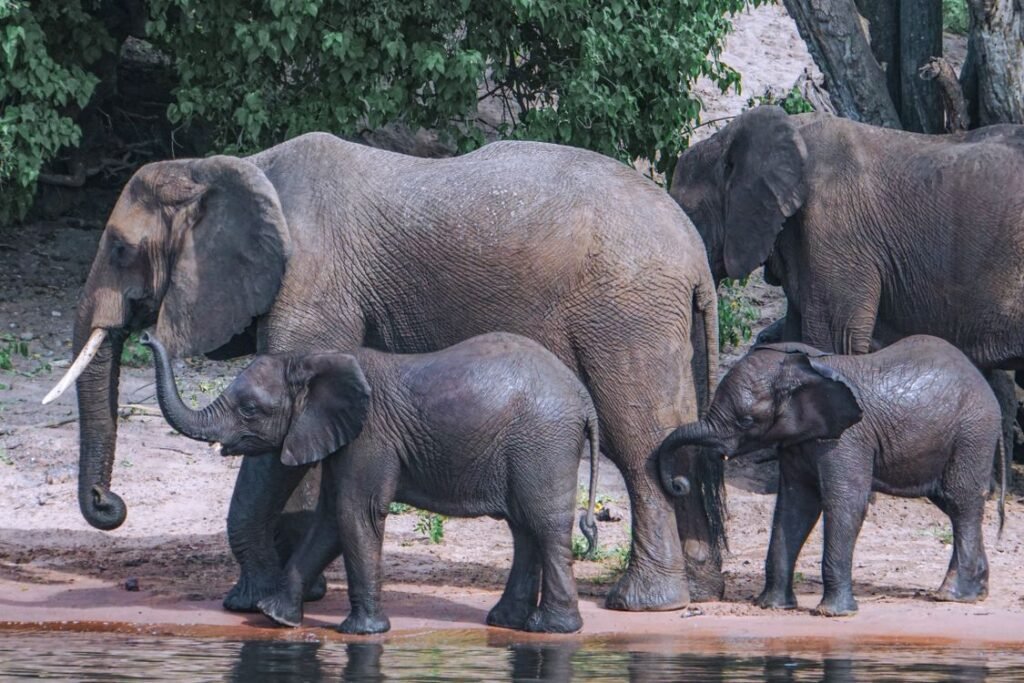
The boat is what makes Chobe different from every other great African park. Nowhere else does water-based game viewing rival the classic open-vehicle drive — and here it often beats it.
A standard cruise runs about three hours, usually in the morning and again in the late afternoon. The late-afternoon sailing is the one to book: animals gather at the water’s edge as the heat breaks, the light turns gold, and the boat puts you at water level with elephants swimming between the islands, hippos surfacing close enough to spray the hull, crocodiles slipping into the channel and fish eagles working the dead trees. The morning cruise is quieter and better for birding. A three-hour shared sunset cruise costs roughly US$40 to US$65 per person in 2026, depending on the boat and the package — book through your lodge or one of the Kasane operators, and confirm whether the park entry fee is included, because often it is not.
Two practical details the glossy guides skip. First, the small boats beat the big ones. The large double-decker riverboats carry dozens of passengers and sit high above the water; the small motorboats used by the lodges and specialist operators get you close to the bank at water level, which is the angle that separates a good elephant photograph from an ordinary one. If photography matters to you, ask specifically for a small boat — Pangolin Photo Safaris runs specialist photographic boats out of Kasane at roughly US$180 to US$220 per person, with swivel-mounted rigs and a guide who positions for light instead of for ticking off species. Second, the river is also a border. The Chobe River is the boundary with Namibia, so the far bank is another country; your boat stays on the Botswana side, and the elephants crossing between the banks are crossing an international border without knowing it.
Pair the cruise with a morning game drive and you have the classic Chobe day: open 4×4 at dawn for predators and the big herds on land, boat in the afternoon for the river. Drives typically last about three to three and a half hours, departing at dawn and again in the late afternoon.
When to go: the dry season, and the two months inside it
Chobe is a year-round park, but the dry season from May to October is when it earns its reputation. As the bush dries out, the animals concentrate along the only permanent water — the river — and the herds grow week by week. The peak is August to October, when hundreds of elephants wade across the river at dusk and the buffalo herds are at their largest. May to July is the gentler version: still superb game viewing, cooler days, and thinner crowds. That is the window most guides quietly recommend for a first visit.
The green season, November to April, trades the crowds for a different park. The bush turns green, birding peaks with the migrants, and the afternoon thunderstorms arrive as short, dramatic downpours rather than day-long rain. Game viewing is harder — the animals scatter across a landscape that holds water everywhere — but the park is quiet and the light is extraordinary. Kasane’s daytime highs sit around 35 to 36 °C from January to March, with roughly 95 to 114 mm of rain a month; by May the rain has fallen to about 8 mm.
One timing trap: do not plan a Chobe trip around the riverfront in the green season and expect the dry-season spectacle. The elephants are still there, but they are spread across 11,700 square kilometres instead of lined up along one riverbank. If the herds are the reason you are coming, come between May and October.
What it costs, honestly — the fee question answered
Here is the part every guide fumbles, because the fee schedule changed and the internet did not keep up. Two figures circulate for the same adult ticket — about P120 and about P270 a day — and both have been correct at different times.
The schedule in force at the gate, confirmed by the Chobe guides updated through October 2026, is the 2022 tariff: P270 (about US$20) per non-resident adult per day, P135 for children aged 8 to 17, free under 8, and a vehicle fee of P115 a day for a foreign-registered car under 3,500 kg (P30 for a Botswana-registered or hired car). Chobe and Moremi share this Category A tariff, and the fee is charged per calendar day, including the day you leave. A rise to P500 for non-residents was approved for April 2026 and then postponed after industry pushback — the minister was reported in May 2026 as saying it was delayed by two years — so check the official Department of Wildlife and National Parks tariff before you travel, because this is the one number in this guide most likely to move.
Pay in cash, in pula, at the gate — bring exact amounts in small notes, drawn in Kasane the day before, and have passport details for everyone in the vehicle ready for the gate register. Gate hours follow the season: April to September the gates open at 06:00 and close at 18:30; October to March they open at 05:30 and close at 19:00. Sedudu Gate is the main tourist entrance; Ngoma Gate sits on the western riverfront at the Namibian border, Ghoha Gate gives remote northern access to Savuti, and Mababe Gate is the southern Savuti entrance from Maun.
Beyond the gate fee, the trip prices in three clear lanes:
- Self-drive day from Kasane: a full-day guided safari combining a river cruise and a game drive runs about US$122 per person, with park entry and tax extra at roughly US$25 per person. Do it yourself in a hired 4×4 and the day is the P270 entry plus P30 for the vehicle, plus fuel — the cheapest way into serious elephant country in Africa. Town beds in Kasane start from about US$60 a night.
- Riverfront lodge: lodges on the Chobe riverfront start from about US$600 per person per night on a fully inclusive basis, with the luxury houseboats and Linyanti camps at the higher end. Chobe Game Lodge, the large hotel-style lodge on the river, famously hosted one of Elizabeth Taylor’s weddings.
- Remote camp (Savuti or Linyanti): fly-in camps reached by light charter flight from Kasane or Maun, priced at the top of the Botswana market — expect well over US$1,000 per person per night at the luxury end, all-inclusive with flights often extra.
In 2024 the park drew 276,400 paying visitors and generated over P30 million in entrance fees — Botswana’s flagship tourism asset, and the crowds at Sedudu Gate on a dry-season morning are the price of that popularity.
Getting there, and the Victoria Falls combination
Kasane is the gateway, and it is unusually easy to reach for a park this wild. Kasane Airport (BBK) sits about 5.6 km from town, with Airlink flying daily from Johannesburg. International flights to Livingstone in Zambia or Victoria Falls in Zimbabwe are often cheaper, and the road transfer from either to Kasane takes about an hour to an hour and a half — which is why most visitors pair Chobe with the Falls. A sunrise game drive, a hippo-packed river cruise and the world’s largest sheet of falling water can all fit in a single long weekend, and that combination is the single best first safari in southern Africa for travellers short on time.
If you are self-driving, the riverfront is the only region you can sensibly reach on your own: tar road to Sedudu Gate, then graded tracks along the river. Savuti is 165 km from Kasane, 70 km of it sand, and Linyanti needs a charter flight or a serious expedition vehicle. Whatever you drive, fill up in Kasane — there are no shops or fuel inside the park, and the remote lodges operate on an all-inclusive basis with no on-site stores.
The honest downside
Three things, said plainly. First, the riverfront is crowded, and the crowd is concentrated. Most visitors never drive more than the first stretch of river road out of Sedudu Gate, so a good sighting there can mean dozens of vehicles, engines running, radios crackling. Drive east past Serondela and the park empties — but most people never do. Second, rhino are almost never seen in Chobe. If completing the Big Five matters to you, this is the wrong park for the last tick — the guides will tell you so honestly if you ask. Third, the park’s rules are stricter than they look. No night drives inside the park, no walking inside the park, and no off-road driving. The walking and night drives happen only in the private concessions on the borders, like Kings Pool in the Linyanti. Travellers who arrive expecting to walk with a guide inside Chobe itself will be disappointed.
Northern Botswana is a malaria area, so speak to your doctor about prophylaxis before you travel — the same advice applies across the region, and it is the one health item to sort before you book, not after.
Who should go, and for how long
- First safari, or a family with children: two to three nights on the riverfront from Kasane — a morning drive and an afternoon cruise each day, with a day trip to Victoria Falls. The boat cruises are gentle and engaging for all ages, and nothing here needs a bush flight.
- Photographers: three nights minimum, small boat in the afternoon, morning drive at dawn, and the specialist photographic boats if the budget stretches.
- Predator watchers: skip the riverfront after one day and fly to Savuti — the lion prides and wild dog packs are the reason it exists.
- Self-drive veterans: a day on the riverfront, then Nogatsaa and the sand road to Savuti, camping at Ihaha, Savuti or Linyanti.
- Honeymooners or big-occasion trips: Linyanti, for the exclusivity the riverfront cannot give you.
Two to three nights is the standard recommendation for the riverfront, and it is the right one — one night gives you a single drive and a single cruise, and Chobe deserves both twice. Add two nights in Savuti or Linyanti if you can, and a night at Victoria Falls on the way in or out, and you have the best-value Botswana itinerary there is.
FAQ
How many elephants are in Chobe National Park?
Around 50,000 elephants live inside the park itself, and about 132,000 across Botswana according to the 2022 KAZA survey. The greater Chobe ecosystem holds well over 100,000 — one of the largest elephant populations on Earth, and the densest concentration of any African park.
What is the best time to visit Chobe National Park?
The dry season, May to October, with August to October the peak for elephant herds along the river. May to July is cooler and quieter with still superb viewing. The green season from November to April is best for birding and solitude, but the animals scatter away from the river.
How much does it cost to enter Chobe National Park?
P270 (about US$20) per non-resident adult per day under the tariff in force since April 2022, plus P115 a day for a foreign-registered vehicle. Children aged 8 to 17 pay half price and under-8s are free. A fee rise approved for April 2026 was postponed, so confirm the current tariff before you travel.
Is a boat cruise or a game drive better in Chobe?
Do both — they show you different animals in different light. The afternoon boat cruise is Chobe’s signature experience, putting you at water level with swimming elephants, hippos and crocodiles. The morning game drive is better for predators and the big herds on land. A standard day pairs the two.
How many days do you need in Chobe National Park?
Two to three nights on the riverfront is the standard recommendation, giving you time for both boat and vehicle safaris. Add two nights in Savuti or Linyanti if you want the remote half of the park, and a night at Victoria Falls — about an hour’s drive from Kasane — on the way in or out.
Is Chobe National Park good for families?
Yes. The boat cruises are gentle and engaging for all ages, Kasane is well connected with an airport 5.6 km from town, and the riverfront lodges offer an accessible introduction to safari without long bush flights or remote airstrips. Several properties welcome children with dedicated family programmes.
Closing
Chobe is the easiest great safari in Africa to do well — a town, an airport, a tar road and a boat are all you need for the riverfront — and it is also a park that rewards going further. One day on the river gives you the elephants. A second day gives you the light. Savuti gives you the predators, Linyanti gives you the silence, and Nogatsaa gives you the wilderness. Start with the river, and let the park decide how far you go. Before you book, read our Okavango Delta Safari guide, our African Safari Beginner’s Guide, our African Safari Cost guide, our Safari Lodges in Africa guide, and our How to Plan a Safari guide. If Botswana leaves you wanting more southern Africa, our Etosha National Park guide covers Namibia’s waterhole safari.